
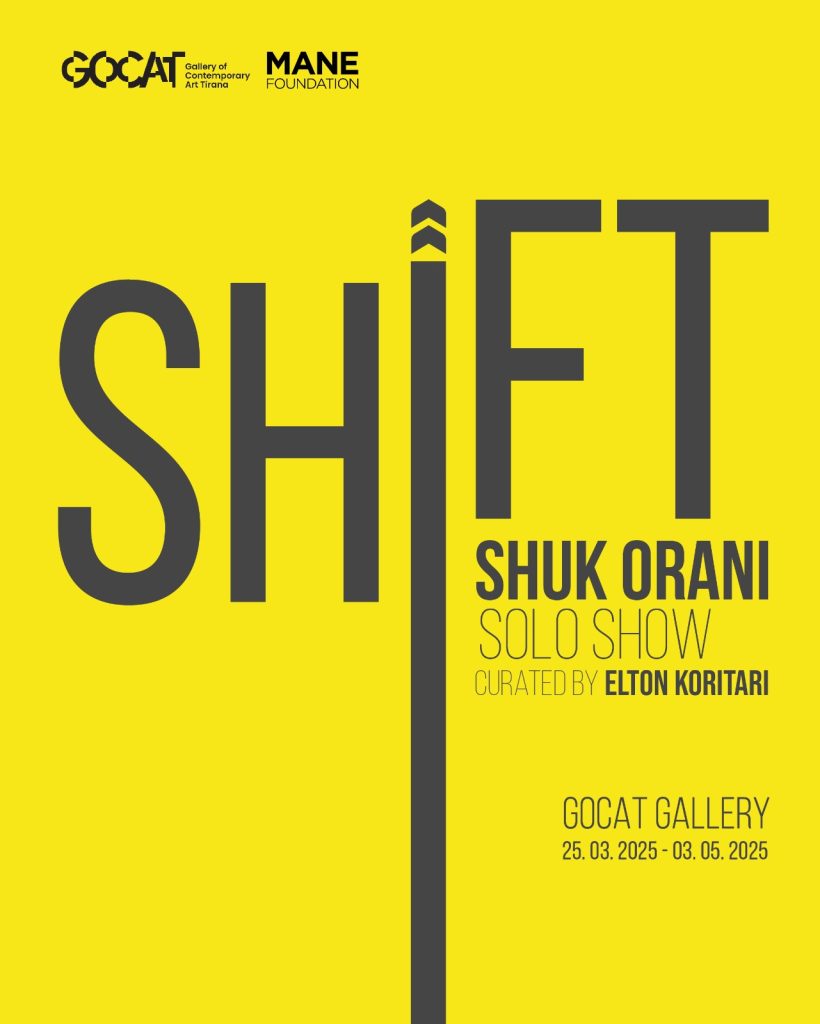
Curatorial Text
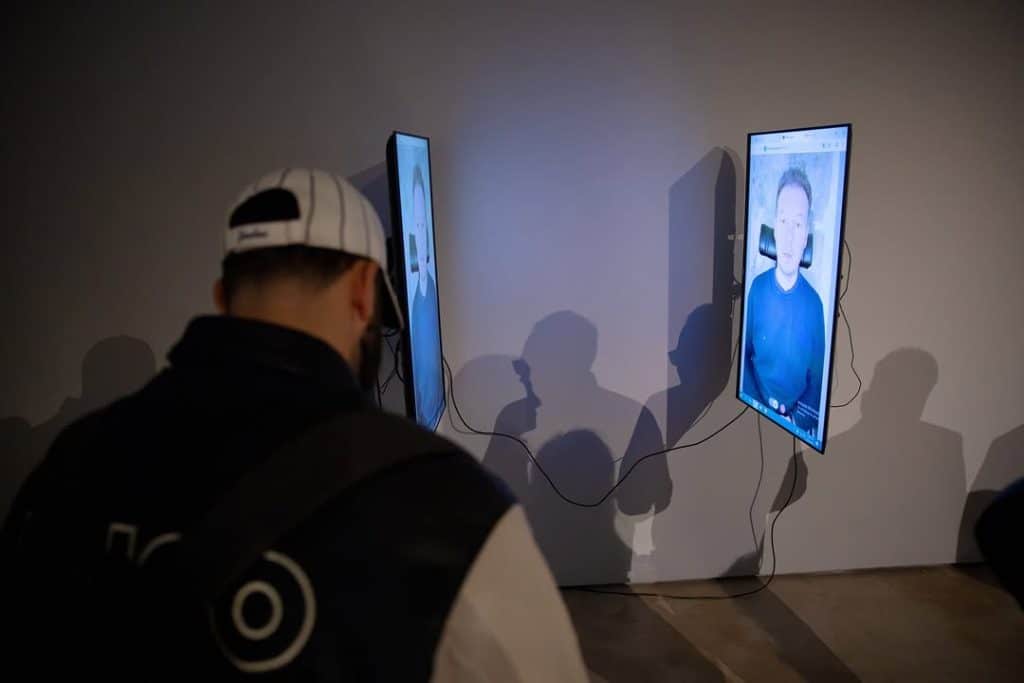
There is a precise moment when an artist stops mastering his medium and begins negotiating with it. For Shuk Orani, an artist born in Kosovo and based in Germany, that moment took the form of a face: his own, replicated, animated, endowed with a voice. An avatar that observes him, listens to him, and responds to him, generated by artificial intelligence, developed by Absolute Software, a team of German engineers (Atelier SO, Absolute, 3rdway, EXXXA) in collaboration with the Friedrich Neumann Foundation and University of Hamburg.
Not a tool. An interlocutor!
Yet SHIFT is not an exhibition about artificial intelligence, nor an exhibition about what happens when an artist, a painter of gesture, of matter, of monumental scale who finds himself face to face with something that learns from him faster than he can unlearn from himself. SHIFT is about an artist who did not retreat from technology. Instead, he chose to remain within the space of friction and made it the core of his most recent practice.
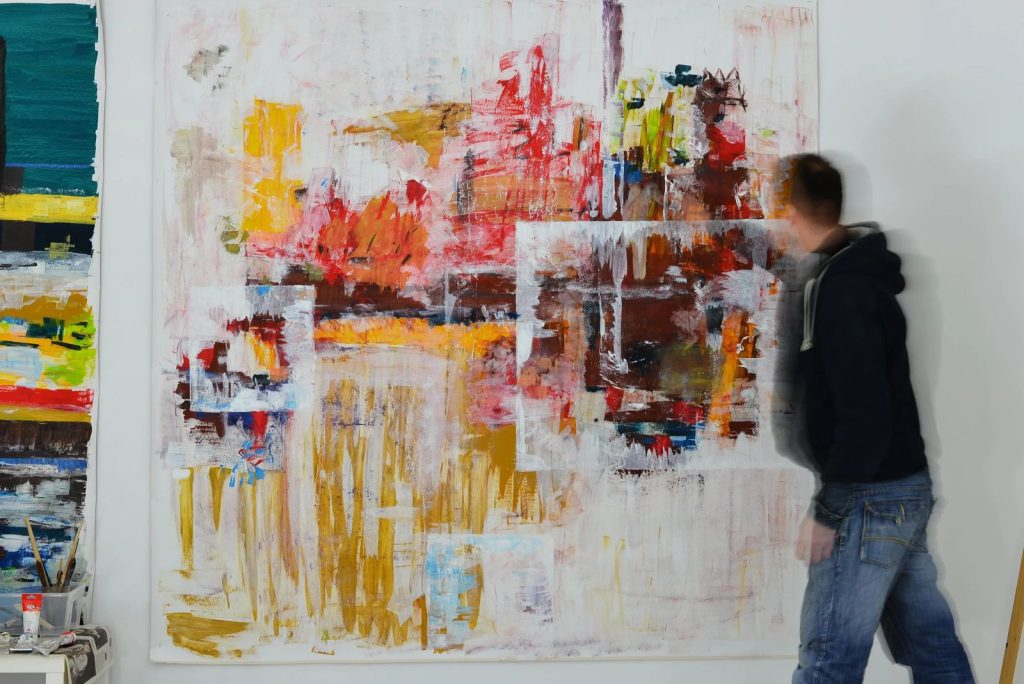
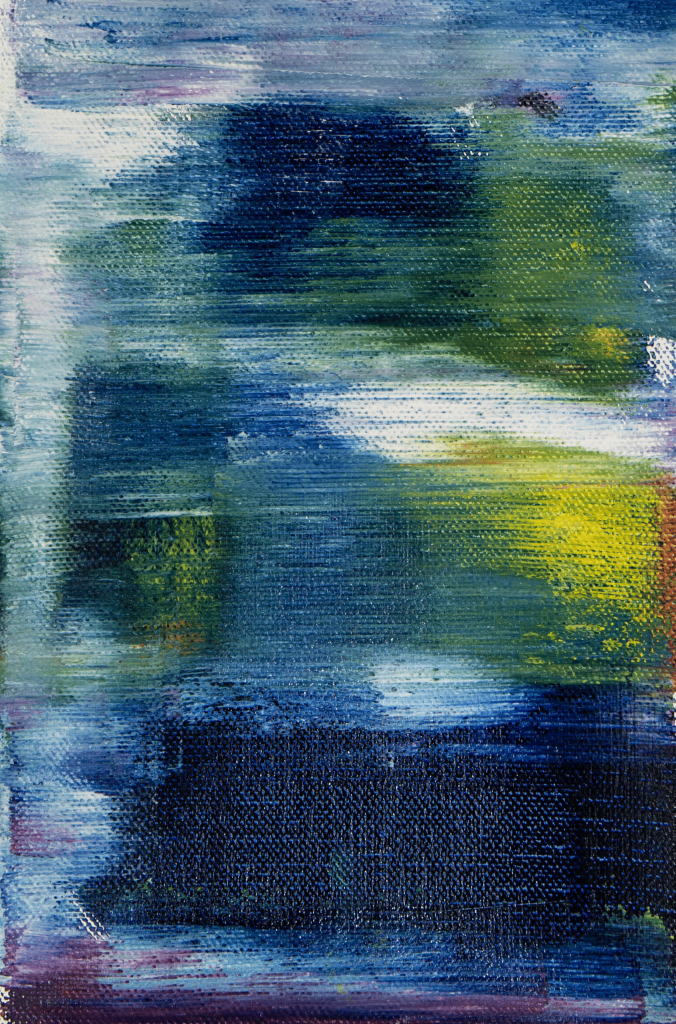
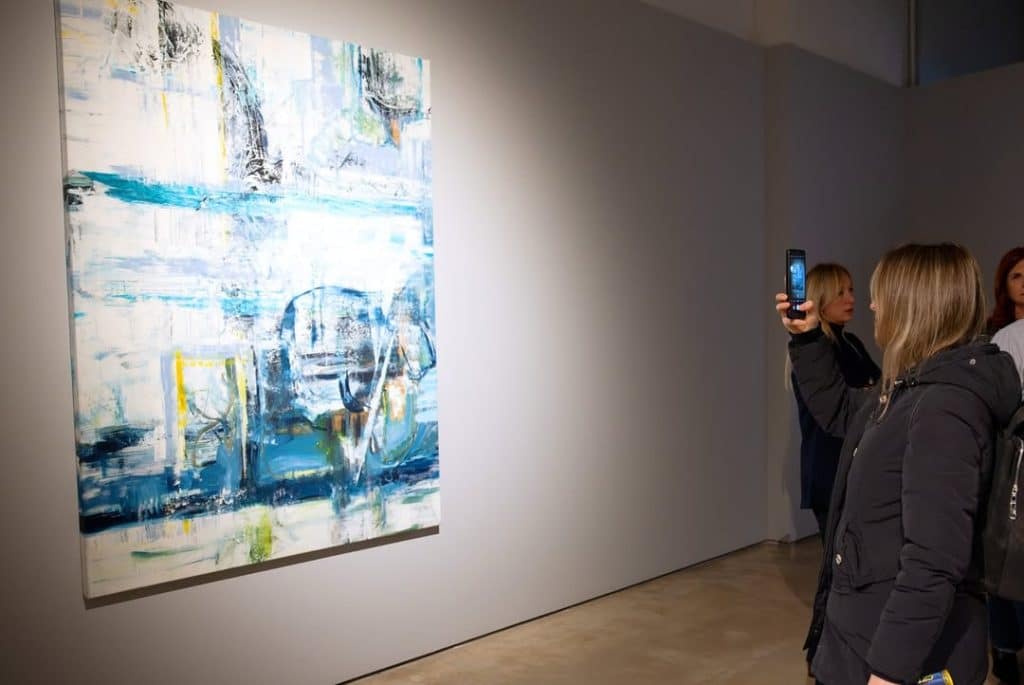
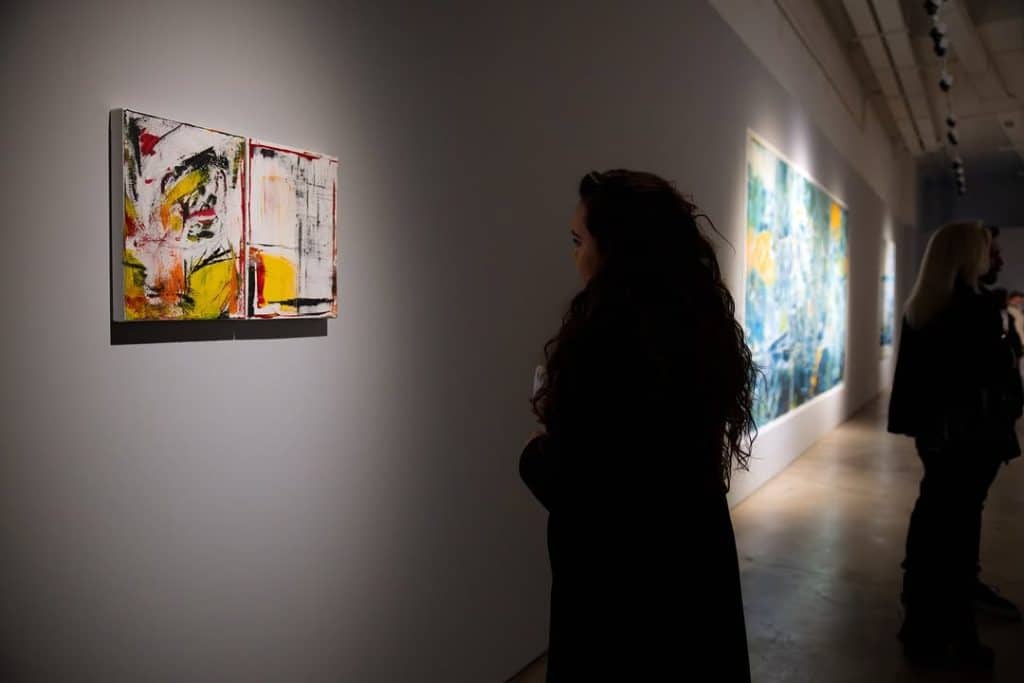
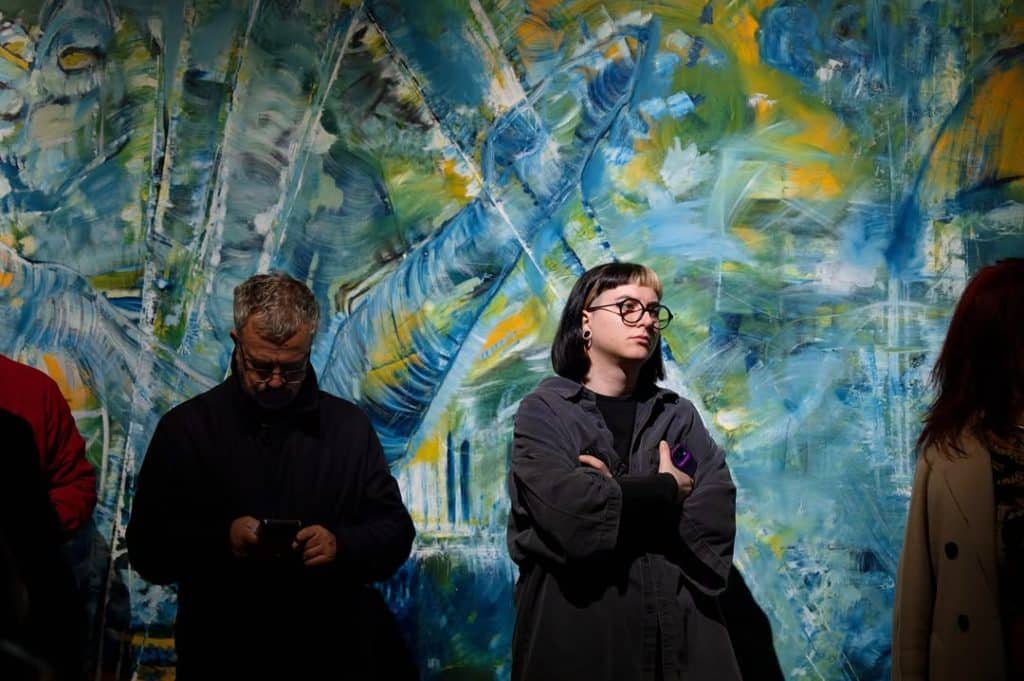
Orani’s large abstract canvases belong to the most rigorous tradition of post war European painting, particularly what is often called the German school; where gesture is never decorative, where colour carries the weight of history and where the surface is always also a threshold. His monumental works do not allow themselves to be ignored: they enter the space with the authority of someone who knows that the body matters, that the physicality of painting cannot be replaced.
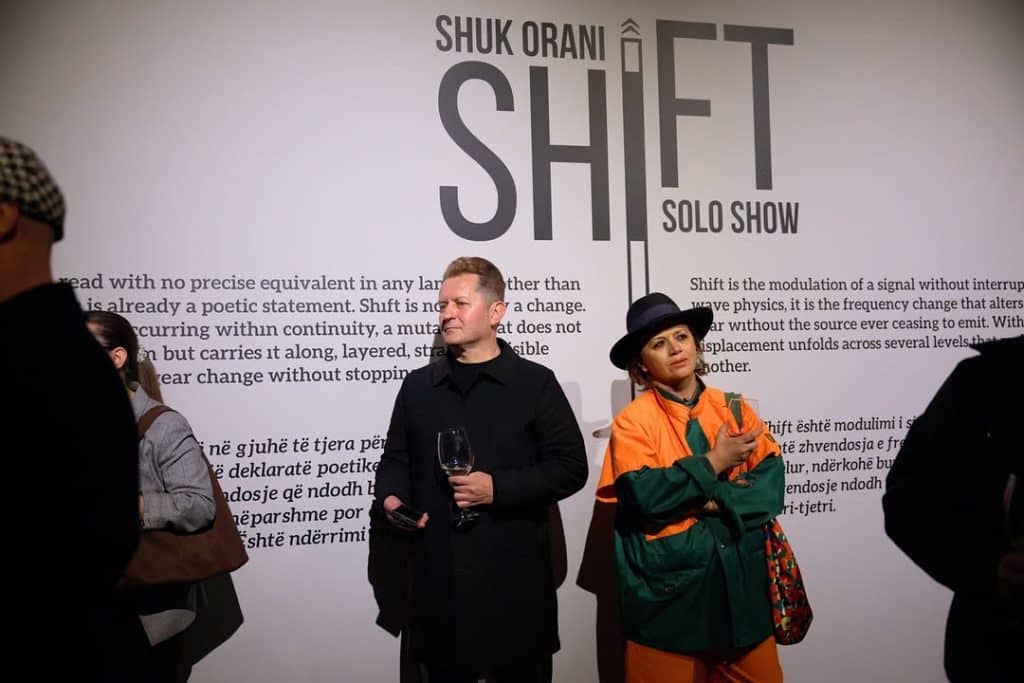
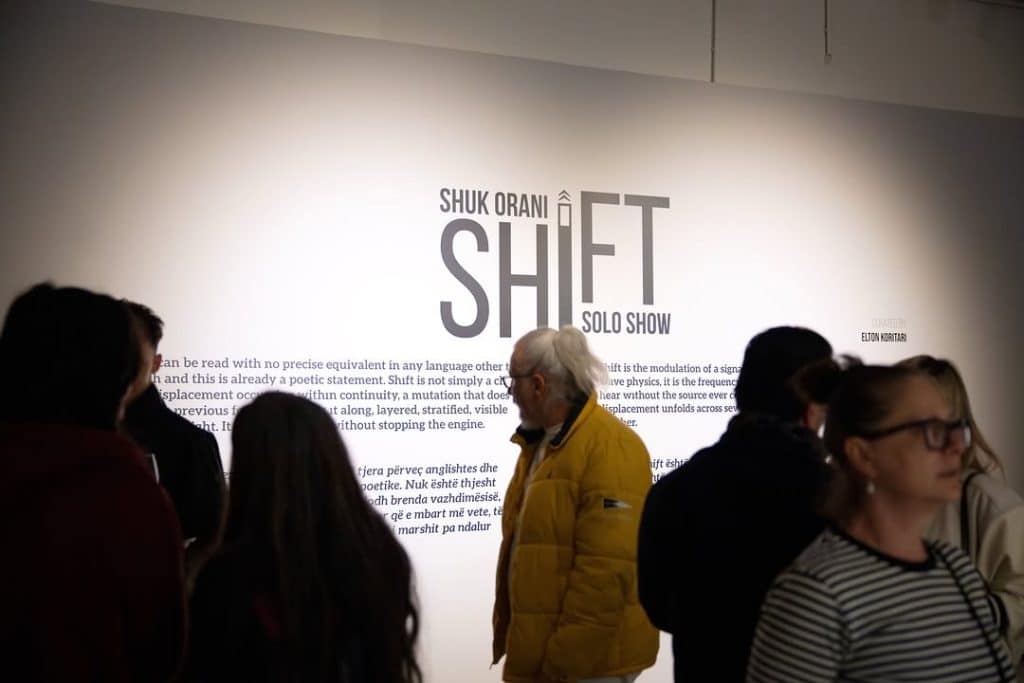
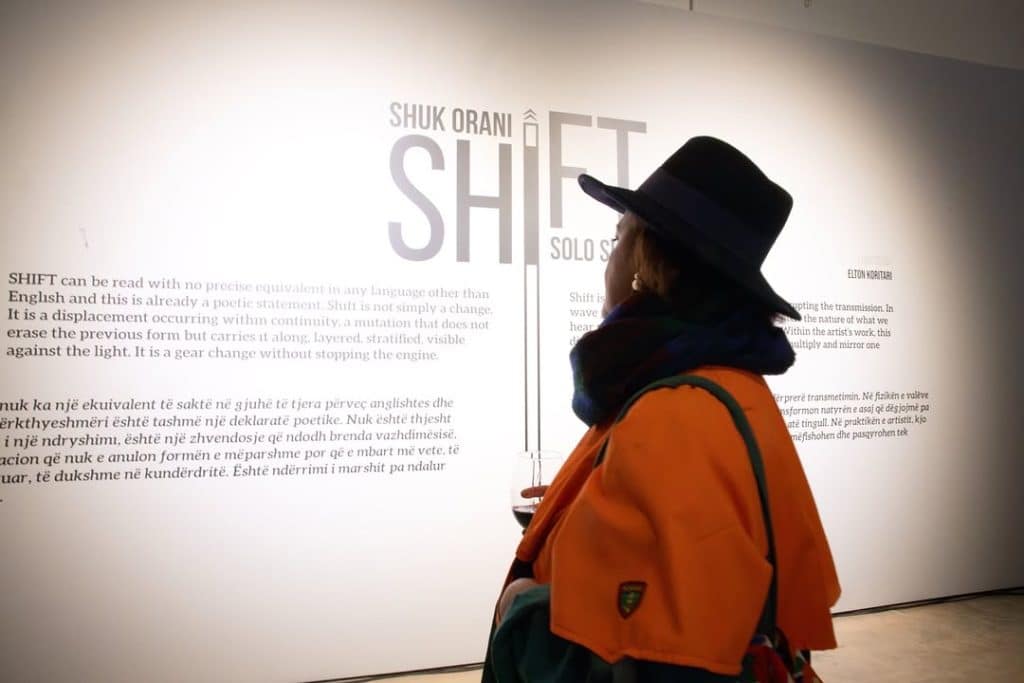
“Shift” has no precise equivalent in any language other than English, and this untranslatability is already a poetic statement. It is not simply a change. It is a displacement occurring within continuity, a mutation that does not erase the previous form but carries it along; layered, stratified, visible against the light. Shift is a gear change without stopping the engine. It is the modulation of a signal without interrupting the transmission. In wave physics, it is the frequency shift that alters the nature of what we hear without the source ever ceasing to emit.
In this sense, SHIFT is not a descriptive title. It is an operative structure; the model through which Orani’s entire practice can be read. Within the artist’s work, this displacement unfolds across several levels that multiply and mirror one another. There is the shift of the hand: the painterly gesture that settles onto the canvas as the trace of an intention that, at the very moment of action, has already become something else. There is the shift of the medium: when Orani overlays his layers of paint onto reproductions of works by Pablo Picasso, he does not quote, pay homage, or destroy; he displaces. The history of painting is neither revered nor denied; it is made to flow beneath a new surface, transformed into a substratum, an invisible pressure shaping the chromatic field without appearing within it.
And then there is the most radical shift: the moment when the artist encounters his own digital double, the avatar that studies him, replicates him, anticipates him, and reveals how much of the creative act can be learned, and how much instead resides precisely in what refuses to be codified
ACT I: LIGHT
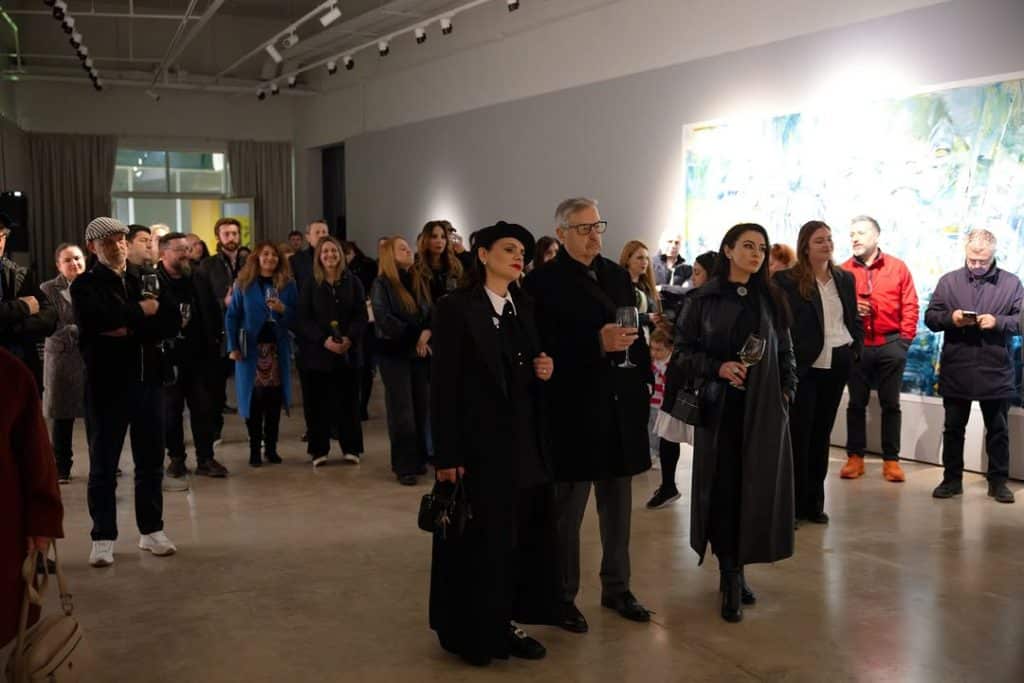
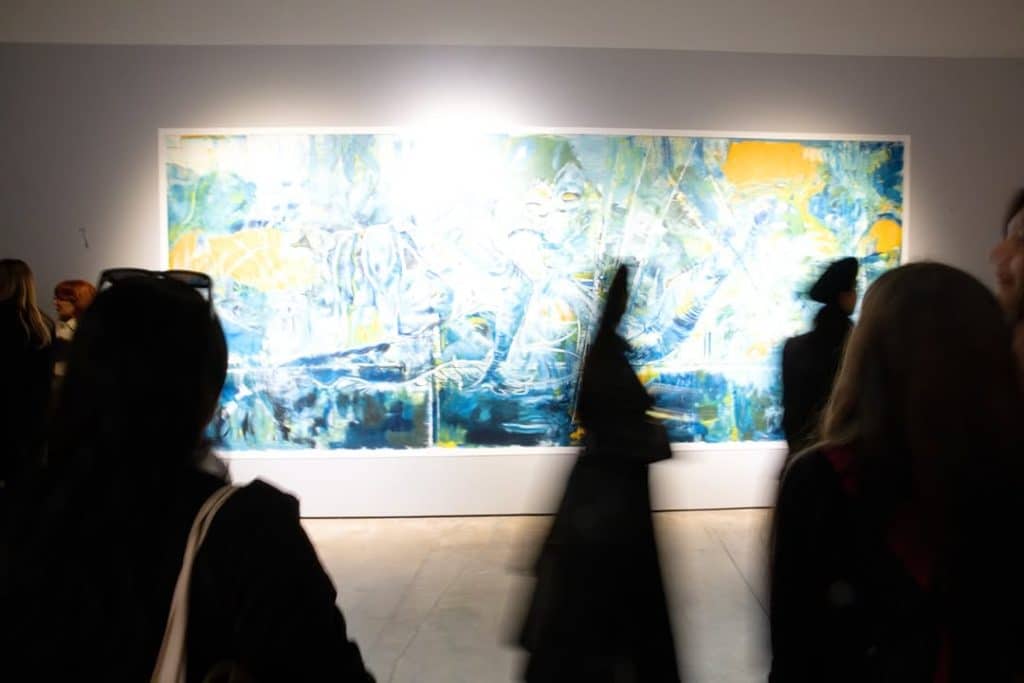
The visitor enters the first space and recognizes the territory. The light is calibrated, museum-like. The works are illuminated according to the gallery rules: canvas in its entirety with details accessible, every surface legible. Two monitors face each other in the space. Orani’s digital avatar speaks with itself, responding to questions, processing inputs, generating answers. A documentary projection shows the artist at work.
Everything is visible. Everything is classified. The visitor feels competent, supposes to understand.
So, this first pavilion is the domain of artificial intelligence translated into exhibition space: the logic of total visibility, transparency as ideology, information offered whole and without resistance. The artwork here is accessible because the “machine has decided” what to show, how to frame it, and in what light to place it.
The visitor consumes; they do not quest. They look; they do not discover. It is a comfortable condition of knowledge and like all comfort, slightly deceptive.
ACT I: LIGHT
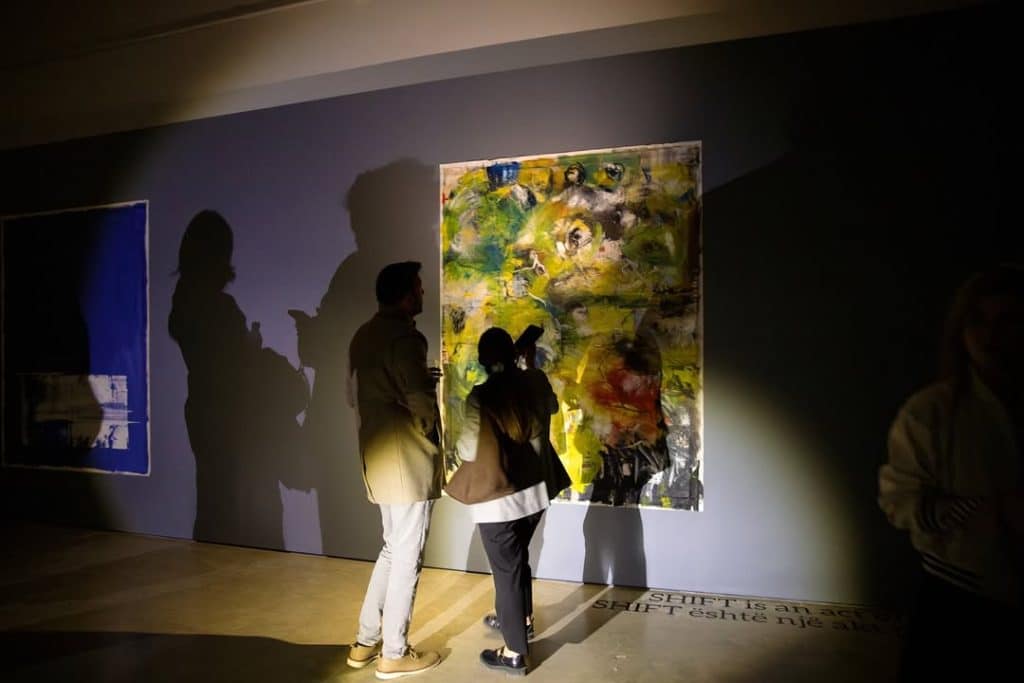
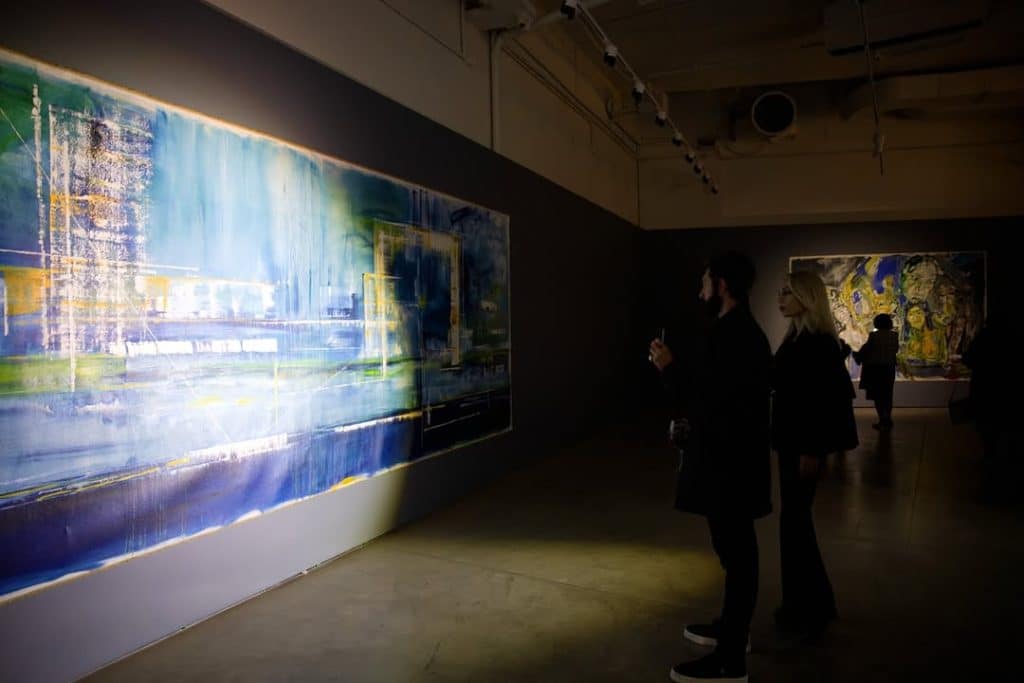
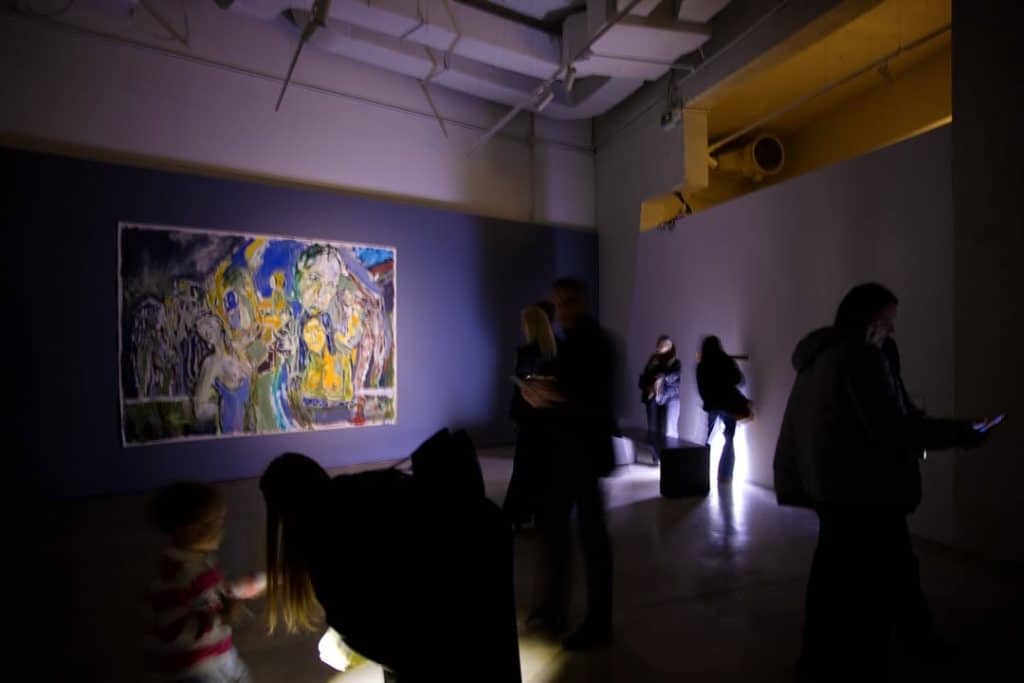
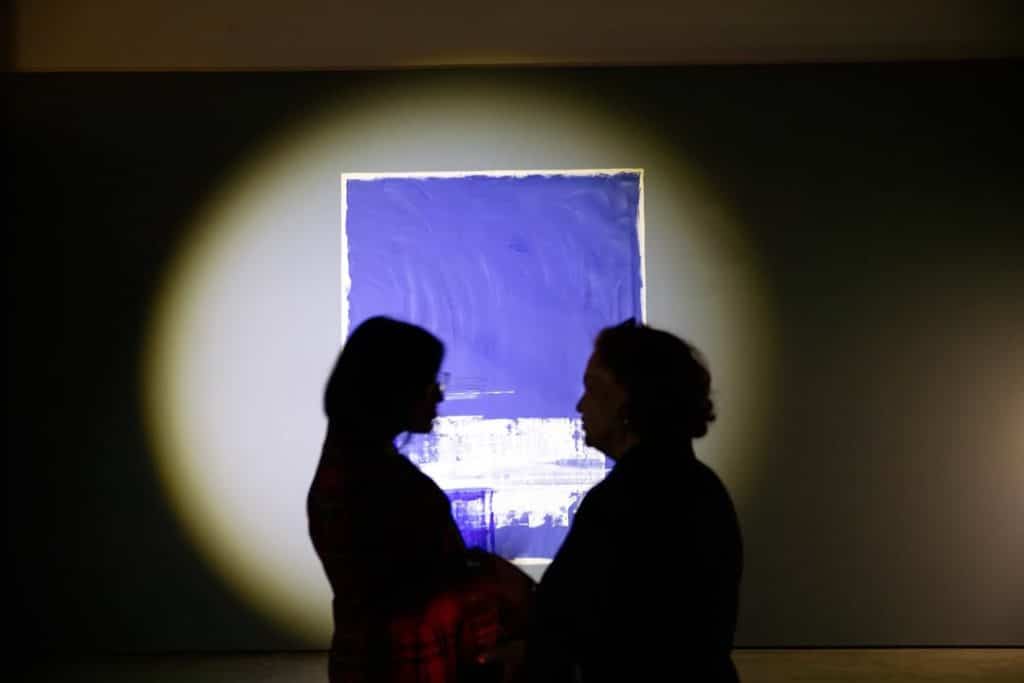
Then the visitor shift to the second room and the comfort disappears. The darkness is over-all, not a theatrical darkness, not a romantic dimness, but a darkness that interrupts. The works are there, yet they are no longer offered, accessible or free.
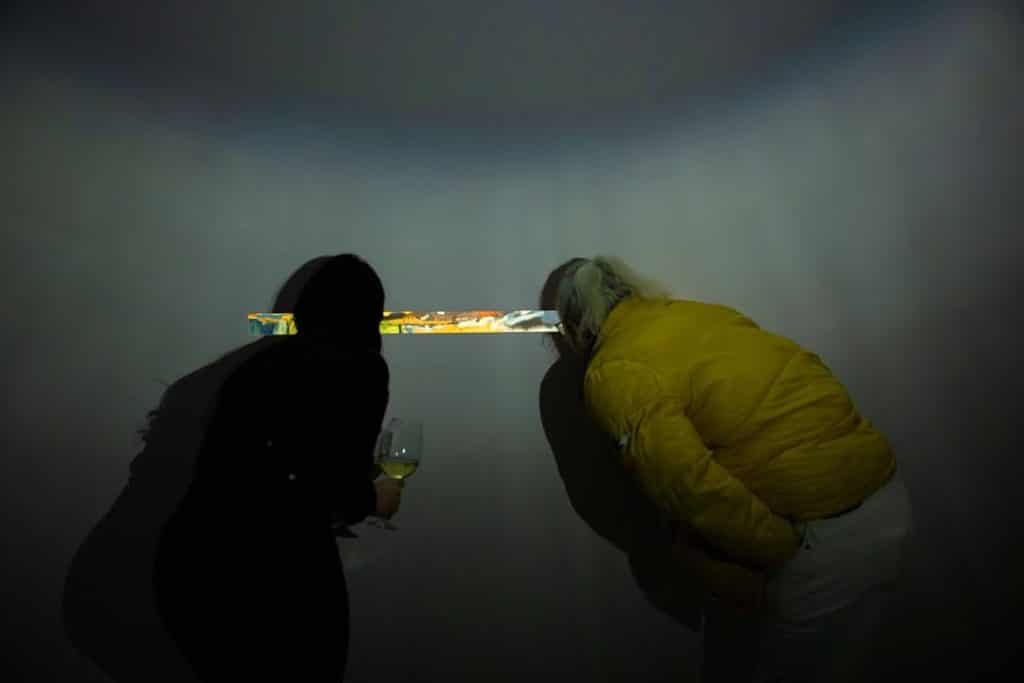
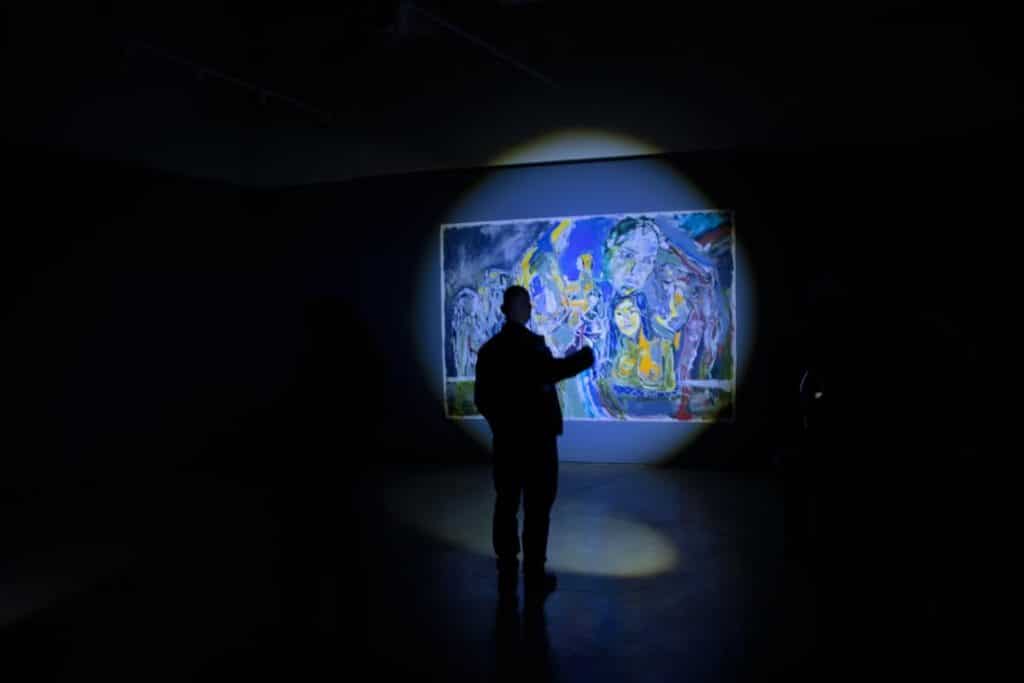
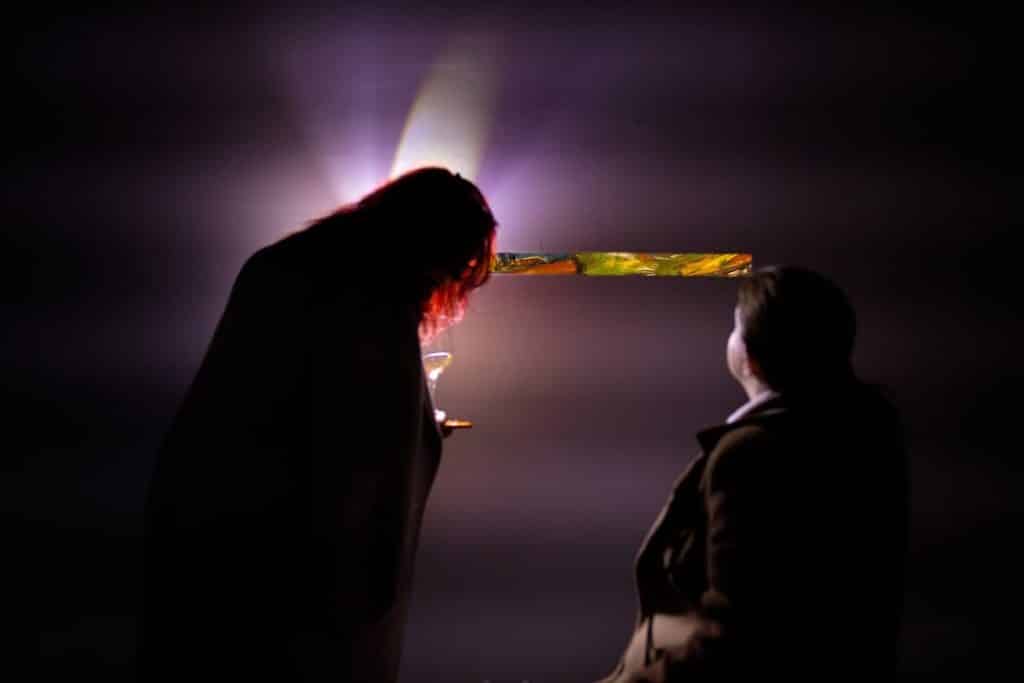
Hidden behind a wall built specifically for the exhibition, visible only through a slit, fragments of a paint glimpsed the way one spies something private, something never meant to be fully seen. The other works exist within the darkness, unreachable until the visitor picks up a flashlight and chooses where to look.
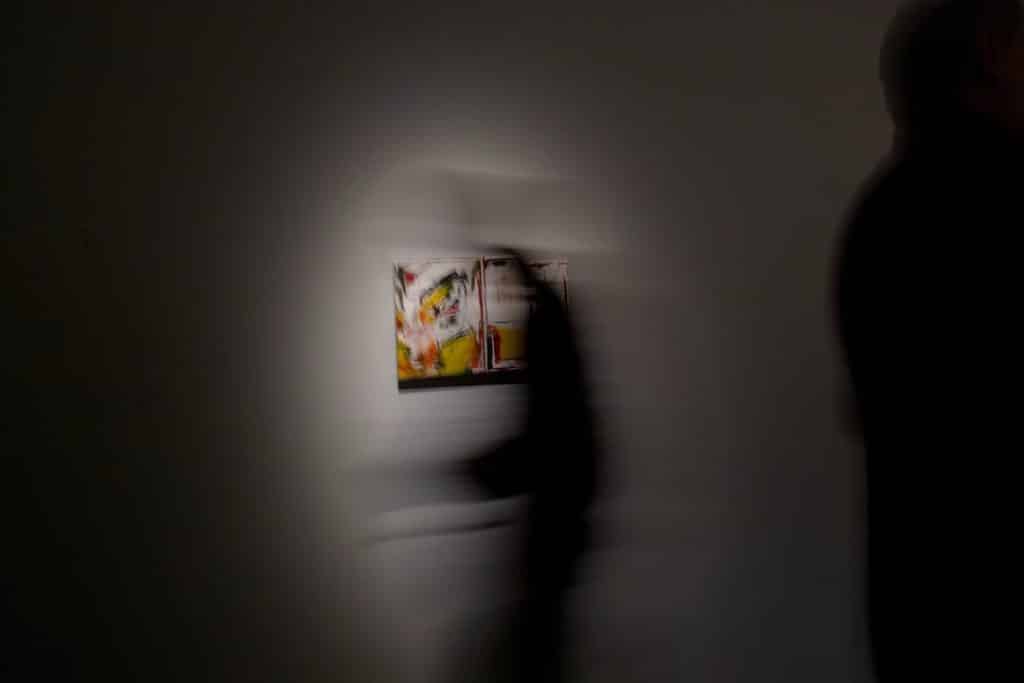
The flashlight is the antithesis of the algorithm; The algorithm optimizes vision: it determines relevance, hierarchizes attention, organizes what deserves to be seen. The flashlight knows nothing. It illuminates wherever the body directs it, wherever curiosity leads the hand, wherever instinct suggests searching.
The visitor becomes the author of their own experience of the work. The fragment illuminated is the fragment seen, and what remains in darkness stays a hypothesis, an intuited presence, an edge of colour glimpsed and then lost.
No visitor will see the same work in the same way. No one will carry away the same painting in memory.
The slits in the wall are perhaps the most radical gesture in the entire exhibition. A hidden work is not an absent work: it is a work that resists. The slit is not a window. It is a limit imposed on vision, a reminder that the artwork possesses its own sovereignty, that it owes nothing to the gaze that observes it.
One spies, glimpses, imagines the rest.
It is precisely what the machine cannot do: it cannot not know where to look; it cannot inhabit incompleteness as a productive condition. The passage from one room to the other, from one act to the next, yeah, this is the exhibition shift. Not a metaphor for it: the physical act of crossing the threshold between the two spaces is the moment when the concept ceases to be a concept and becomes a bodily experience. The competence acquired in the first room does not disappear. It transforms, it becomes insufficient and in that insufficiency, something opens: the awareness that the work always contains more than what light reveals.
SHIFT is an act of presence. But presence here is neither simple nor guaranteed. It must be sought in the dark, centimetre by centimetre, with the hands and with light as art has always asked us to do, even when no one said so explicitly.

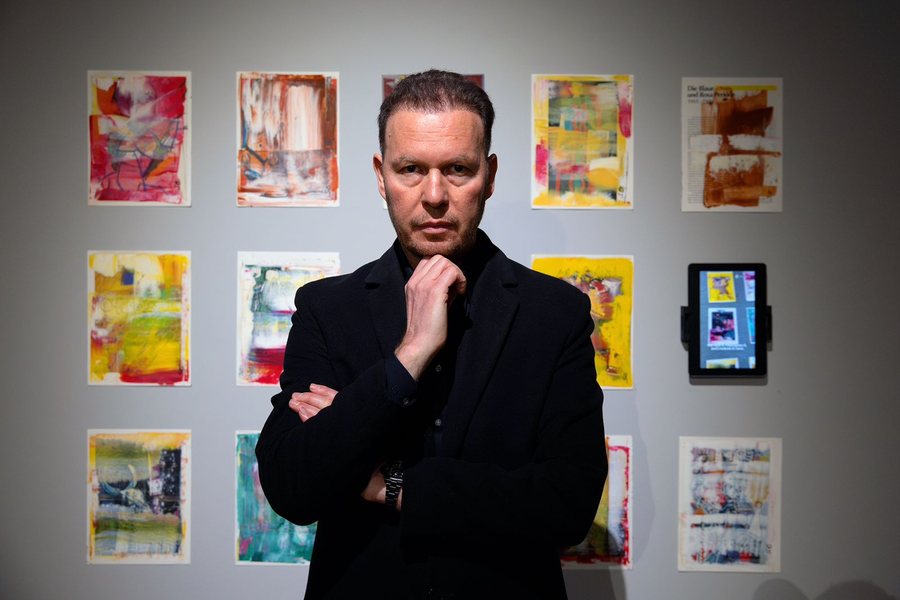
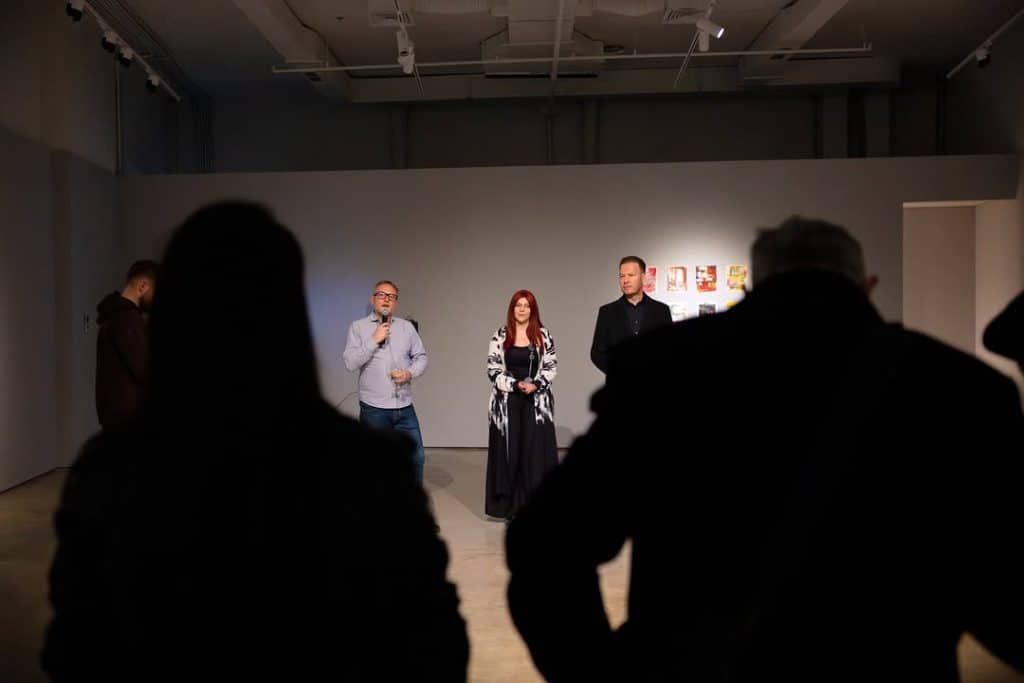
Talk With The Artist
Podcast
