“Tirana Castles and Fortresses” – Workshop
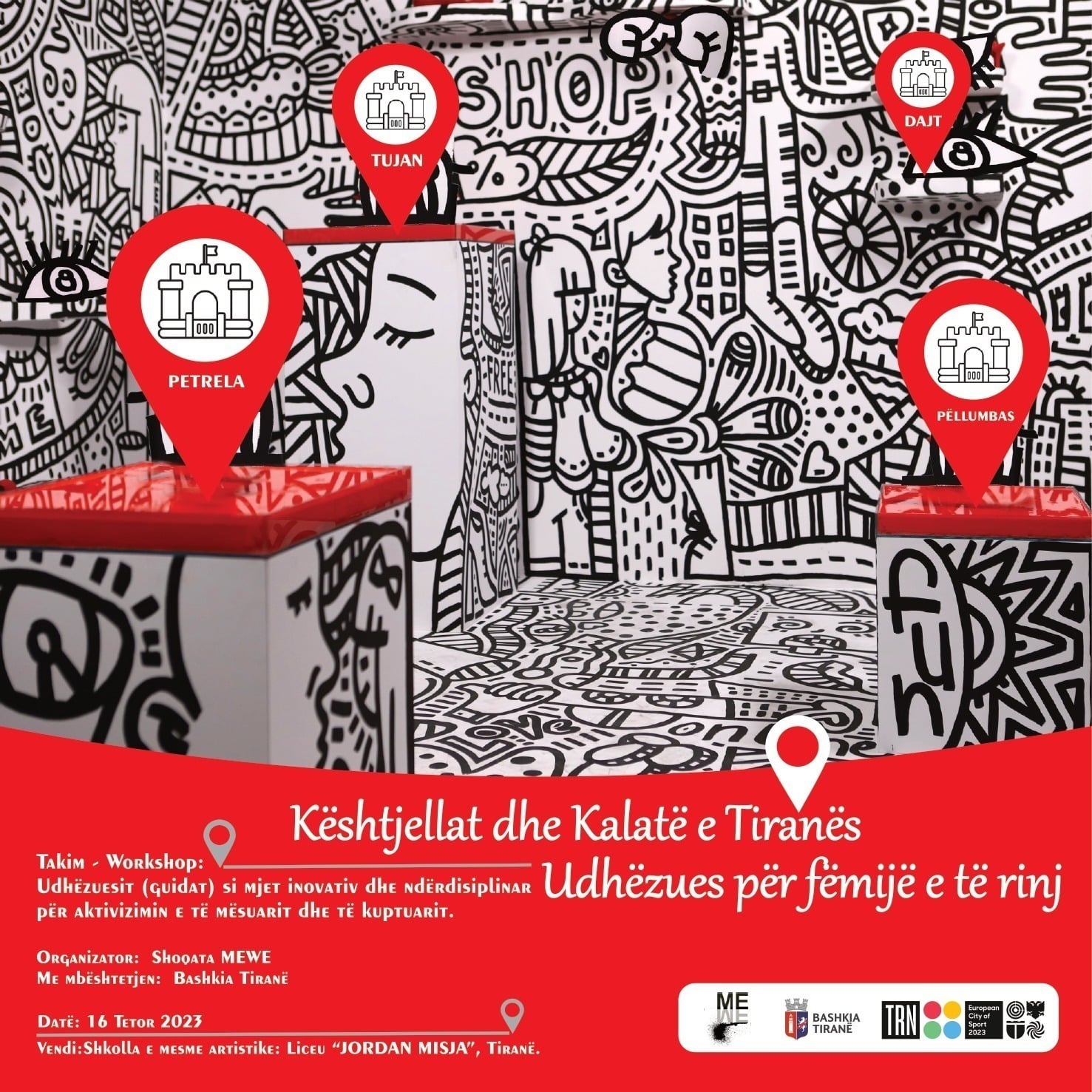
This week, Family Art Guides organised two workshops as part of the project “Tirana Castles and Fortresses – A Guide for Children and Young People”.
One of the meetings was held with pre-university teachers and educators, while the second workshop was held with art students, creating two important spaces for dialogue and collaboration around education through cultural heritage.
Guides as an innovative and interdisciplinary tool for activating learning and understanding.
Workshop with teachers and educators
As part of the project “Tirana Castles and Fortresses – A Guide for Children and Young People”, a workshop dedicated to university lecturers and pre-university teachers was held, aiming to present in detail the concept, objectives and methodology of the initiative.
The meeting focused on the role of education through Cultural Heritage as a direct tool for strengthening national identity and developing civic competences in children and young people. Both formats of the guides were presented, the traditional (print) and the digital one, as teaching instruments built for two different age groups, with the aim of making them easier to use in class, on study visits or in extracurricular activities.
Moments from the workshop:
During the workshop, discussion covered the preparation of historical and artistic materials, as well as the importance of involving schools in structured visits to sites such as Tirana Castle (the Fortress of Justinian), Petrelë Castle, Prezë Castle, Ndroq Castle or the ruins of Dajti and Persqop, turning them into open learning laboratories.
An important part of the discussion was devoted to the cross-curricular dimension of the project. Teachers and educators shared experiences on how history, art, geography and the social sciences can be woven together through the use of the guides, activating meaningful learning and metacognitive reflection among students. The importance of the transition from “digital natives” to “digital citizens” was also emphasised, where the use of technology serves as a tool for awareness rather than merely for consuming information.
The workshop strengthened cooperation between the project team and the education community, laying the groundwork for the concrete implementation of the guides in teaching practice. It confirmed that this project is not just a publication or a cultural product, but a long-term platform for education, cooperation and social awareness.
Museum guides for children and young people as an important tool in visual art practice
Presentation workshop with UART students
As part of the project “Tirana Castles and Fortresses – A Guide for Children and Young People”, a presentation workshop was also held with students of the University of Arts. The meeting served as an important step in building dialogue between the project's concept and the creative contribution of the younger generation.
Moments from the workshop:
During the workshop, the idea, concept and objectives of the project were presented in detail, with particular emphasis on the importance of education through Cultural Heritage and the need to create guides dedicated to children and young people. The students were introduced to the structure of the physical and digital guides, to the fieldwork documentation methodology, and to the challenges involved in communicating history to younger age groups.
A key part of the discussion was the role of graphic design, illustration, photography and technology in building a contemporary, accessible and interactive teaching material. Students were invited to contribute ideas on the visual identity of the guides, on how information should be organised, and on creative approaches to making heritage more understandable and engaging for children.
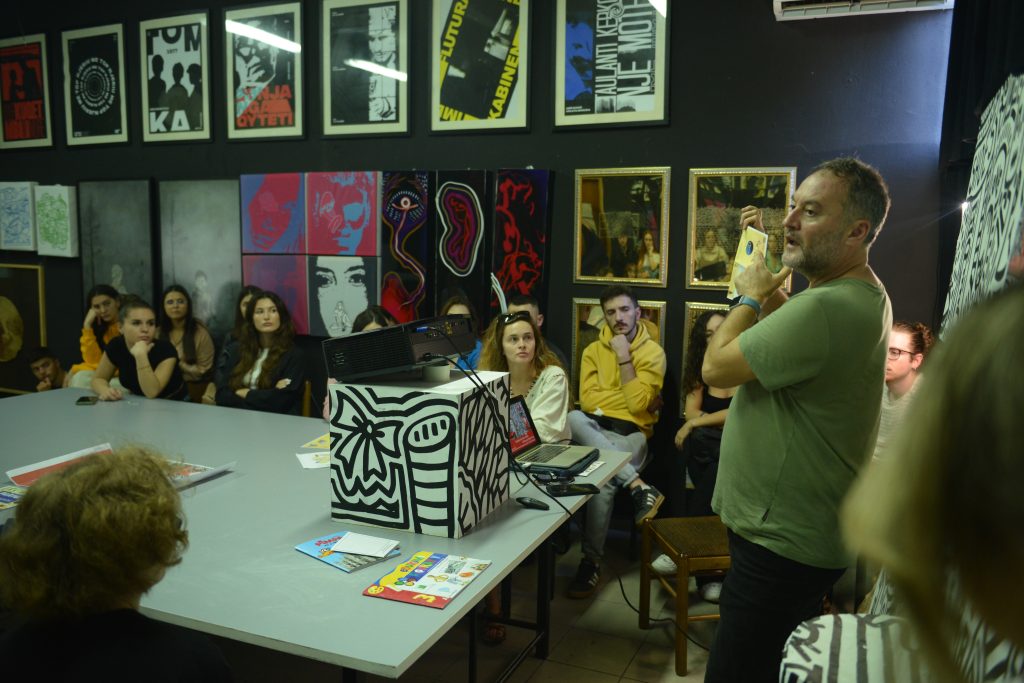
The workshop was not just a formal presentation, but a space for conversation and critical reflection on the current state of Tirana's castles and fortresses, on the lack of public information, and on the responsibility that art and design carry in processes of social awareness-raising. Through discussions and initial conceptual ideas, the groundwork was laid for the active involvement of students in the further phases of the project.
This meeting confirmed once again that interdisciplinary collaboration is the key to carrying out initiatives with long-term impact. The involvement of students not only enriches the project with fresh energy and new perspectives, but turns it into a two-way educational process, where learning and creation move forward in parallel.
This Family Art Guides project is organised by the MeWe Association and EJAlbum, with the support of the Municipality of Tirana.
See also: