
PRESSURA 2023 – NOMADIC EXHIBITION
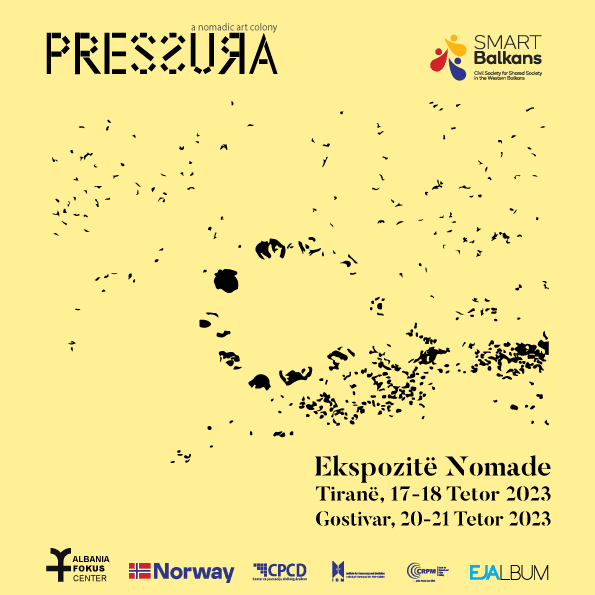
NOMADIC EXHIBITION
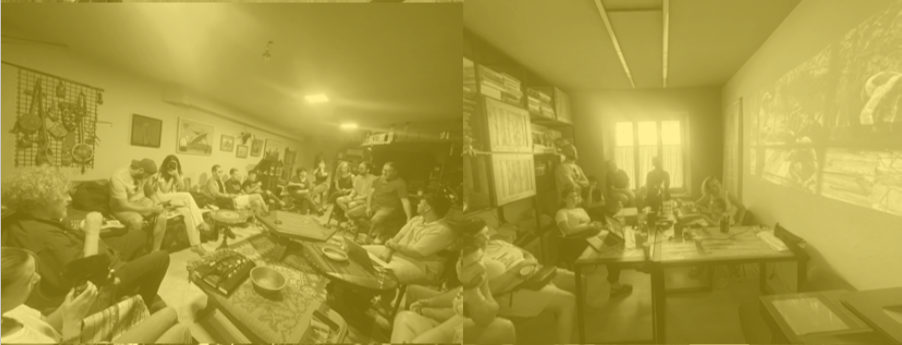
Pressura is a nomadic colony of artists dedicated to social photography. The photographers and artists engaged in the project develop a sense deeply oriented toward storytelling as a tool that is both ancient and modern, to tell the often complex reality of our region, and to fight public disinformation by authenticating reality according to their own ethics and conscience. Further, by creating an environment with a deeply formative character while at the same time fostering cultural and professional exchange among photographers — with the aim of strengthening their critical spirit — Pressura has the ambition to become a genuine artistic and ethical movement and to help this class of professionals orient themselves toward social photography, as an artistic sensibility and a stance toward contemporary social-historical reality. Pressura is an urgent need of Albanian art, to develop the premises for creating a photojournalism inclined not only toward the news, but toward its contextualisation and authorial analysis.
Albanian photojournalism has been among the artistic practices most subjugated and used by the dictatorial regime, and almost solely a tool of its propaganda. Furthermore, this sector of journalism, but also of Albanian art, has suffered and continues to suffer deep isolation from the Western world, in terms of the exchange of ideas, experience, practice, etc. Reduced editorial budgets, declining trust in the press, its control by those in power, the growing danger for photojournalists as they become targets amid events or conflicts — driven by the increased demand for “spot” image consumption — declining interest in news (public apathy) and its rise for so-called “gossip”, social networks and the exponential growth of images on them, are just some of the factors that risk endangering the future of photojournalism, especially in our regions, where the socio-cultural shock absorbers against these blows, as well as the experience in dealing with them, are almost entirely absent. All of this, directly and indirectly, further affects concrete everyday problems that undermine our society today, the preservation of Collective Memory, and the future integration of Albanian society into the Euro-Atlantic one.
The exhibition itself aims precisely to show the local public that photography can become a powerful expressive form of social reality and a catalyst for public debate, through stories that convey the human condition, needs, dramas, but also the complexity of the way of life in these regions. In this light, this exhibition is dedicated not only to photographers or the art scene, but to the whole public, and especially to the space of free and independent thought. The participation of photographers in this nomadic colony — on a shared journey among themselves, the organisers, the lecturers and the guests — where the expected outcomes of this public intervention, with its deeply artistic character, must necessarily also be seen as an attempt to curb the ongoing distortion of information and to turn photography into a trustworthy source of information in its own right.
Press on the exhibition: The “Pressura” exhibition
Artists taking part in the exhibition:
David Cuka / Vlasov Sulaj / Korab Basha / Enza Rripaj / Vigan Demiri / Marsej Fuçia / Majlinda Dedaj / Ber Abdulahi / Arben Alliaj / Bledar Hasimi / Anjeza Mema
“999”
David Cuka
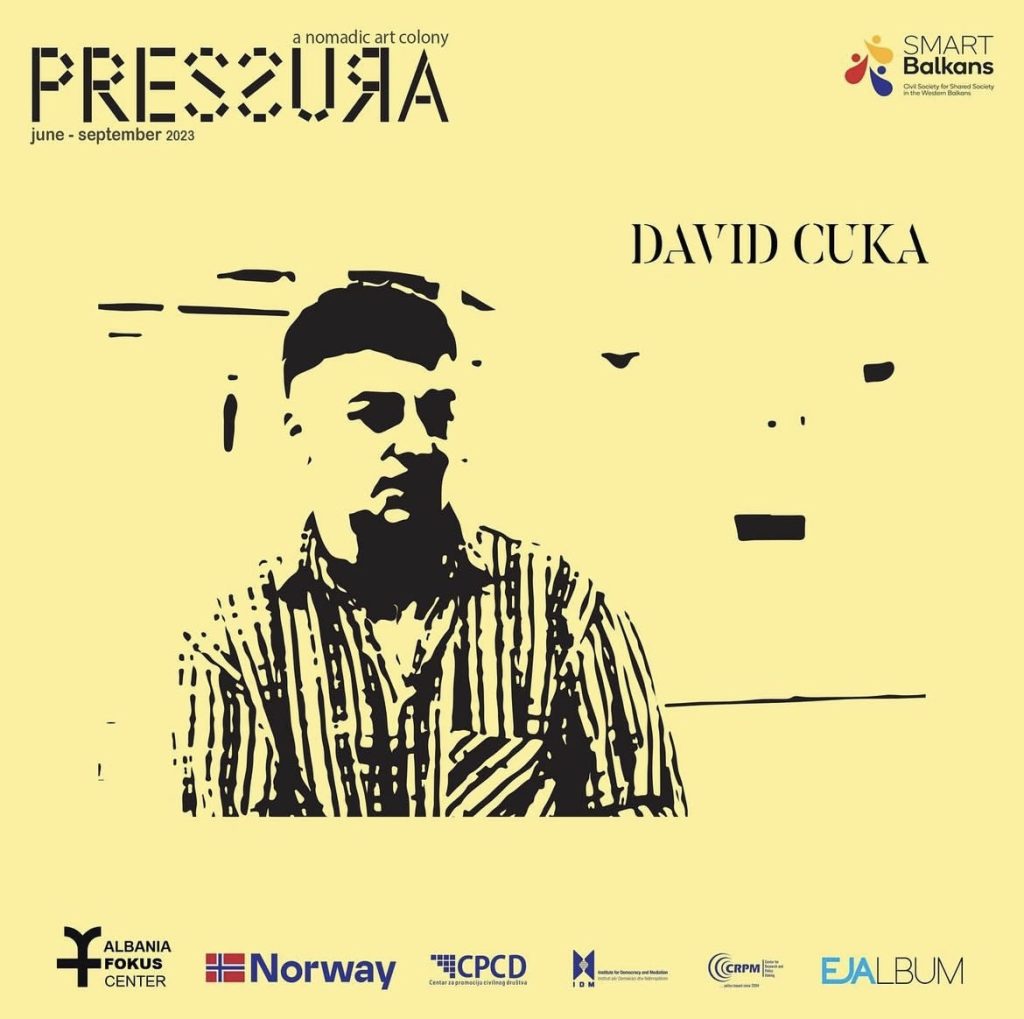

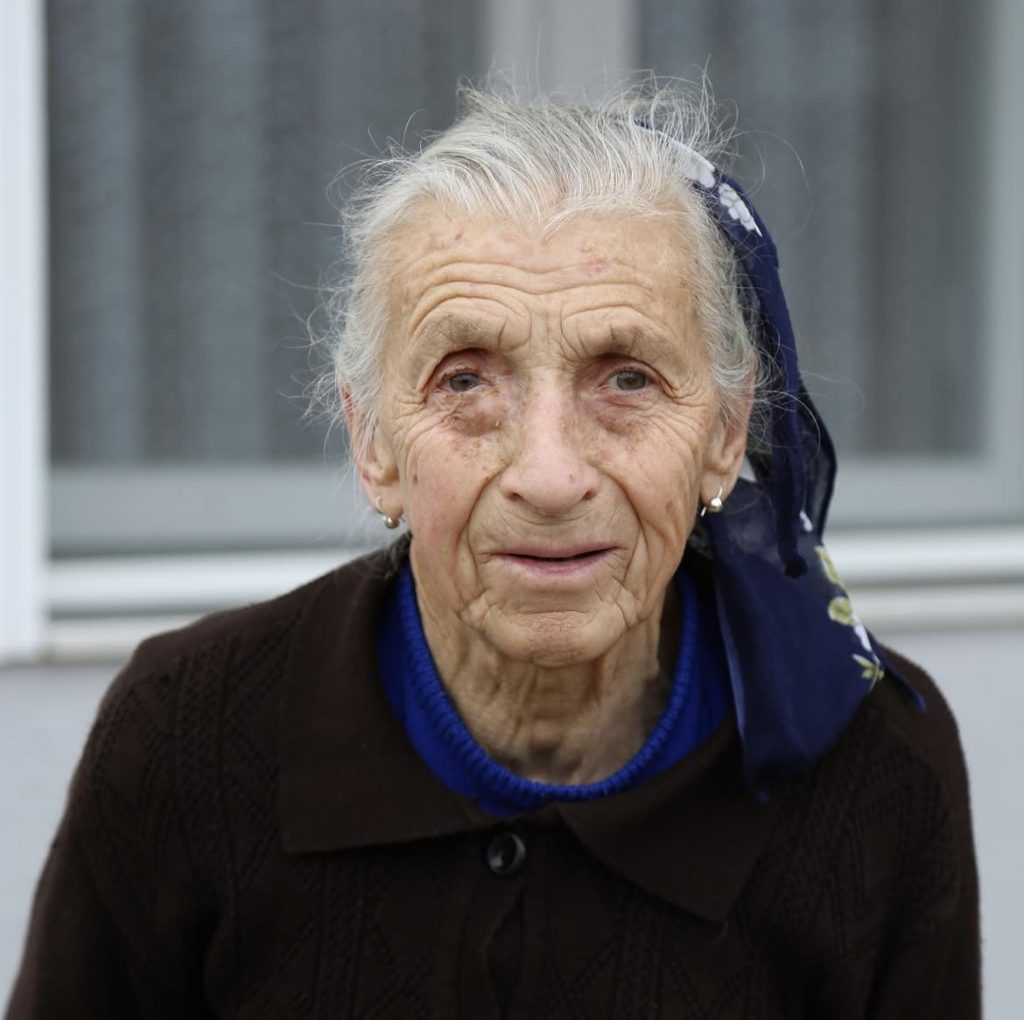
David Cuka is an Albanian artist who has chosen the medium of photography to document mainly issues related to human rights. In the project “999 Portraits” he has pointed the camera's lens at his subjects, inviting them to simply be themselves, without making any distinction whatsoever, in any respect. David Cuka has developed and widely published his work in local and European media and has opened several exhibitions in Albania. Through photography, the artist raises and promotes awareness of social equality and women's rights, and advocates against the discrimination of the LGBTI+ community in the country and the region, a community to which he himself belongs, as a transgender person.
“The weaving together of these portraits comes as a work in progress, after the successful completion of the first series —
carried out over a period of 4 years — with its origin in August 2019 and ending with a series of exhibitions
at the most prominent and important institutions in Albania in October 2022. These portraits come as a result
of 3 new series begun this year, out of a need to go deeper and to further address different problems and
approaches to the times we are currently living through in Albania. And so, I set out again on my journey, from the north of
Albania to the south, from the mines of Bulqiza to the fields of Myzeqe. Every difference in the portrait of each person
who has been captured by my camera brings, through this series, a diversity; it brings the problems, the changes and the ways
in which we look at Albania and how it truly is. It undoubtedly brings a confrontation between the young and the
elderly, without forgetting a series of portraits that include foreigners from every country in the world, for whom there is no possibility
of travelling to these places, and it likewise brings an artistic confrontation of cultures arriving through this third series
of 999. Can a portrait, or a few series of photographs, convey all of this? As they are, without filters,
straight into the camera, eyes that flee — eyes that come but remain and take root in the Albanian Collective Memory,
also to create a space, to open up a political, social, artistic discussion — through a lens and through an
activist persecuted and bullied by Albanian society — prejudged solely for his existence as a transgender male
artist, alone in a small country like Albania, where being free and an artist costs a great deal.
UNCLE ALI
Korab Basha
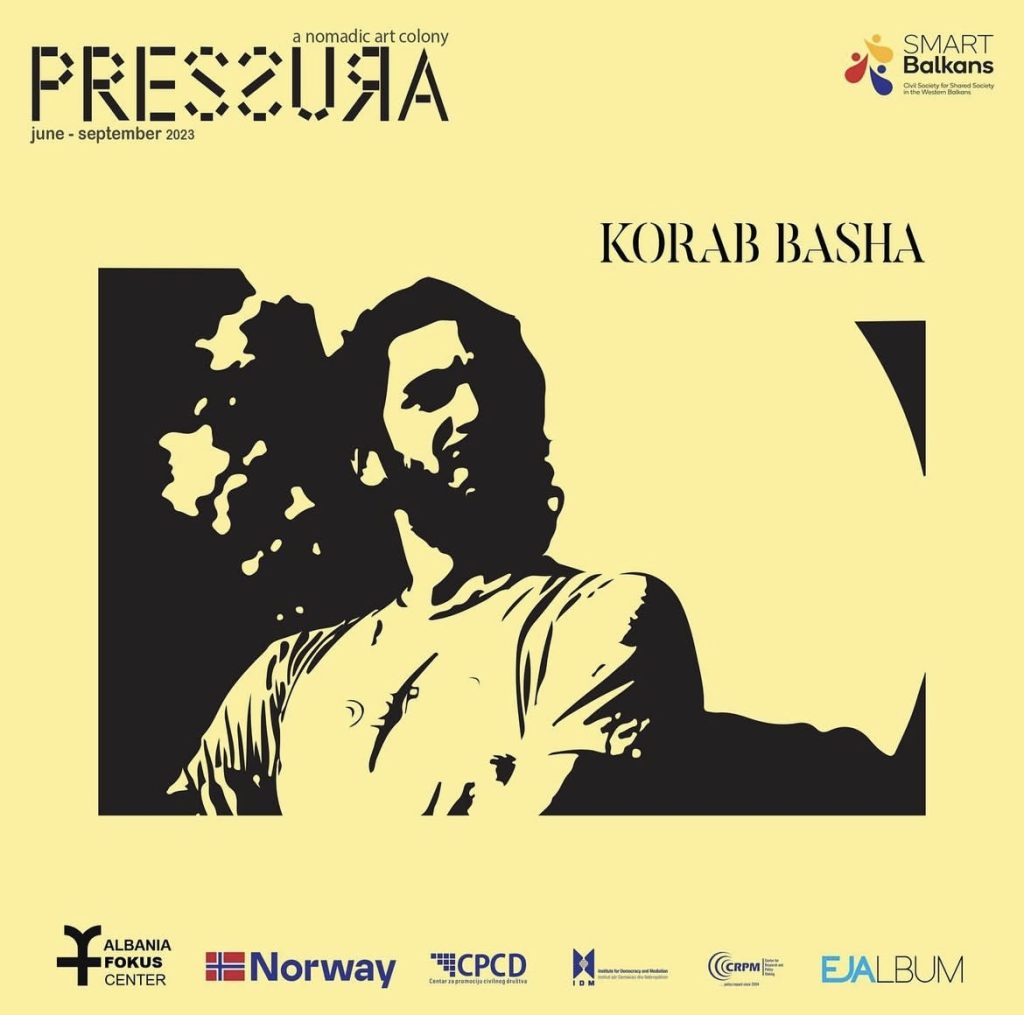
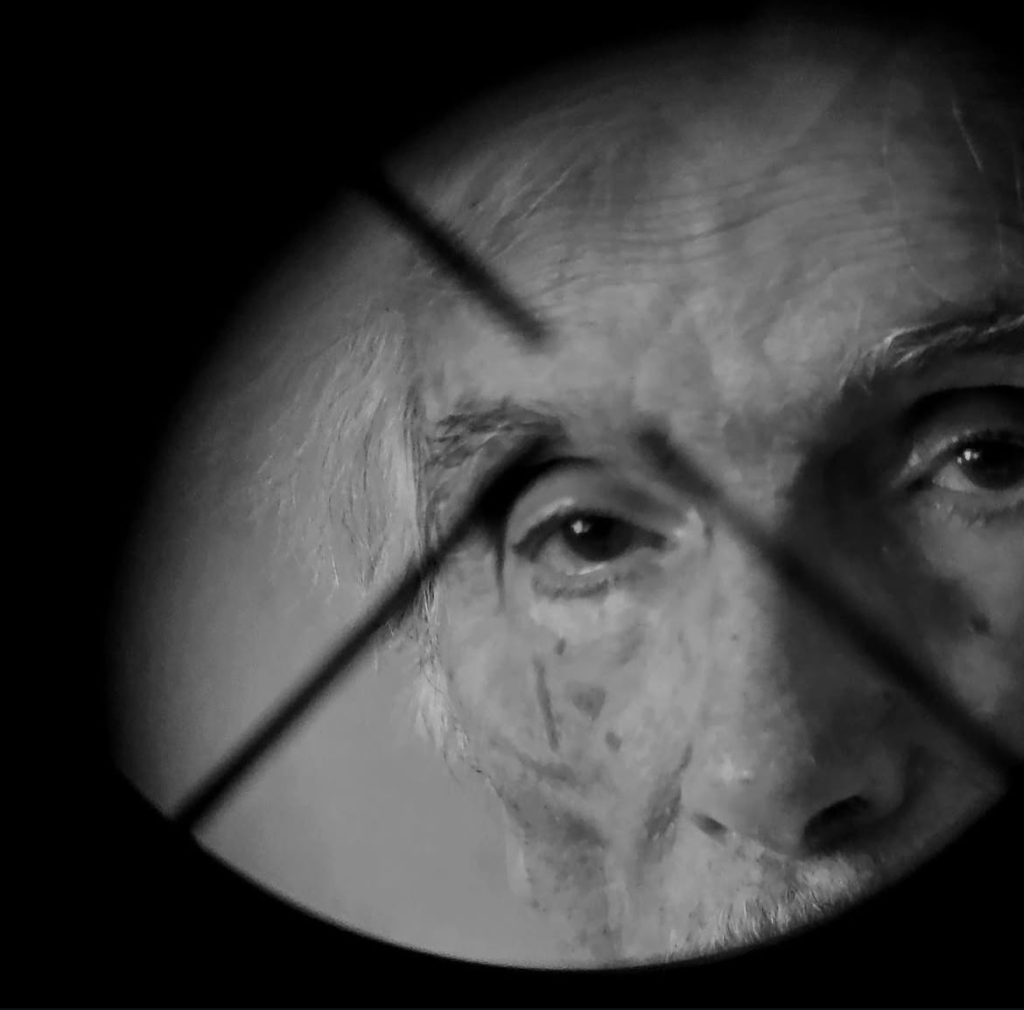
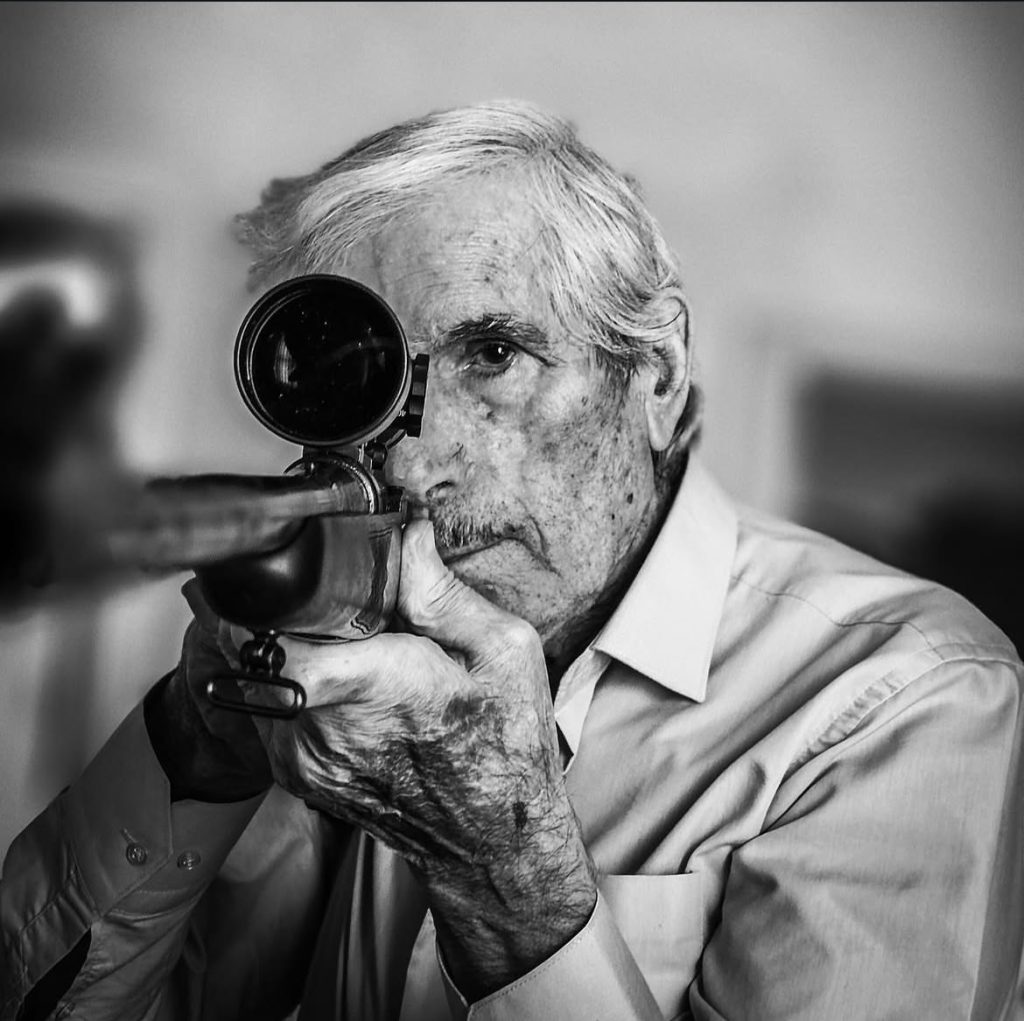
Korab Basha was born in 1984 in Pristina, Kosovo, where he still lives and has worked for years at one of the country's best-known daily newspapers. A graduate of the “Gjon Mili” Institute of Film and Photography in Pristina, for 15 years Korab has been an active photographer, also present on the art scene with two solo exhibitions and several
group ones under his belt.
“For some time, during the many meetings I hold for my work with various personalities, including those
from sport, I have met Ali Pllana, the champion marksman of the former Yugoslavia, who, in recounting his story,
describes the period of the Kosovo War, in which he contributed as a repairer of KLA snipers and as their trainer, while
always stressing that he himself never once aimed a weapon at anyone. Because war is also waged
this way — with tools, knowledge, and the experience of a born champion of the sport, and a silent hero.
Uncle Ali's story as a sportsman begins, by chance, on a distant day in 1944, when the Second World War had not
yet ended. Ali's brother, Ramadan Pllana, was cleaning his M-48 7.9mm calibre military rifle,
and, seeing the curiosity of the 5-year-old Ali, let him take a shot. Ali takes the rifle and hits the target,
on the dry tree his brother had set as the mark. This is how his sporting career begins; with his dedication, Ali Pllana
became an absolute champion of Marksmanship in Yugoslavia, winning championships such as in Skopje in 1962
in 1×5 cartridge shooting with an M-48 rifle at 100 metres, in Pristina in 1969, Ljubljana in 1978, or Kragujevac
in 1980 in the 2×10 or 3×120 cartridge categories with an M-98 rifle at 100 or 300 metres, in Berat in
1981 in Olympic Shooting with 1×40 cartridges with a standard KV rifle, or even in 25mm pistol shooting in
Belgrade in 1980. He tells me that after he was let go from his job in 1989, he still continued shooting,
mainly in a kind of illegal organisation of it in Kosovo. During the war years, together with Hajrush Demaj, they
organised logistics in Serovc, Podujevë, where they trained a group of KLA soldiers who had almost
no knowledge of weapons at all. Uncle Ali returned once again to help that unit, repairing weapons and
calibrating or tuning them, especially the snipers, for firing at a distance of 800 metres. When I asked
him whether he had personally ever fired a sniper rifle at a person, Uncle Ali answers immediately:
NO!
CHANCE
Enza Rripaj
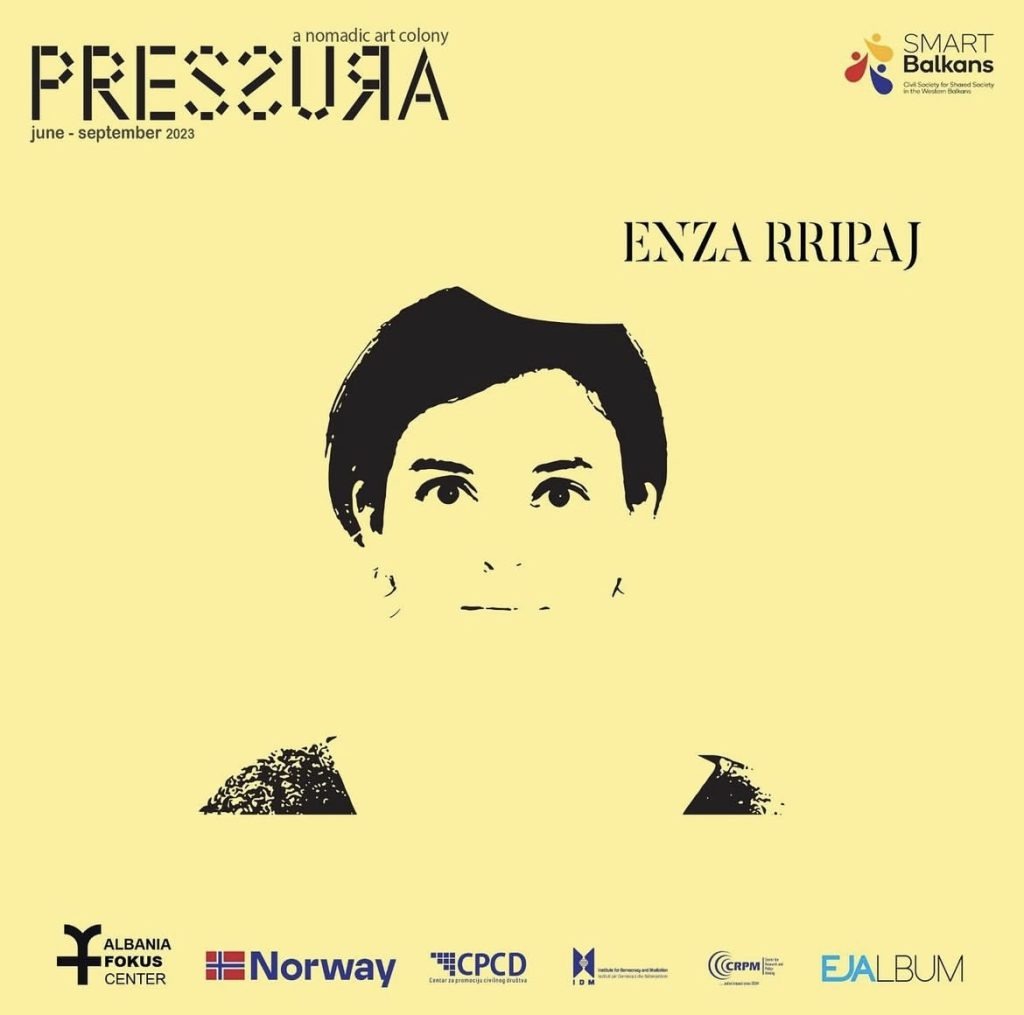
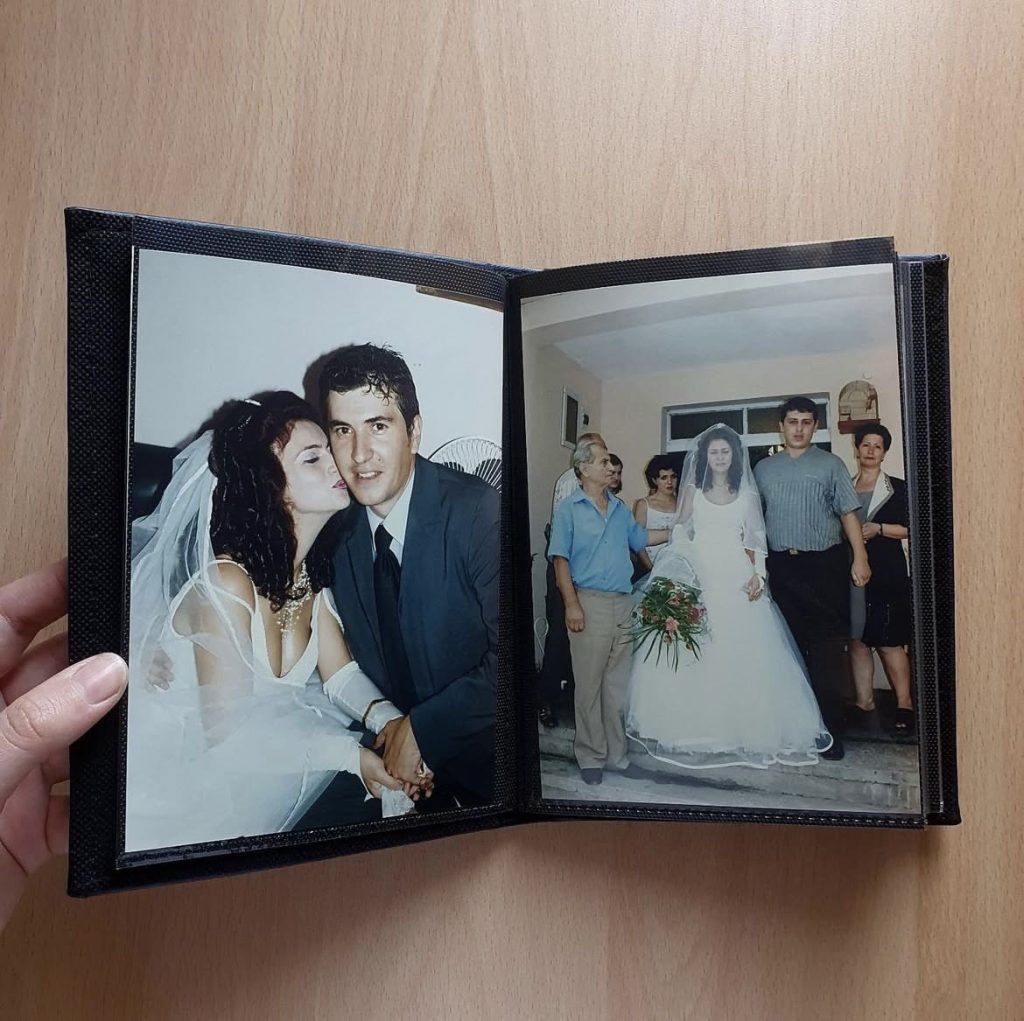
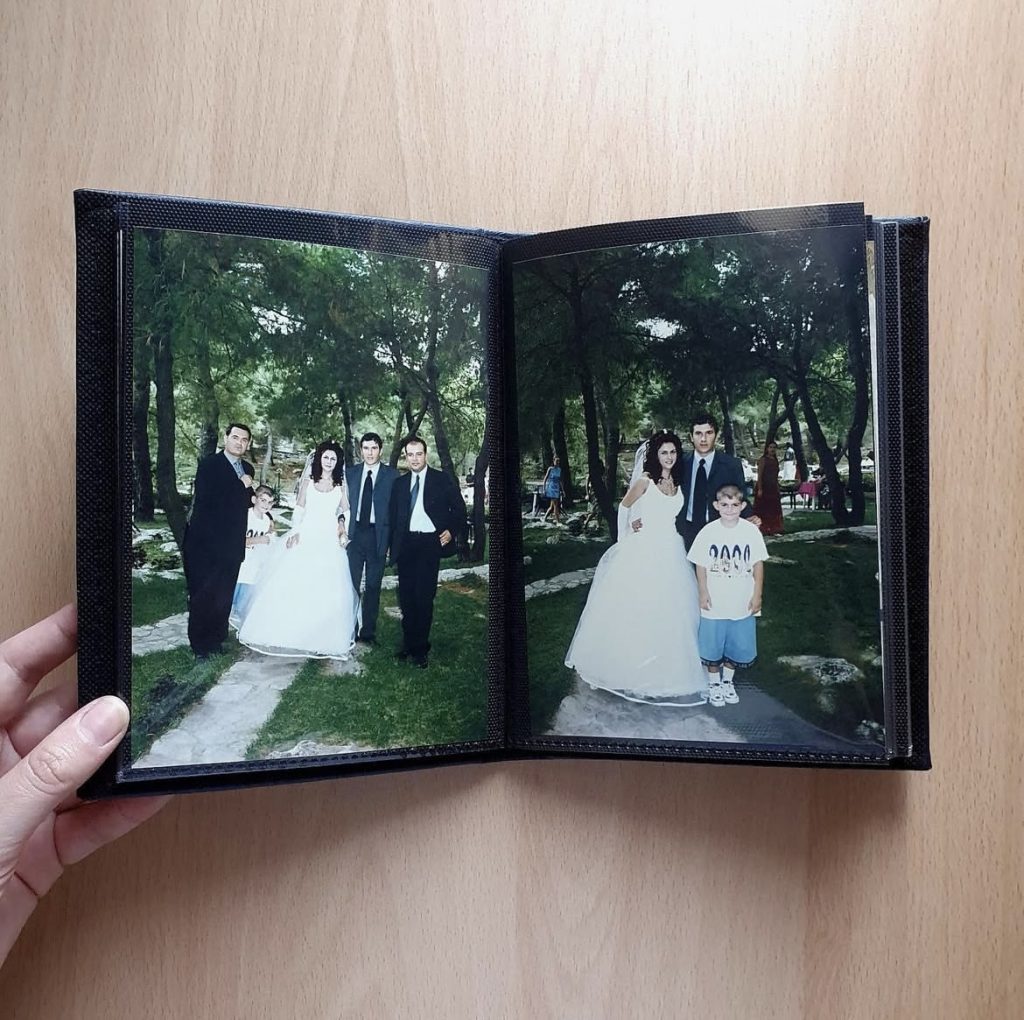
Enza Rripaj was born in 1995 in Shkodër. She currently lives in Tirana, where she is also studying at the University of Arts, in the Faculty of Fine Arts, Multimedia department, second year of Master's studies. Her artistic work is based on the concept of time and darkness. She works mainly in the medium of video, photography, installation, including
writing.
“Photography is a tool of memory and a very common mnemonic device, and this is one of the reasons for
family photography. There are many families that own at least a few photographs, such as: wedding photos,
identity-card photos, school photos, etc. The function of memory can lead both to the preservation and to the destruction
of photographs. The 12 photographs in the album were taken from a film reel that I found in the street. It's clearly
a wedding, let's say from the year 2000, and this part of the film shows the moment the bride is taken
from her home. It is well known that the ceremony of taking the bride is one of the most important parts of an Albanian wedding,
a tradition that continues to this day. However, what gives meaning to this whole development is its starting point, the moment of finding
the film, of my time meeting a distant and foreign time and context, now made close and
personalised.”
MOULDY
BER ABDULAHI
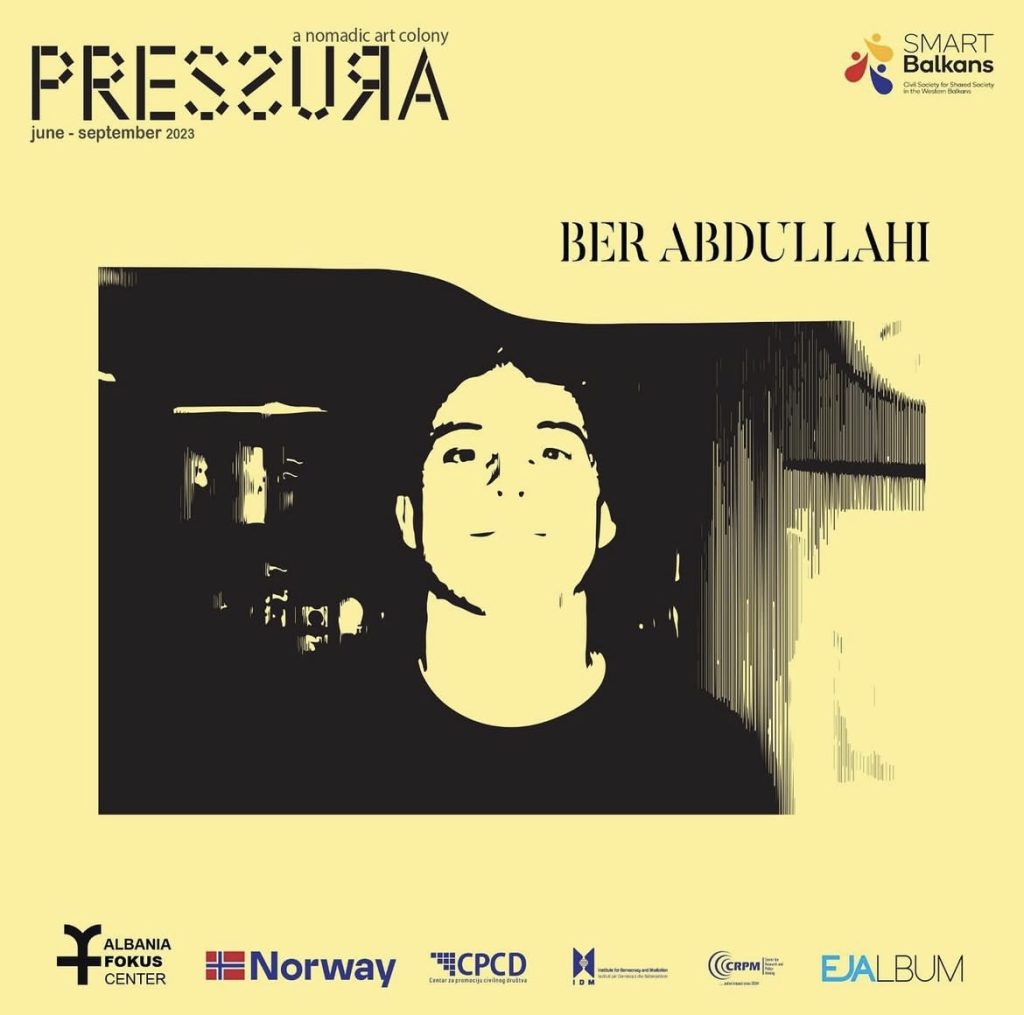
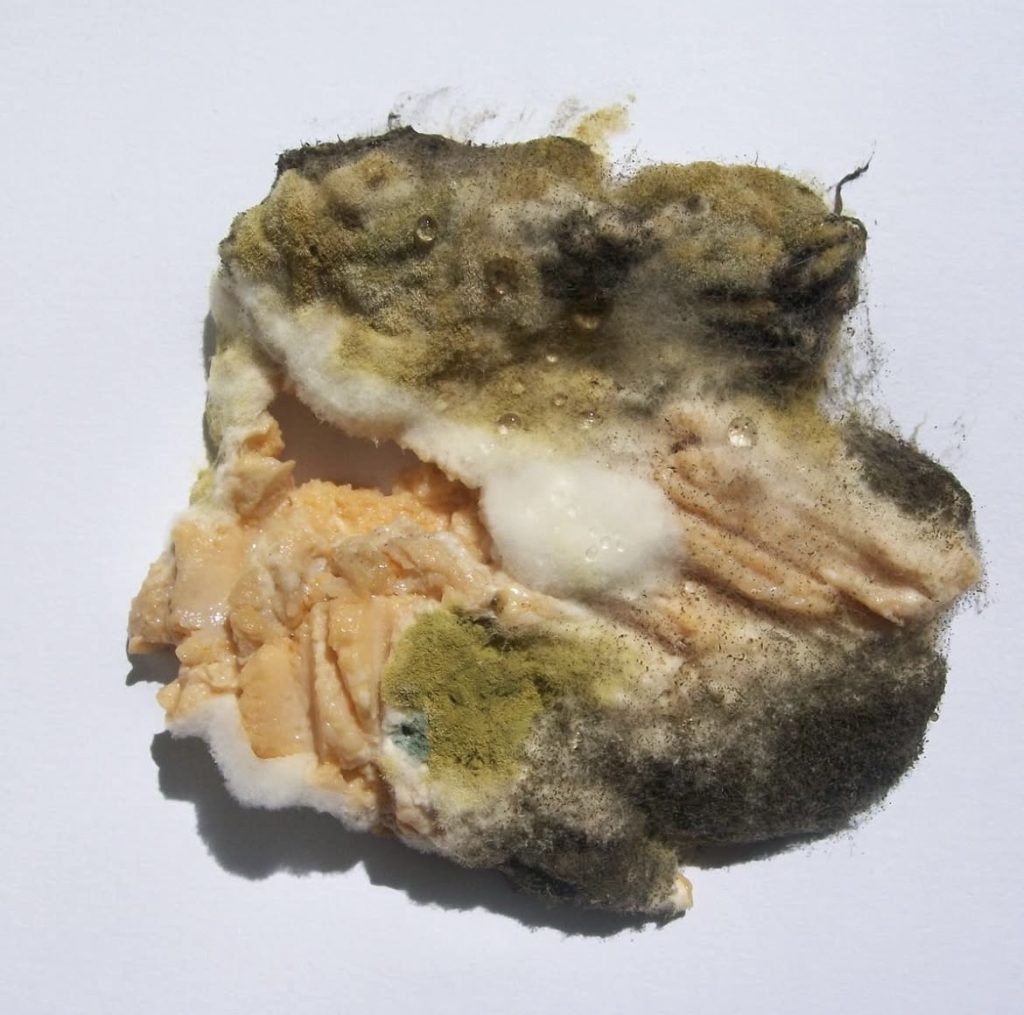
Ber was born in Tetovo, North Macedonia, in 2001, the city where he still lives, works and studies economics, marketing branch, but as he himself says, art, mainly photography, is his greatest passion in life.
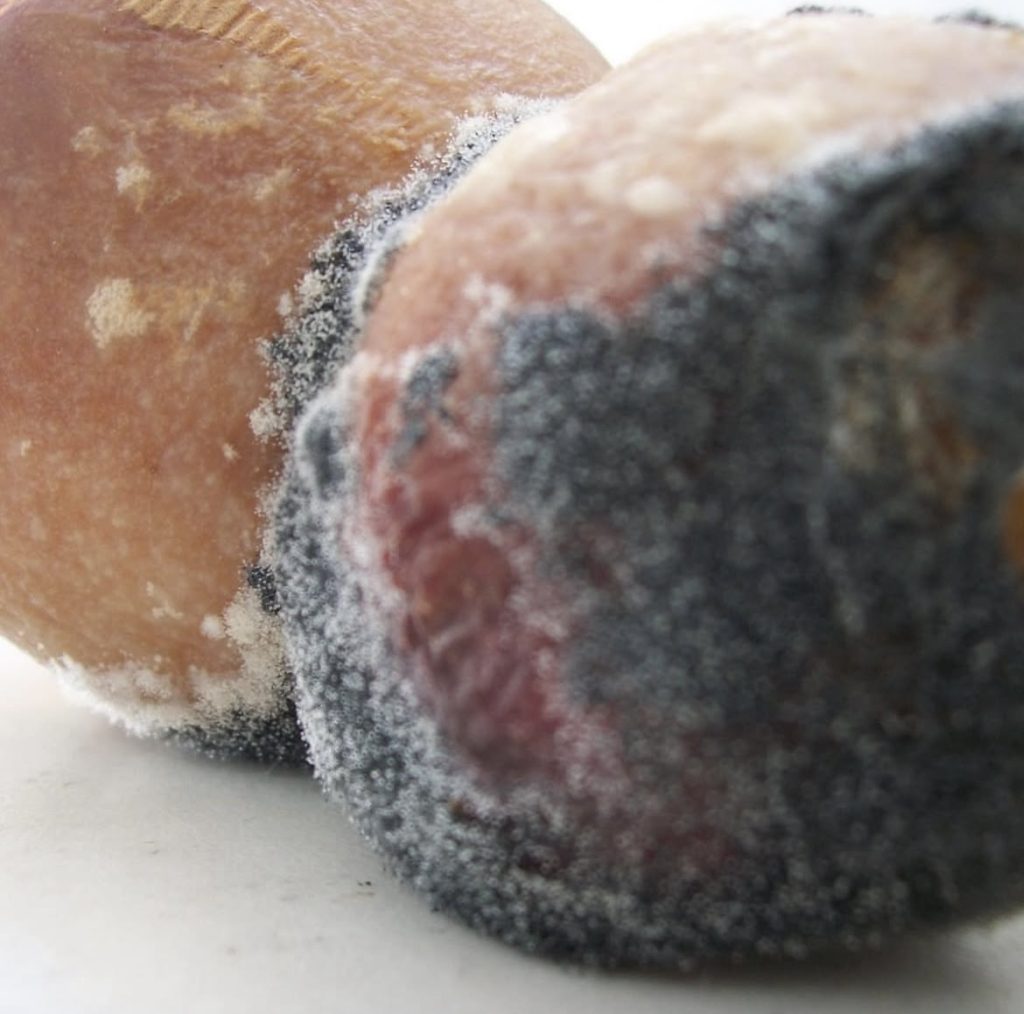
“Food waste is one of the 10 biggest ecological problems of the 21st century. Buying unnecessary quantities and over-cooking are just some of the aspects of this problem, but unnecessary stockpiling is also a widely practised form of waste among most people. However, whenever I investigate it, mould sends me messages with deep meanings: an ending, a gestation, and an abandoned state. On the other hand, mould is also a wonderful beginning — a privileged creature, an unusual birth that is often not noticed. It is a new beginning, a beginning from zero; the reasons for its existence and its benefits are very important. Mould plays a special role in maintaining balance in the ecosystem. It helps break down organic matter and recycle it, helping to maintain a healthy environment for all forms of life. Mould, especially the type known as Penicillium, is the basis of many antibiotics used in medicine to treat bacterial infections. This important discovery has saved many lives and has helped in the fight against various diseases. It is a key ingredient in many famous cheeses such as Gorgonzola and Roquefort, giving these gastronomic products their characteristic taste and distinctive aroma. Having said this, I must stress that when I photographed mouldy food, I did not waste food resources — on the contrary, they were used carefully and at the right moments. In some cases, the food that was photographed had already been thrown away, used, or had passed its expiry date. This helped maintain a perfect condition for the growth of moulds. The process of carrying out this idea took over two months and involved more than sixteen types of food, which were photographed using only natural sunlight.”
VOYEUR
Anjeza Mema
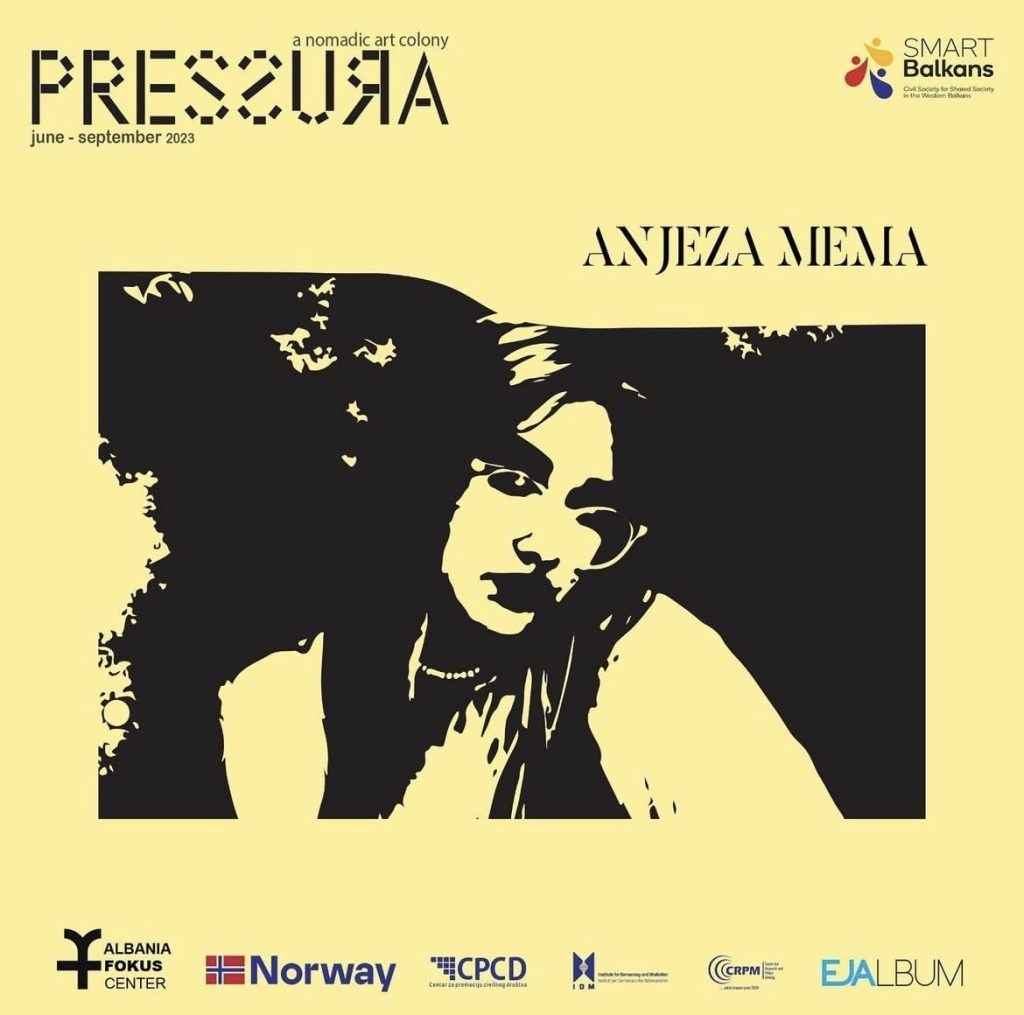
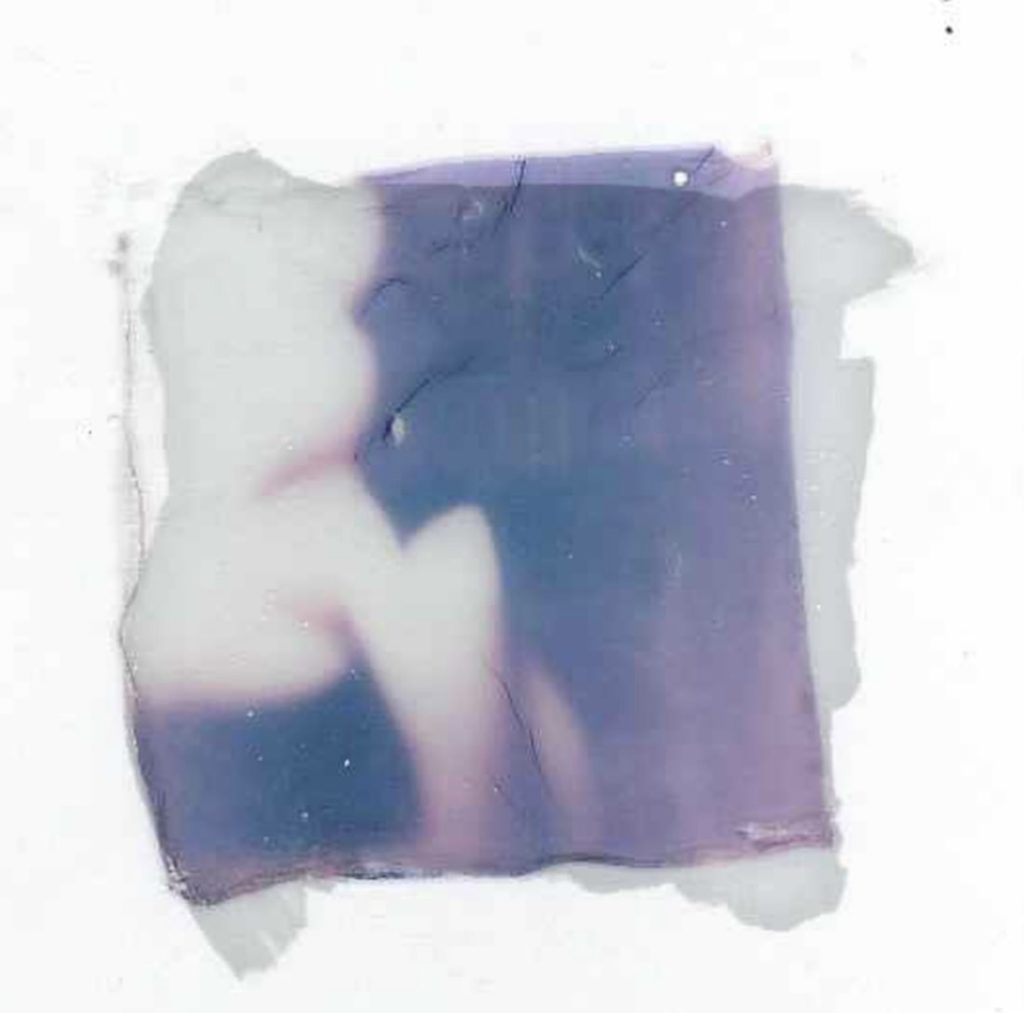
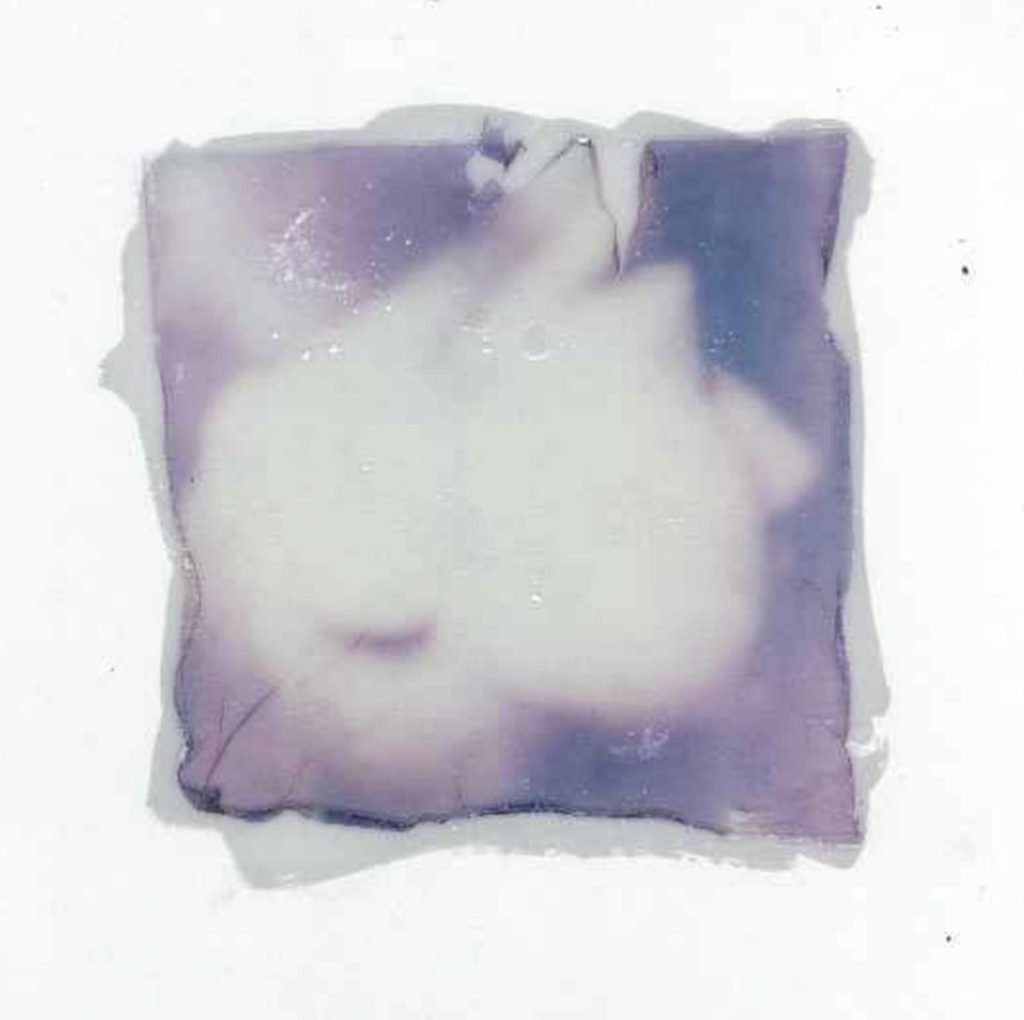
Anjeza Mema is a young Albanian artist, born in 2002 in Tirana, the city where she lives and works.
A graduate in graphic painting from the University of Arts Tirana, Faculty of Fine Arts, alongside
graphic design and painting, Anjeza works with analogue photography, mainly experimenting with the
Polaroid technique, or Instant photography. The technique used by Anjeza for the “Male Gaze” project is glass transfer from
Polaroid 600 film. The photographs are self-portraits of the artist.
“I have chosen the phenomenon known as the ‘male gaze’ because I believe every woman or girl
has experienced it in her life. Even if someone believes they have not been touched by this phenomenon, it is always present
in our society. By treating it as a theme, I want to make the public aware of the effect that this phenomenon has on the collective
subconscious. Not as something that necessarily can be changed, but as something that must certainly be
acknowledged. The term
‘male gaze’ takes its name from the director and theorist Laura Mulvey, who in 1973, in an essay on
visual pleasure and narrative cinema, analyses how the male gender projects its own fantasy onto the female
figure, with her appearance determined for strong visual and erotic impact. This phenomenon is present
even today, as an archetype of the collective subconscious. The writer Margaret Atwood best describes
the feeling of this projection of desires and fantasies, of the objectification that has been built up over the years in the subconscious of
women and girls. She writes in her 1993 novel “The Robber Bride”: – “Even pretending not to
care about male fantasies is a male fantasy; behaving as if you are invisible, pretending
to have a life of your own. You are a woman with a man inside you watching a woman. You are your own
voyeur.”
VIOLET
Bledar Hasimi
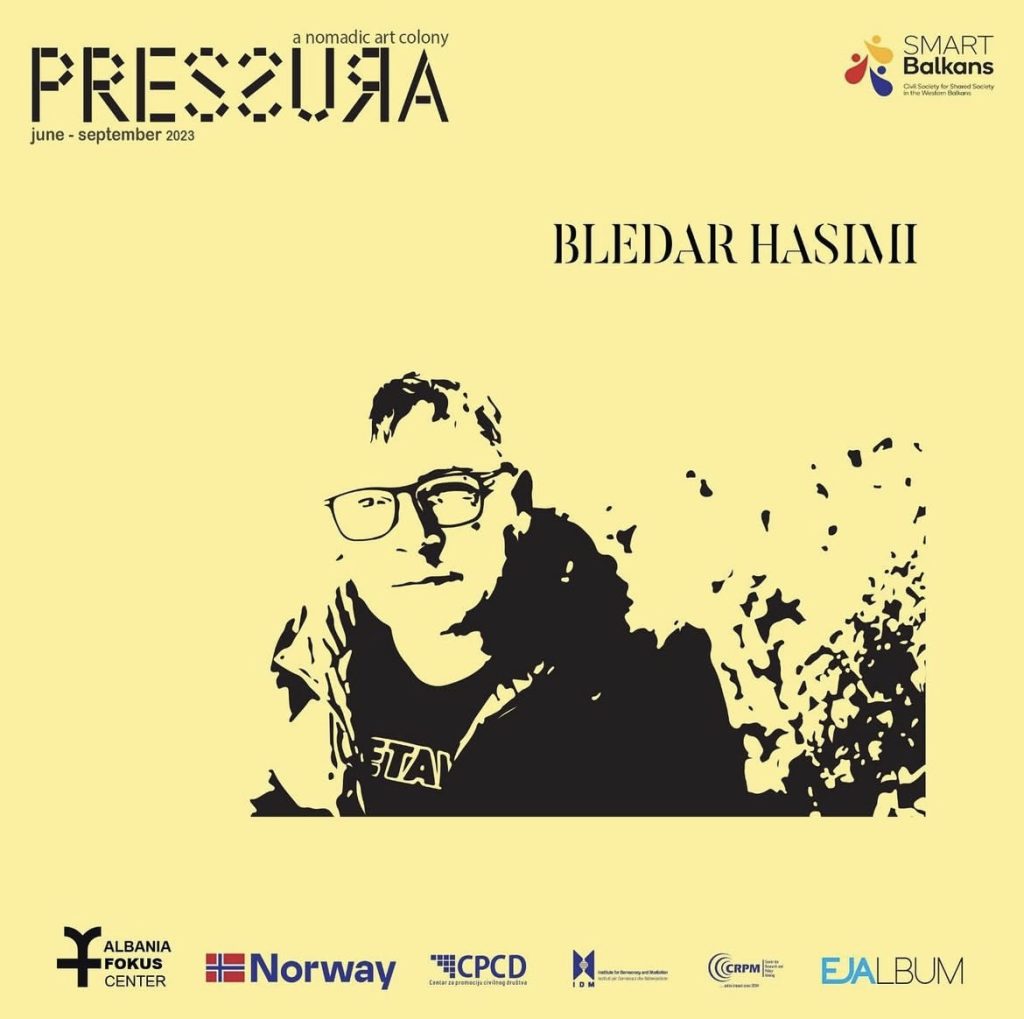
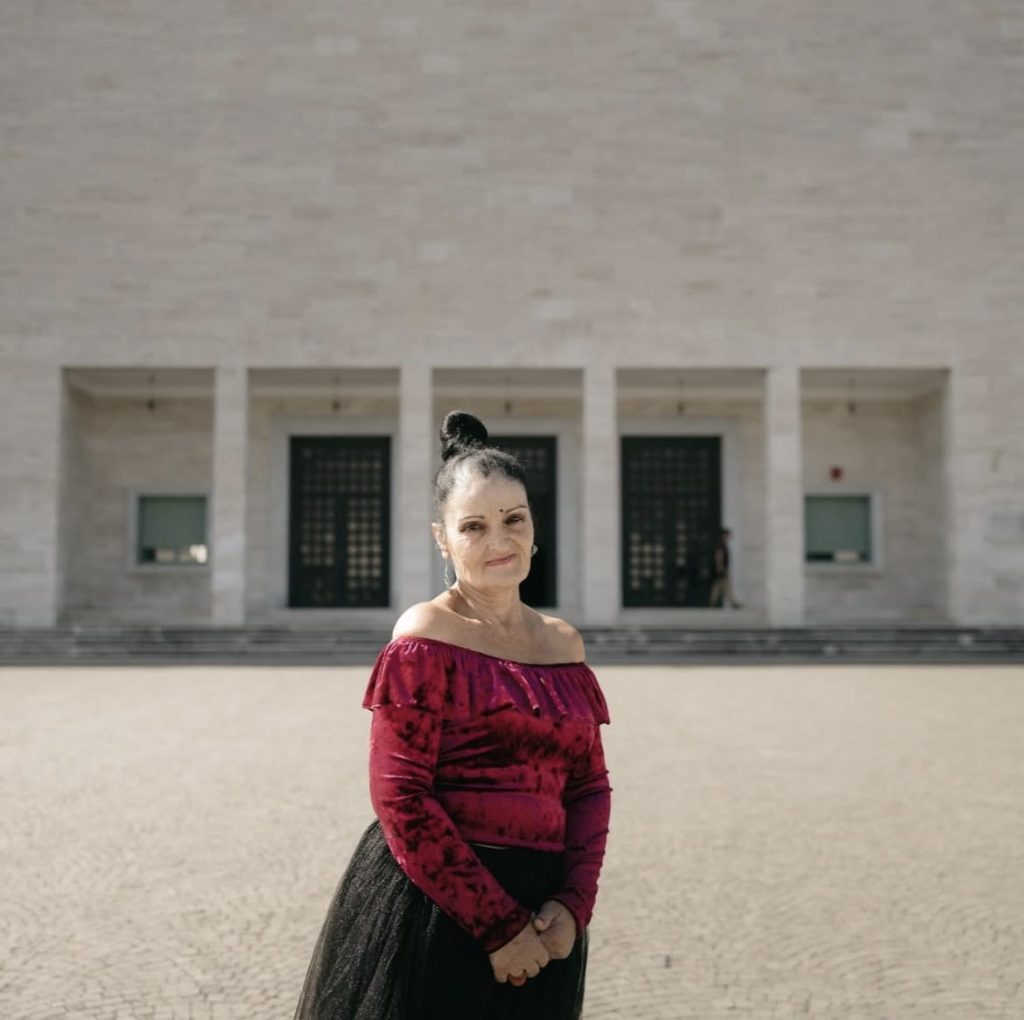
Bledar Hasimi was born in 1979 and currently lives and works in Tirana. A professional photographer for more than 20 years, with a long career in photojournalism and event photography. Bledar Hasimi studies
Photography at the Faculty of Fine Arts of the University of Arts and is involved in projects on social issues in collaboration with various NGOs and Albanian organisations.
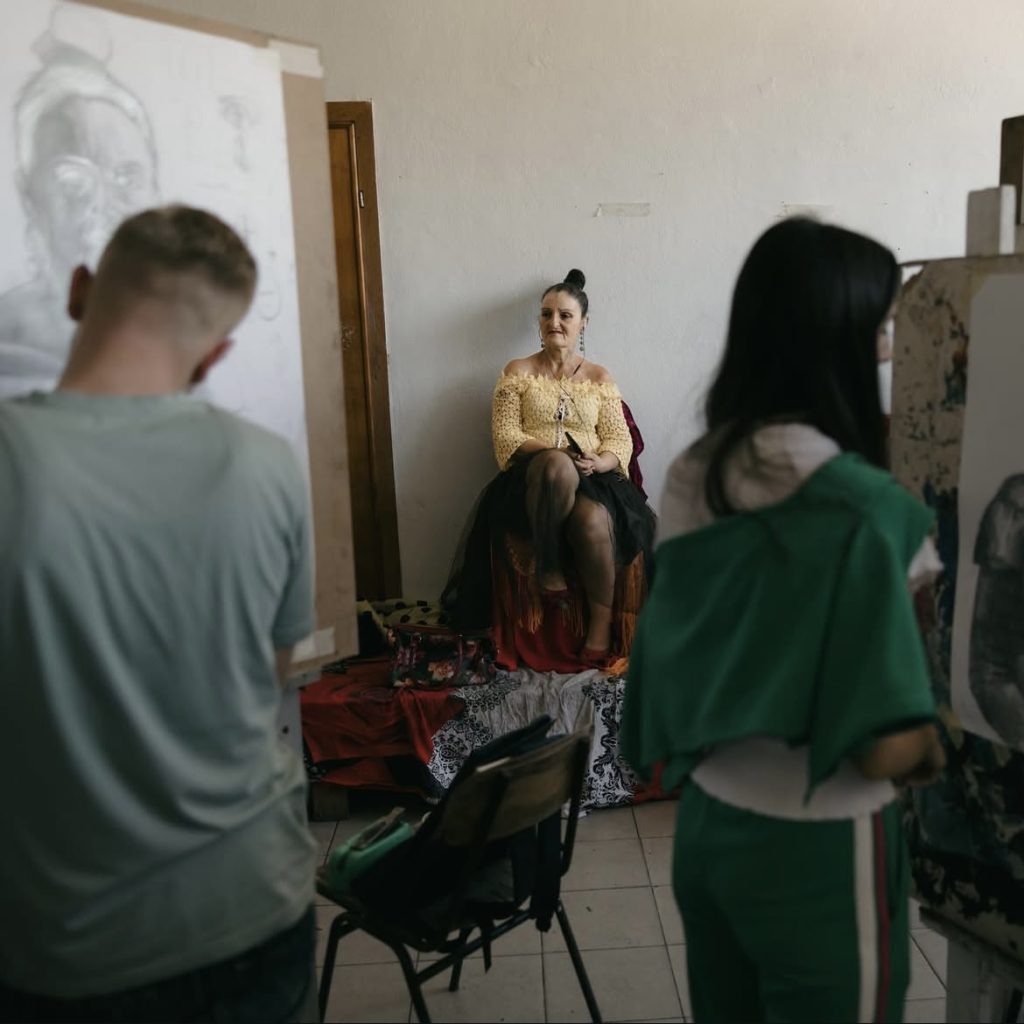
Violet is a professional model, a “living figure” as students or professors at the University of
Arts call them. Anyone who has not attended an art school has probably never noticed such a category
of “workers”, who are indispensable for the functioning of certain programmes that depend largely on
their presence in the studio. Long posing sessions, in a working environment where the gender ratio is not much
different from reality — the overwhelming majority of models are women, just as the overwhelming majority of the professors are
men. It's a different matter with the students, who often do not dwell on this contradiction, which concerns the basic
rights of this category of workers. Sometimes, with her stillness, her lack of movement, it seems as though Violet
is not alive — after all, the less alive she is in the studio, the less movement, distraction, the
better it is for the lesson. Students and professors have for some time called her Xhulia, an artistic name given to her
long ago, as if to distance themselves from her even further; outside the studio Violet no longer needs a University of Art, and in
fact there is no employment contract between the two parties, even though she has now served
the institution and Albanian art for 30 years. Violet has a refined taste in clothing and colours, has 4 cats
which she adores, has recently fallen in love with a young man, and lives alone.
USTA KADRIU
Vigan Demiri
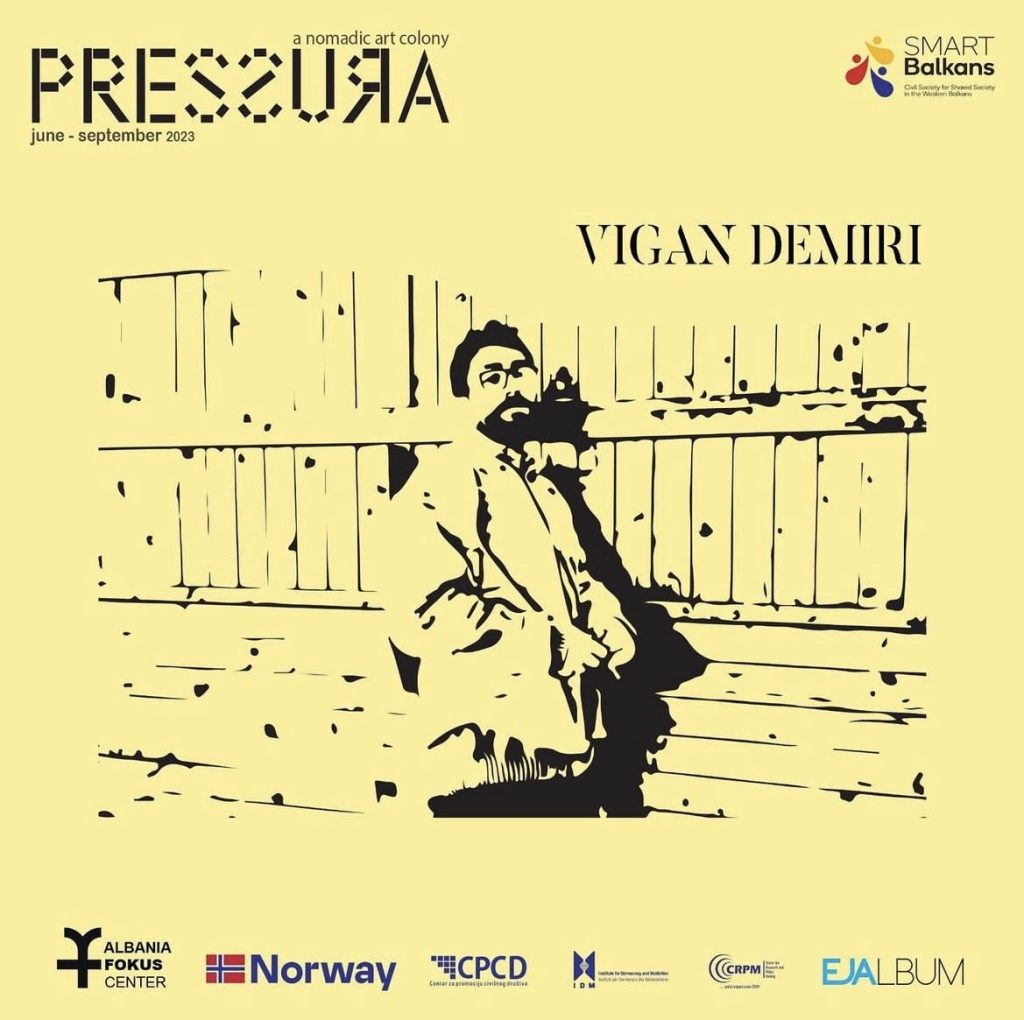
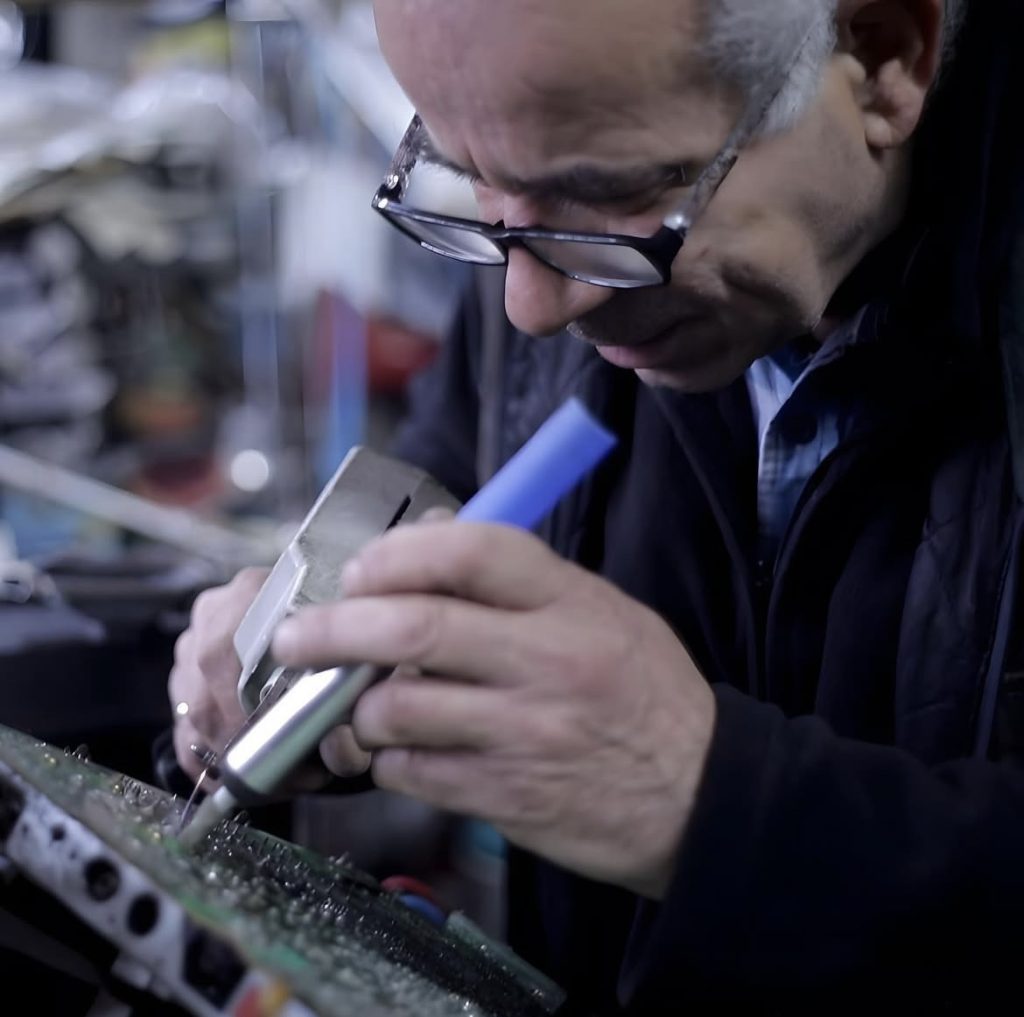
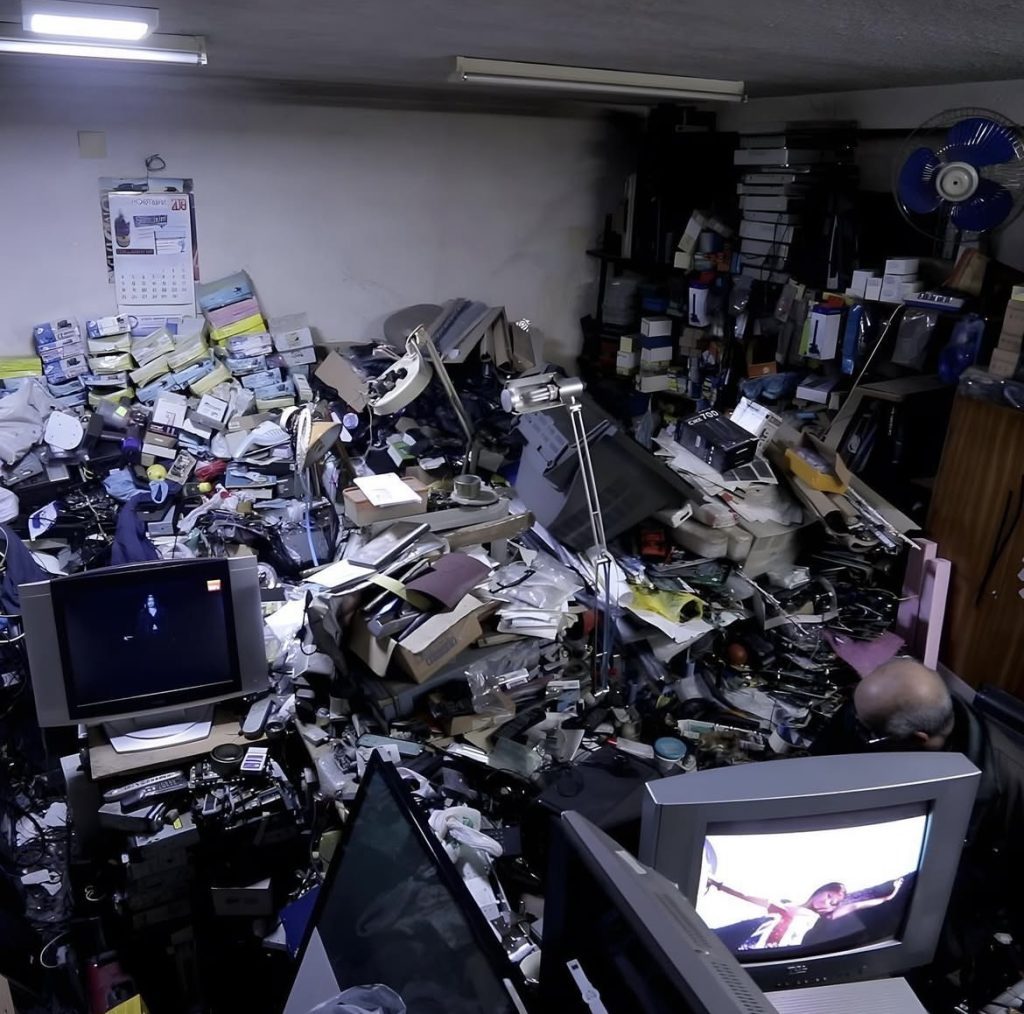
Vigan Demiri was born in 1998 in North Macedonia and graduated in Graphic Design from the Academy of Arts of the University of Tetovo in 2020. He currently lives and works in the city of
Gostivar, where he runs marketing campaigns, works in design, photography, video and graphics. Author of several films and documentaries, participant in several art exhibitions, Vigan is currently also co-founder and Creative
Director of the “Punctum” Photography Festival.
“Usta Kadriu's workshop, or shop, is a true mirror of this underworld. A dumping ground of outdated systems and values.
No one dares take a step forward into the future, because the past weighs heavily. A false past,
a manipulated one, that holds the future hostage, that holds hostage the youth who, ‘little by little’, are
drifting away toward the unknown. Usta Kadriu's television, in the middle of the workshop, plays the role of the town crier, shouting:
oh men, the river has swept us away. In this ‘workshop’, only junk remains, useless
to anyone. He, with great pain in his soul, cries out: run and save yourselves wherever you can. The television in the middle of the workshop is a shrine of worship
which he keeps on day and night with fanaticism, yet does not believe in. It is not by chance that he turns it on only to mute it with
curses, because he no longer believes in anything, least of all this noisemaker. And yet he turns it on again, because it is the only outlet
where he can vent his anger. His children's departure, into migration, is written on the many wrinkles of his forehead and the eyebrows that
never leave him. He knows the names of every city in Europe, not because he has ever travelled there, but because everywhere
he has some relative. The only one he had at home, his wife, was taken by ‘the bad illness’. Of her, all he has left
is the ring embedded in his finger, which he is no longer sure he could remove, because he has never tried. Usta Kadriu is
me too, is you too… he is all of us…”
THE BACHELORS' HOTEL
Vlasov Sulaj
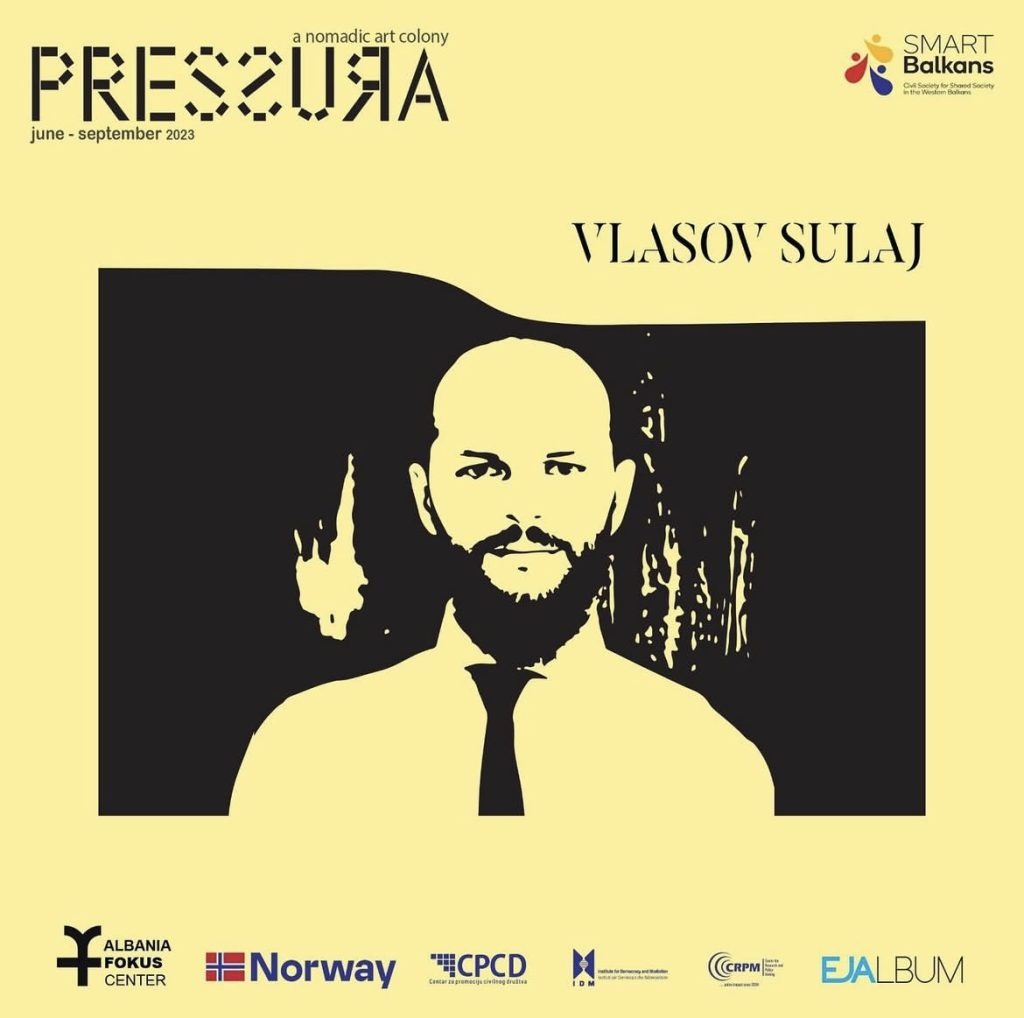
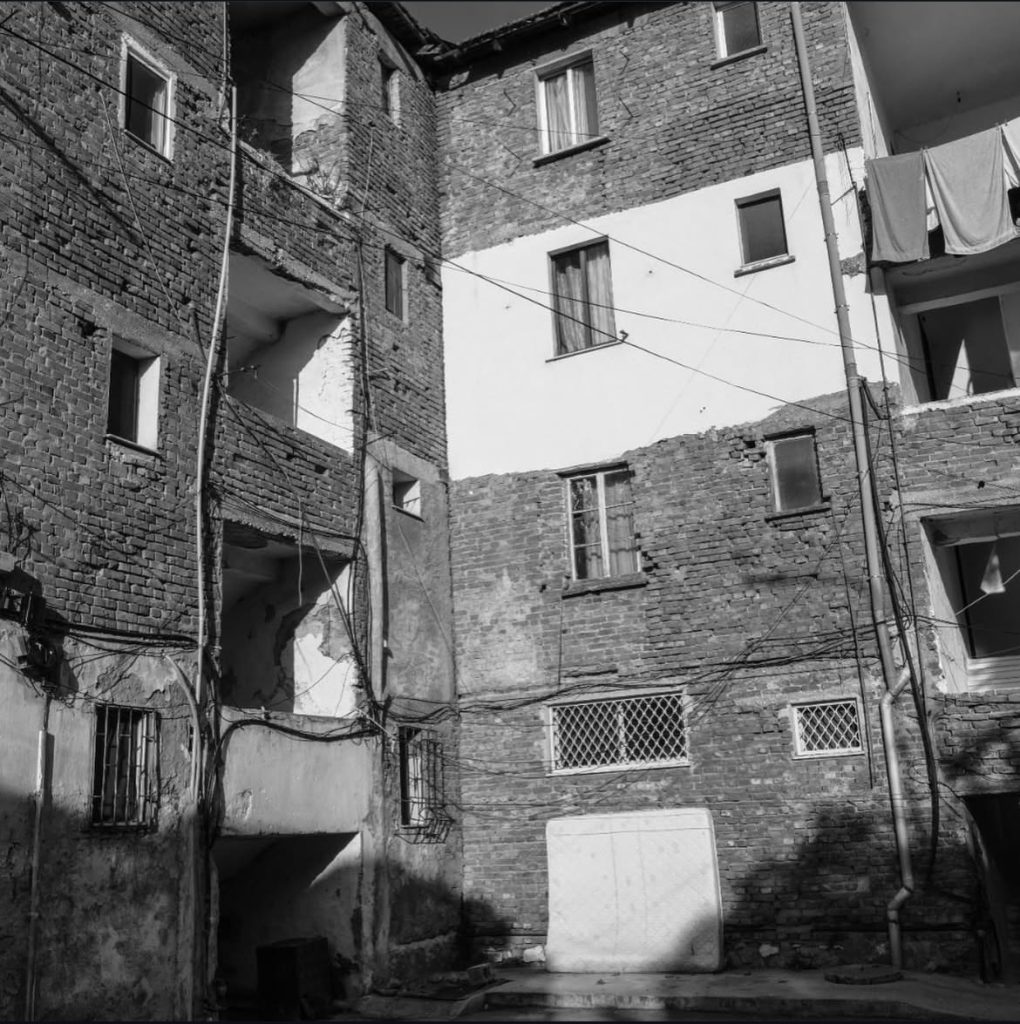
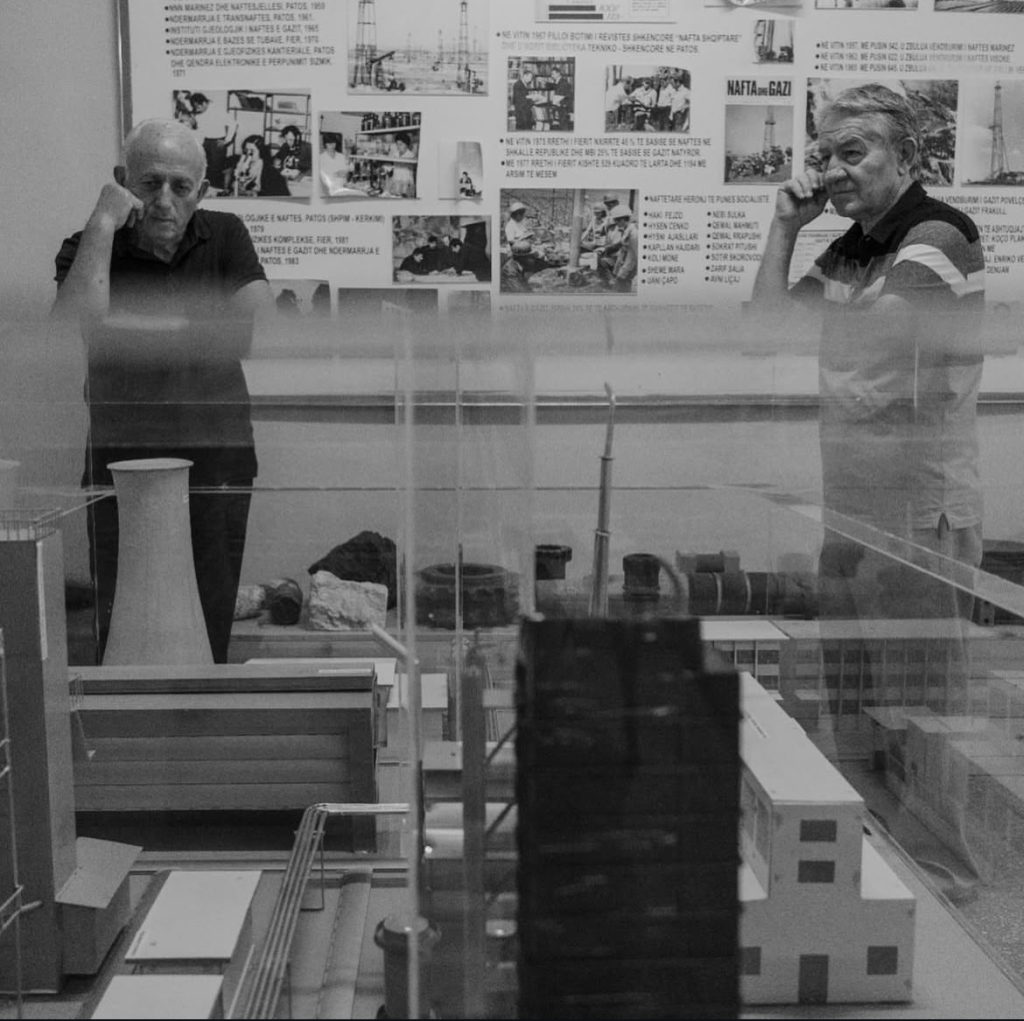
Vlasov Sulaj was born in the city of Fier in 1984 and graduated from the Faculty of Fine Arts of the University of Tirana in 2008. The artist works and lives in Tirana, where for almost 20 years he has been a professional photographer, journalist and freelance photojournalist, engaged with several of the country's best-known newspapers and magazines.
“The Bachelors' Hotel is one of the dormitory buildings of one of the largest enterprises of the
dictatorship era, the Azotik of Fier, officially named the “Gogo Nushi” Chemical Fertiliser Plant, or as it was called by former
workers, the “School Plant”. The plant met the same fate as dozens of such large enterprises which were
abandoned or completely destroyed, wrecking almost the entire industry of the country and, at the same time, its entire
workforce. The plant was liquidated in 1999 and put out to tender for scrap (Council of Ministers Decision 269). The main focus of my
investigation is the social and cultural-artistic activity in the city of Fier, naturally induced by the social
interaction among the workers. In those years, according to former workers — now almost all of them
emigrants, unemployed or retired — there even functioned a variety show and an ensemble at the Azotik. Among
the workers, cross-regional ties were strengthened, as many specialists and workers came from different regions of the country, with different
levels, ways or concepts of life among them. The plant, again according to former workers, also shaped the professional but
also the civic and social character of the city. Acquaintances, social as well as family ties. Dozens of
families, they say, were formed at the plant. The Bachelors' Hotel is today inhabited by families of a low economic level, but the two separate
entrances, for women and for men, are still distinguishable from the time it served as temporary housing for specialists or workers,
who today recall how even the Chinese workers who came to build the plant used precisely this building as their
dormitory. This dilapidated building on the edge of the former Azotik seems to me a metaphor for two eras, while
today, perhaps precisely the lack of work and social relations among citizens has turned a good part
of Albanian towns into nothing more than large dormitories where nothing happens.
ALLIGATOR 1991–2023
Arben Alliaj
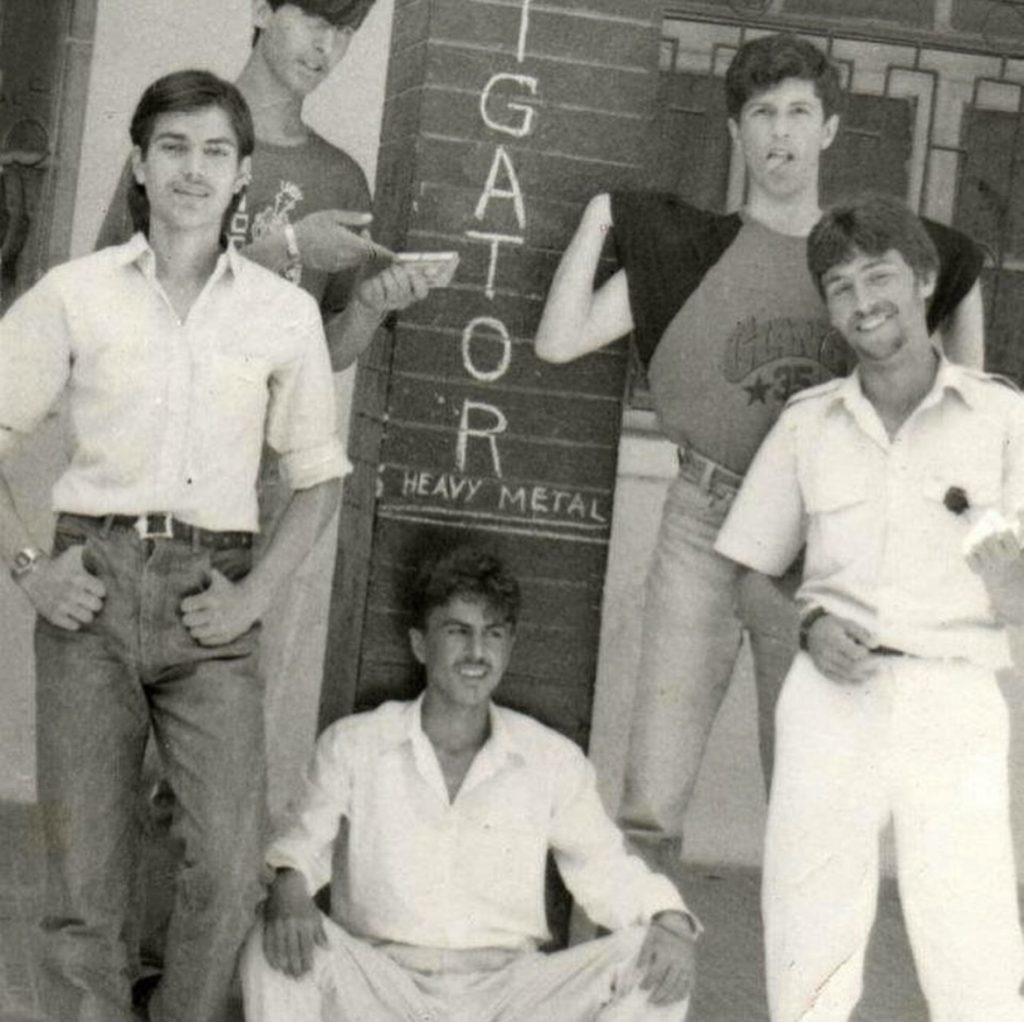
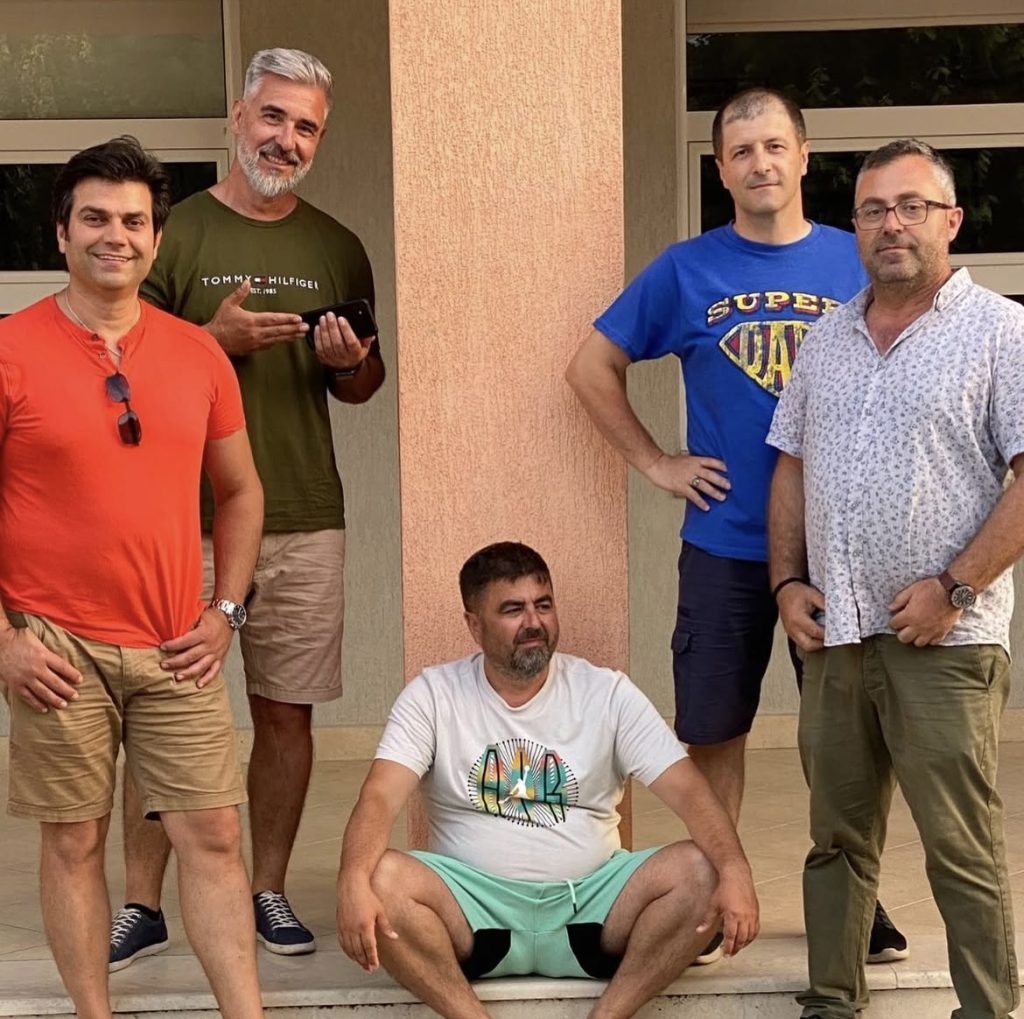
Arben Alliaj was born in Patos, in the city of Fier, in 1975. He is a photographer and designer with a long career in Albania, founder and administrator of “Benart Print”, and founder in 2006 of the “Fokus Artistic Photography Competition”, successfully transformed over the years into the “Fokus Award” festival, where he has held the role of Artistic Director since its inception. A participant in dozens of photography exhibitions in the region, a jury member at various festivals, a curator of exhibitions, and a participant in many art colonies, Arben is also executive director of the “Albania Fokus” centre.
“Can a reunion after many years among old friends throw a person's entire life archetype into crisis?
Perhaps so! It was precisely the meeting with my high-school friends and retaking a photograph exactly
as it had been 32 years earlier that brought me back to the memories of that time, but also to the old dreams
of a dignified life here, in our homeland. I believe everyone remembers the slogan ‘Let's make Albania like the rest of Europe’?
Meanwhile, by coincidence, it had not been many days since a friend of mine, with whom I have worked together for 10 years, had just
received his visa for the United States — after winning the lottery — at the same time as the joy of a father whose
son, with another, newly issued visa, was permanently relocating to Germany. I was, in a way,
destined by these coincidences but also by a reflection I had long held, that I too should put myself into play
by working on this project. This is because even today — 32 years after that photograph of friends — the dreams
of Albanians are once again, tragically, being realised outside their homeland, visibly driving Albania toward a massive
depopulation. Of those five young men in the first photograph, only Arbeni and Tiku remained here, while
Reli and Indrit are in the USA and Ilir is in Ireland. Meanwhile, among our own children, Gledi has just
received his visa for Germany, and Ernesti and Angela will move with their whole family to America. Kleo and Henri,
although younger and with their families still here, likewise, like so many others, dream of leaving far away for a better life.”
WE ARE TIRANA
Marsej Fucia
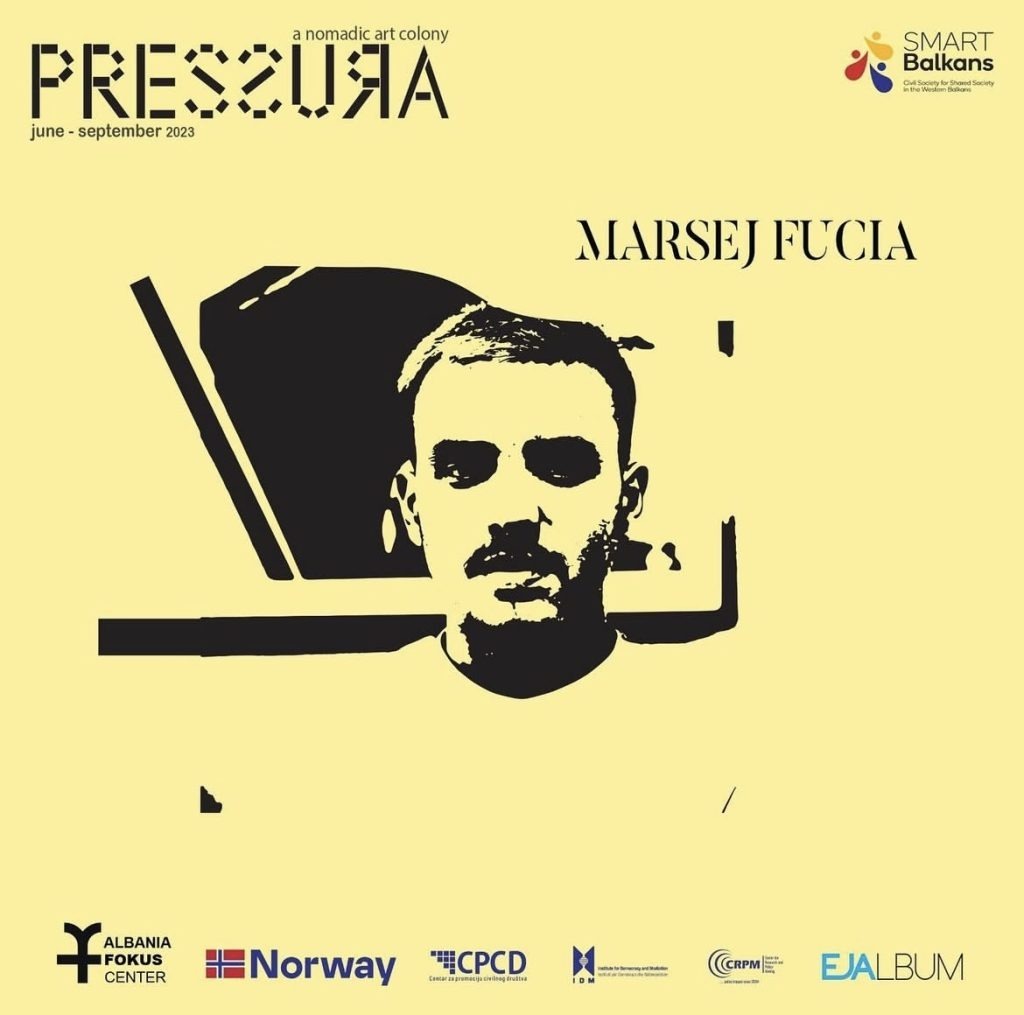
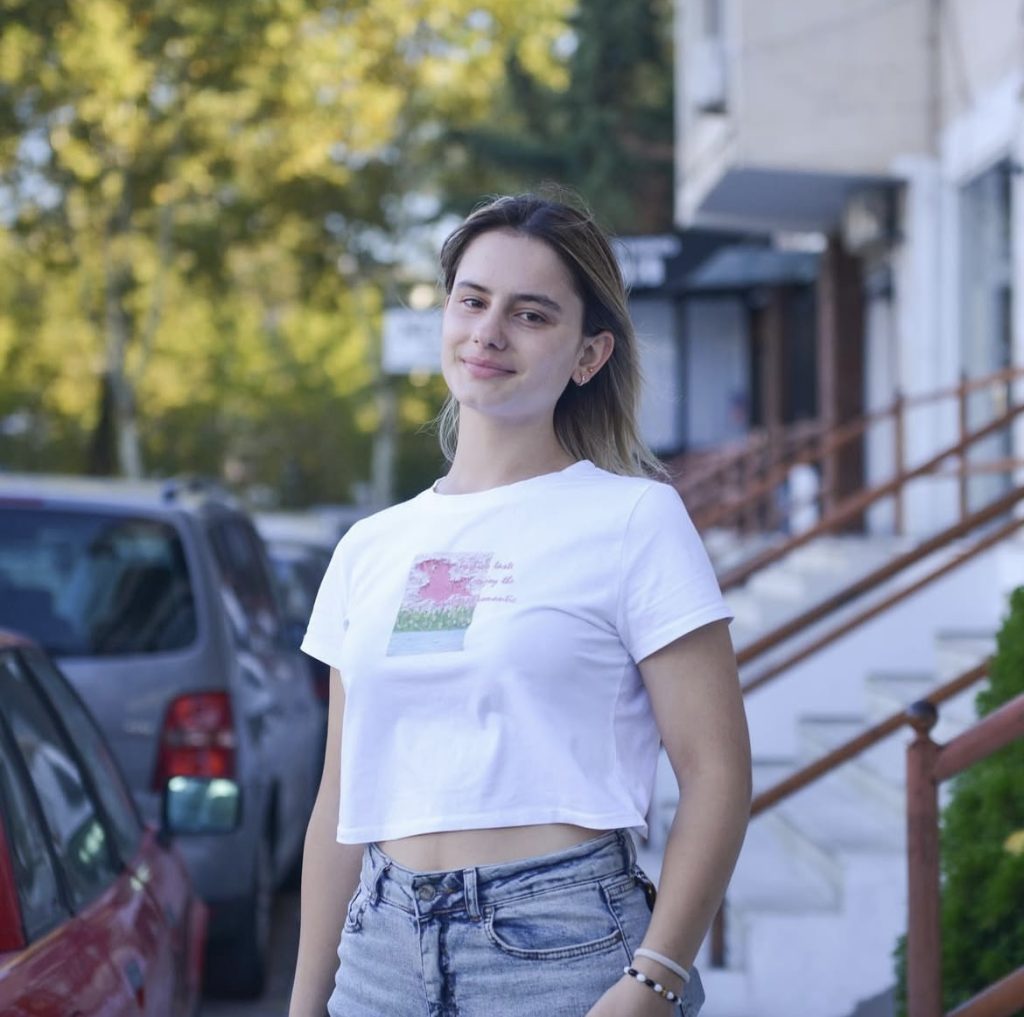
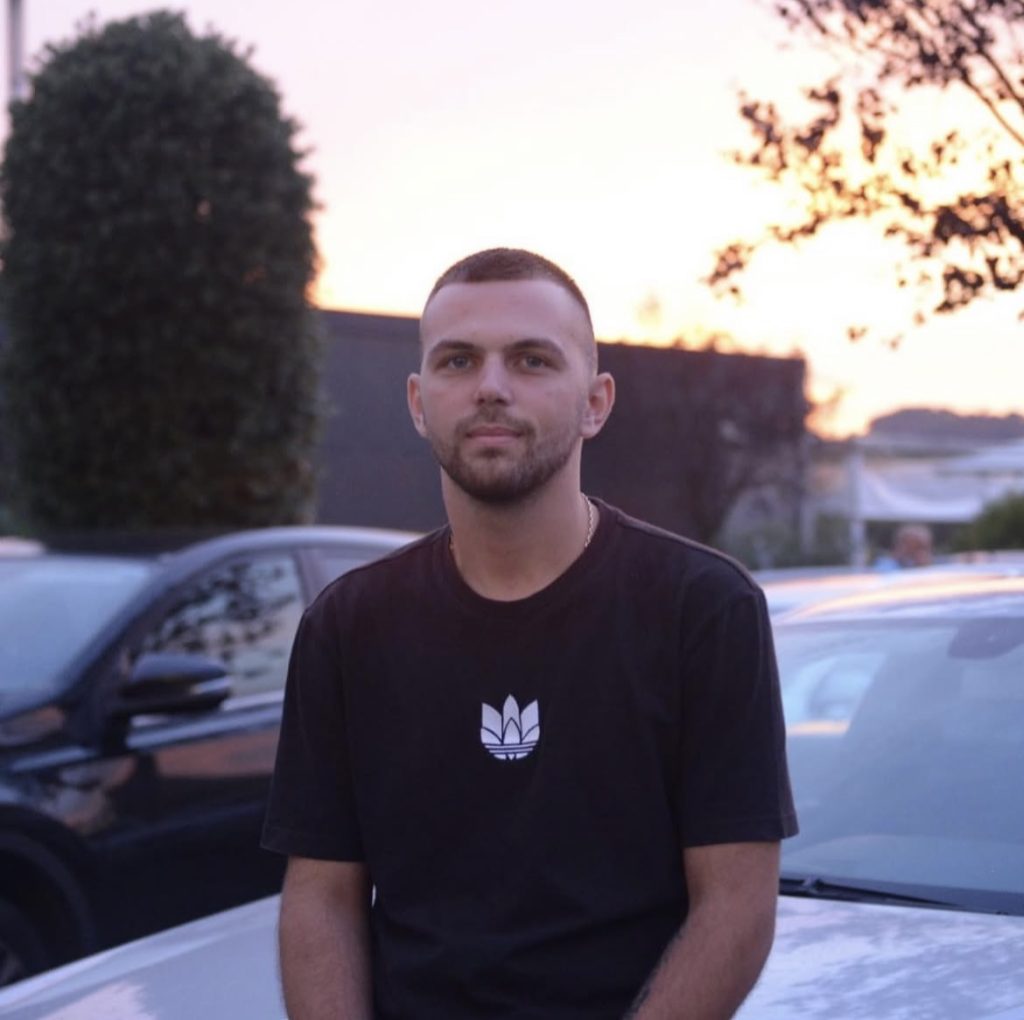
Marsej Fucia was born in 2002 in Tirana, the city where he lives, studies and works. Despite his young age, Marsej has 5 years of experience as a designer, photographer, videomaker, editor, artist and art director,
especially in the field of art exhibitions. He says of himself: – “Photography has been my passion since I was little, and I was always amazed whenever I saw photography studios. For years I've worked behind the scenes of various
exhibitions, but for this project I'm happy to be stepping forward on stage, as a photographer in our exhibition.”
“We Are Tirana is a social project, born more than 4 years ago as an investigation into the conditions, situation and circumstances of
the city's most important people: its residents. By joining this project, I have photographed
hundreds of characters of Tirana this way; I have talked with them and we have come to know their stories, we have in some
way captured the essence of the city. We Are Tirana gives life to the city's stories and creates a new community
space; however, I felt something was missing, both in this project and in general in Albanian photography and
media: following the characters over time, following in time the story they have told, where they are today and
what they are doing in their lives. This is something that concerns precisely the documentary and social aspect of
photography, and it is what I bring to Pressura, starting from some of those hundreds of stories, from the beginning right up to the present day. In general, my artistic research is now focused on following people's stories or accounts over time, bringing updates from their lives, especially for those whom I feel have built their lives on the basis of contradictions.”
THE ONE-HANDED MAN
Majlinda Dedaj
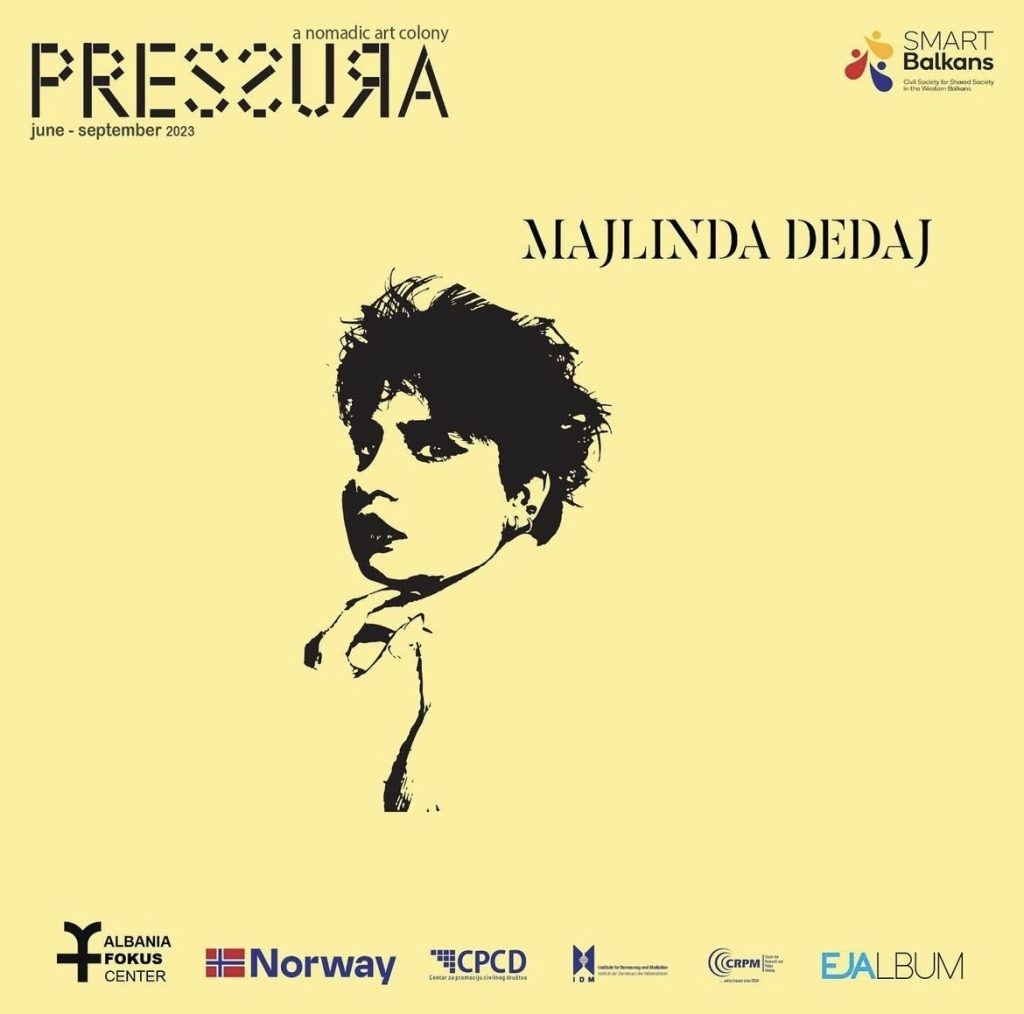
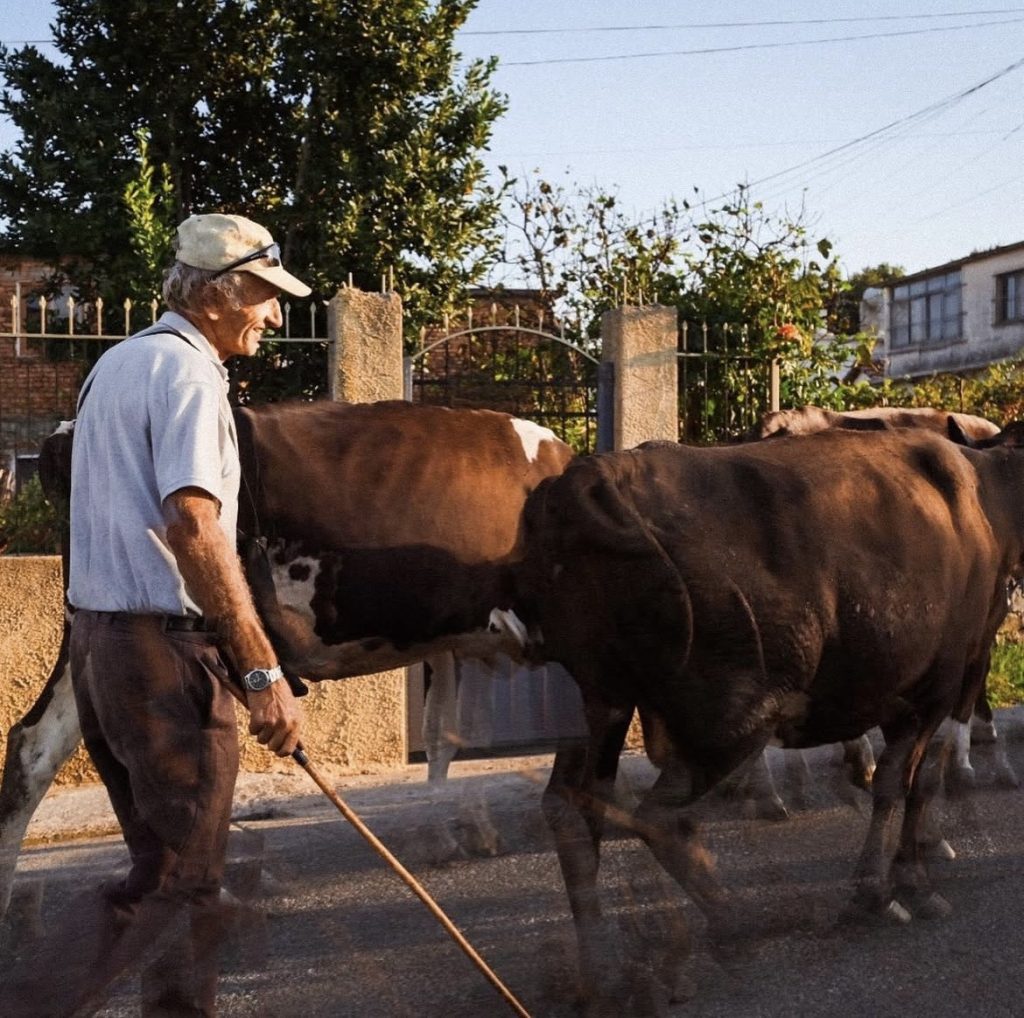
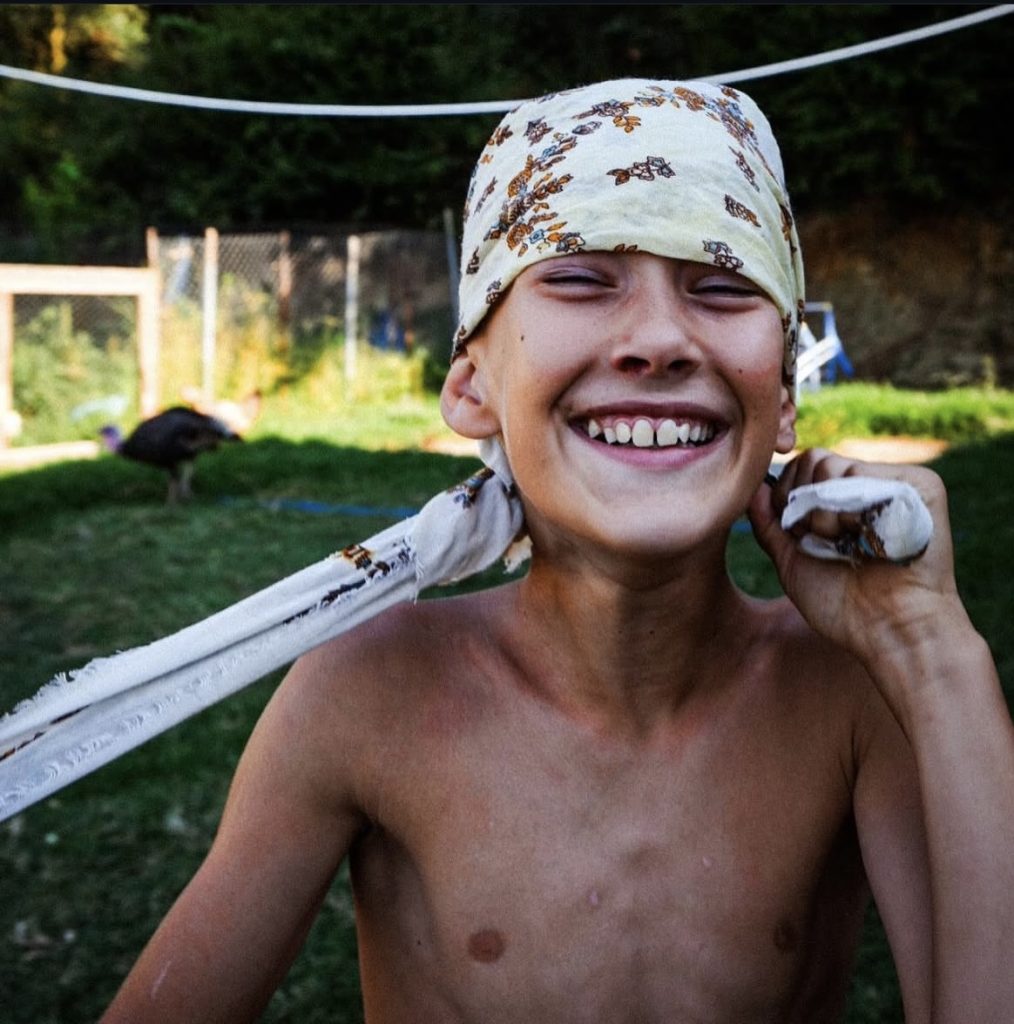
Majlinda was born in Shkodër in 2000, and for some time now has lived and worked in Tirana. By profession she is a teacher of Albanian language and literature. Besides her higher education in this field and her full specialisation in it, she also carries on a photography practice, which was born as a passion and continues with a serious and ongoing commitment, even winning prizes and taking part in exhibitions and art shows. In the future, Majlinda,
intends to devote herself fully to photography, mainly portraiture and the world of fashion.
“In the focus of my lens is the life of the village of Ças, near Velipojë. The man at the centre of this story is
Pjetër Ara, the close friend of my late grandmother. Those who don't know Pjetër closely call him “the one-handed
man”. He watched his village empty out day by day, as people moved abroad or to the region of central Albania. While
people were leaving the village, Pjetri worked in his own place until, with great
sacrifice, he bought all four entrances of an apartment block. Today he lives there with his brother, children and grandchildren. Through my
photographs I seek to capture something more than landscapes, clothing, architecture, and other ethnographic elements. In
this place where I was born, after all these years I rediscovered the same simplicity and harmony that characterises the village. People
speak of love for one another and of a strong connection with nature. Their relationships are built on
besa (given word), honour and respect. Through Ças I aim to bring as faithful a photograph as possible of the values of village culture.
The ordinary moments in which the subjects are captured in the photographs speak of an authentic way of life, one that is not
built on material things alone. Ças is a testimony to how a person (often), even under difficult living conditions, knows how to protect
with dignity and sacrifice their land, family and culture.”
The methodology used in the Pressura project has combined engagement between photographers themselves and lecturers, but also field workshops, masterclasses, online lectures, work presentations (portfolios), and the realisation of a personal project for each participant, monitored by the project curator. Given the multidimensional character of the colony, highly professional figures, including academics such as professors, curators, writers, photographers, visual artists, architects, activists, leaders of non-governmental organisations, journalists, etc., have been engaged as lecturers or workshop leaders. In total, 4 colonies have been organised. We especially thank our lecturers and collaborators:
Ardian Isufi / Arben Alliaj / Carmela Rosiello / Osman Demiri / Burim Myftiu / Vlora Demiri / Stefan Çapaliku / Eltjana Shkreli / Naim Spahiu / Nekije Shahinasi / Paul Lowe / Ziuah Grafić / Koloreto Cukali / Rozafa Shpuza
As well as the organisations:
Fokus Award / Fotoist / Punktum / MeWe / EJAlbum / Kult Gallery / Oda Gallery / GO2 Albania / Hapat e Lehtë / VII Academy
Press on the exhibition: The nomadic photography exhibition “Pressura”
Tirana, Albania 17–18 October 2023
University of Arts Amphitheatre, Mother Teresa Square
Opening Ceremony: 17 October 2023 / 17:00
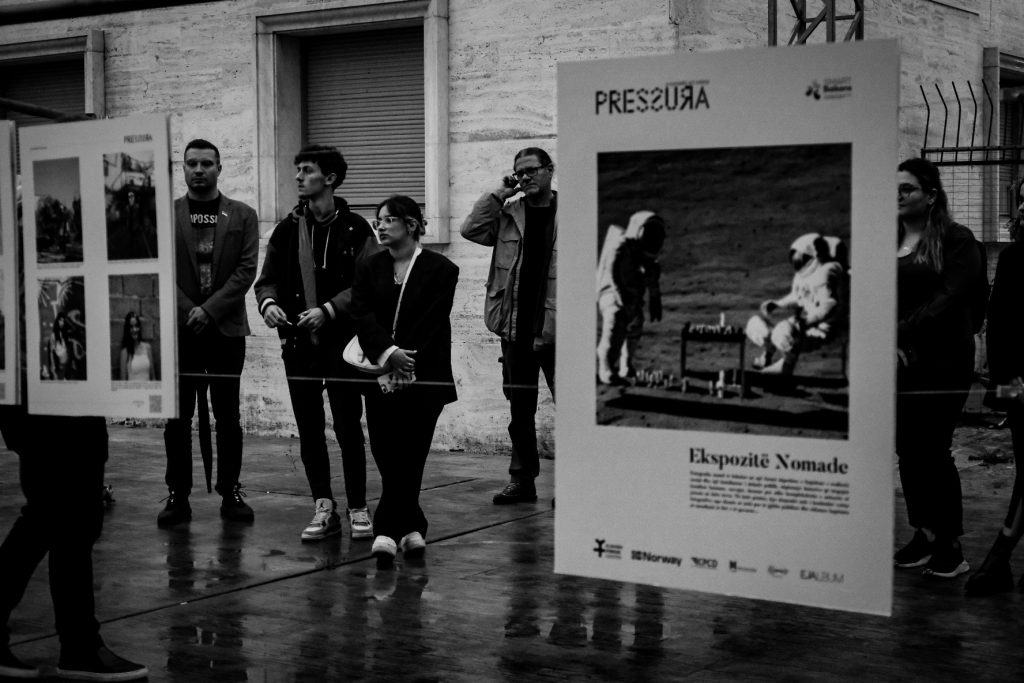
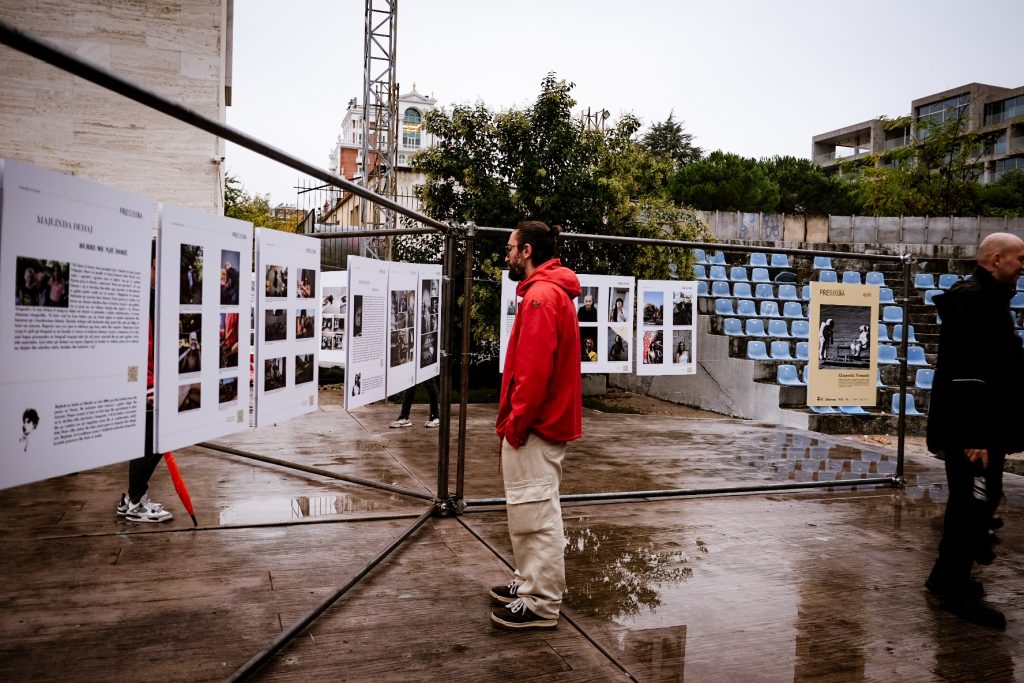
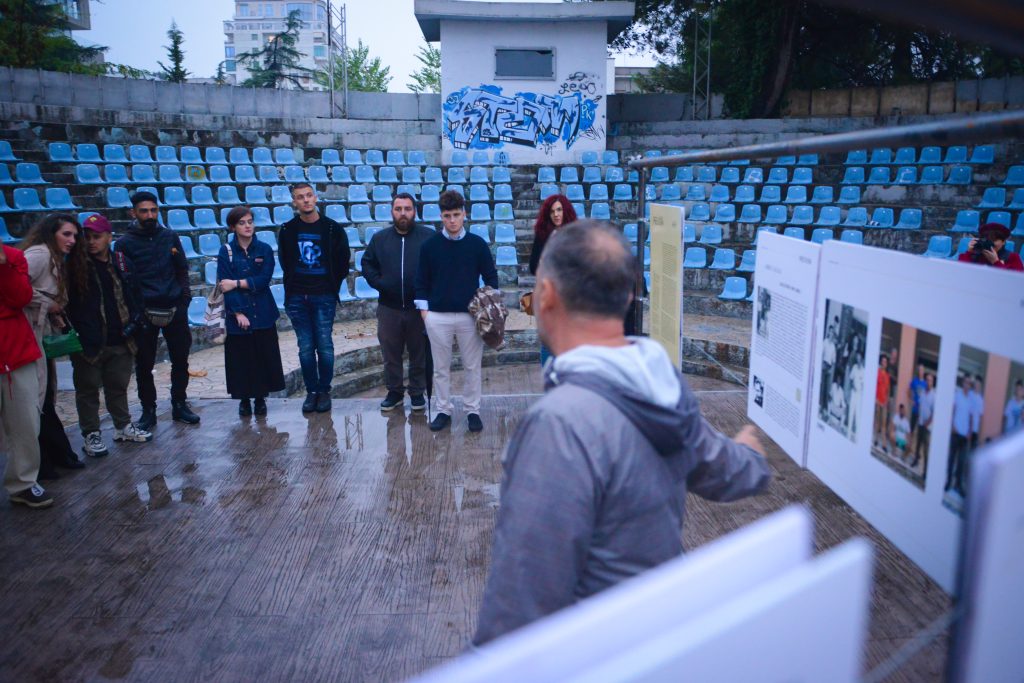
Press on the exhibition: The “Pressura” exhibition was held in Tirana, where numerous artists presented their artistic works
Gostivar, North Macedonia 21–22 October 2023
City Amphitheatre
Opening Ceremony: 21 October 2023 / 16:00
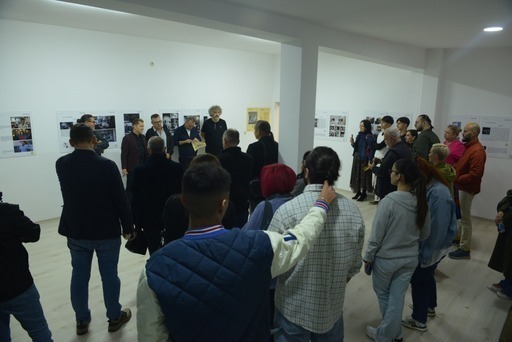
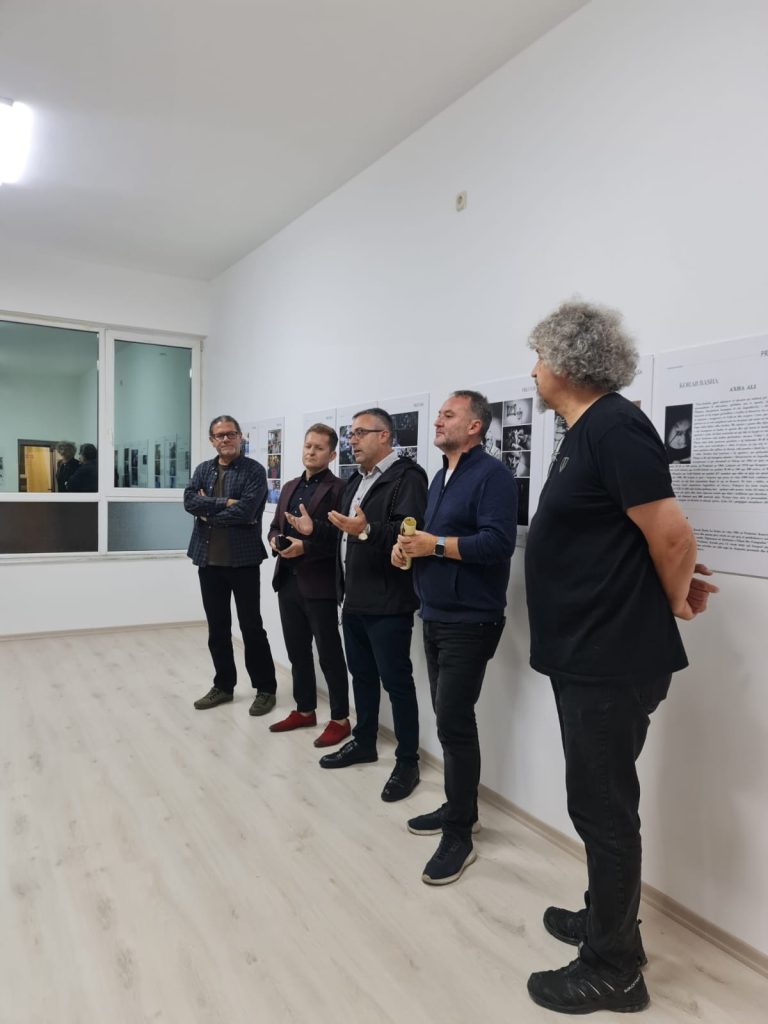
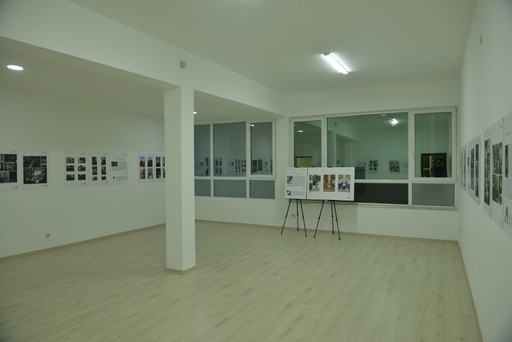
Pressura is implemented with the support of the regional project “SMART Balkans – Civil Society for Shared Values in the Western Balkans”, implemented by the “Centar za promociju civilnog društva (CPCD)” in cooperation with the “Institute for Democracy and Mediation (IDM)” and the “Center for Research and Policy Making (CRPM)”, and is financially supported by the Norwegian Ministry of Foreign Affairs (NMFA).
Curated by: Elton Koritari

See also:
PRESSURA 2024 – In honour of Paul Lowe
Media coverage:
The nomadic photography exhibition “Pressura”
The “Pressura” exhibition was held in Tirana, where numerous artists presented their artistic works
PRESSURA, the colony of nomadic artists dedicated to social photography!
#PRESSURA 2024/PRESSURA IS BACK/PRESSURA 2023/PRESSURA/PRESSURA 2025