
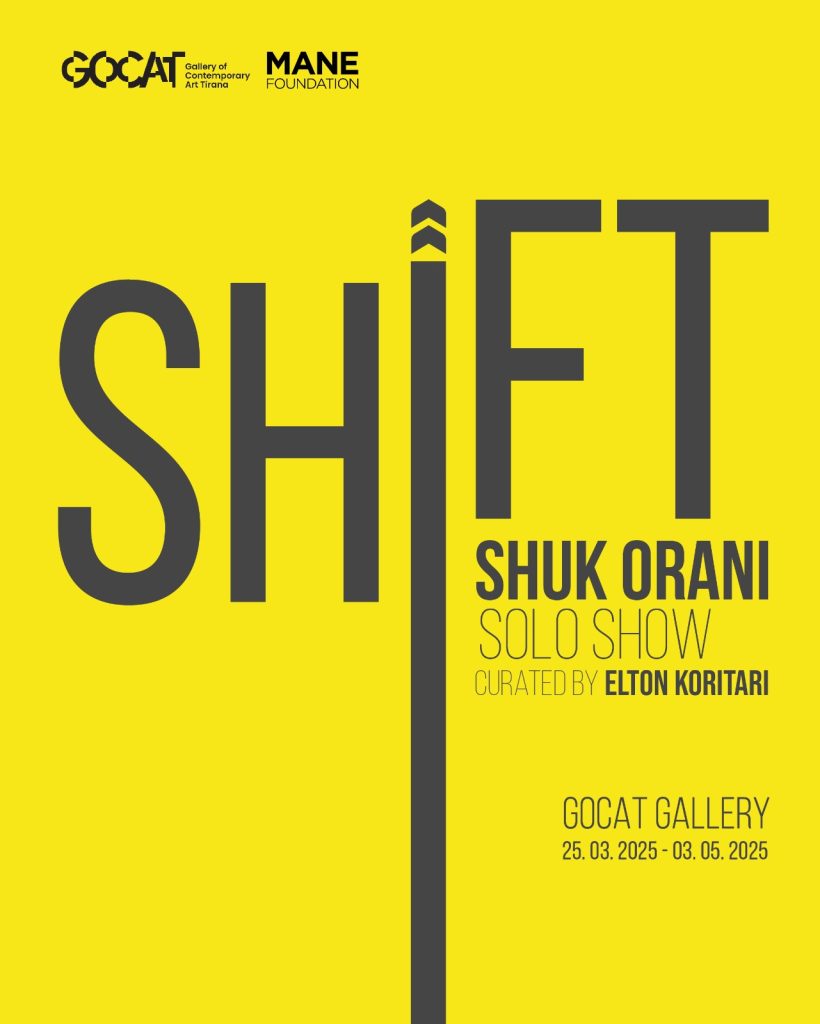
Tekst Kuratorial
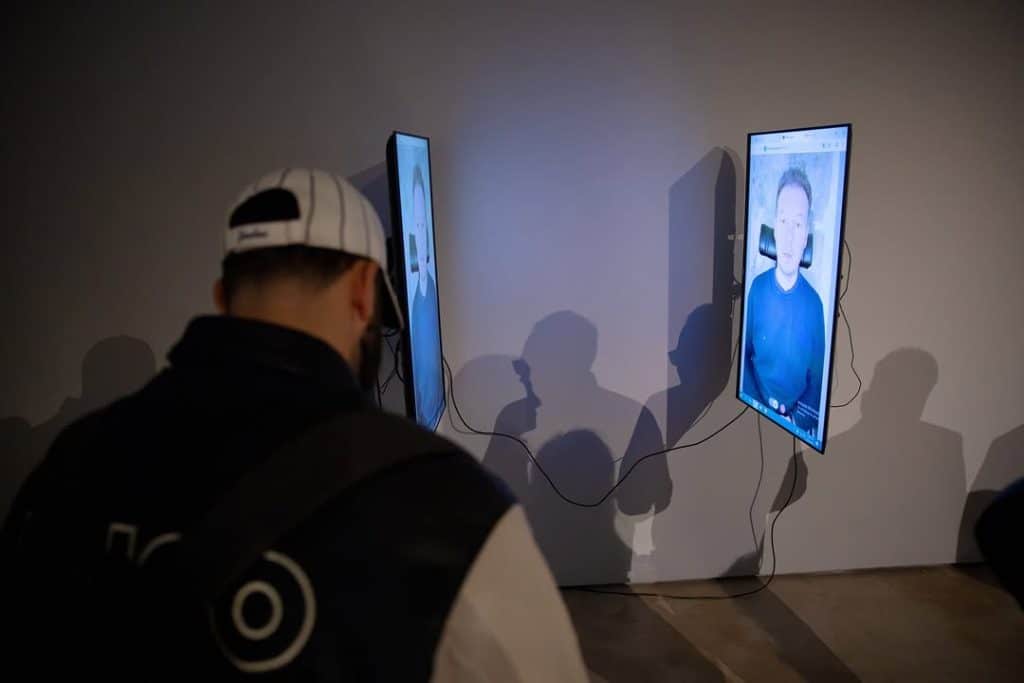
Ekziston saktësisht një moment në jetën e një artisti kur ai ndalon së dominuari mediumin e tij dhe fillon të negociojë me të. Shuk Orani, an artist born in Kosovo and based in Germany, that moment took the form of a face: his own, replicated, animated, endowed with a voice. An avatar that observes him, listens to him, and responds to him, generated by artificial intelligence, developed by Absolute Software, a team of German engineers (Atelier SO, Absolute, 3rdway, EXXXA) in collaboration with the Friedrich Neumann Foundation and University of Hamburg.
Jo një instrument. Një bashkëbisedues!
Yet SHIFT is not an exhibition about artificial intelligence, nor an exhibition about what happens when an artist, a painter of gesture, of matter, of monumental scale who finds himself face to face with something that learns from him faster than he can unlearn from himself. SHIFT is about an artist who did not retreat from technology. Instead, he chose to remain within the space of friction and made it the core of his most recent practice.
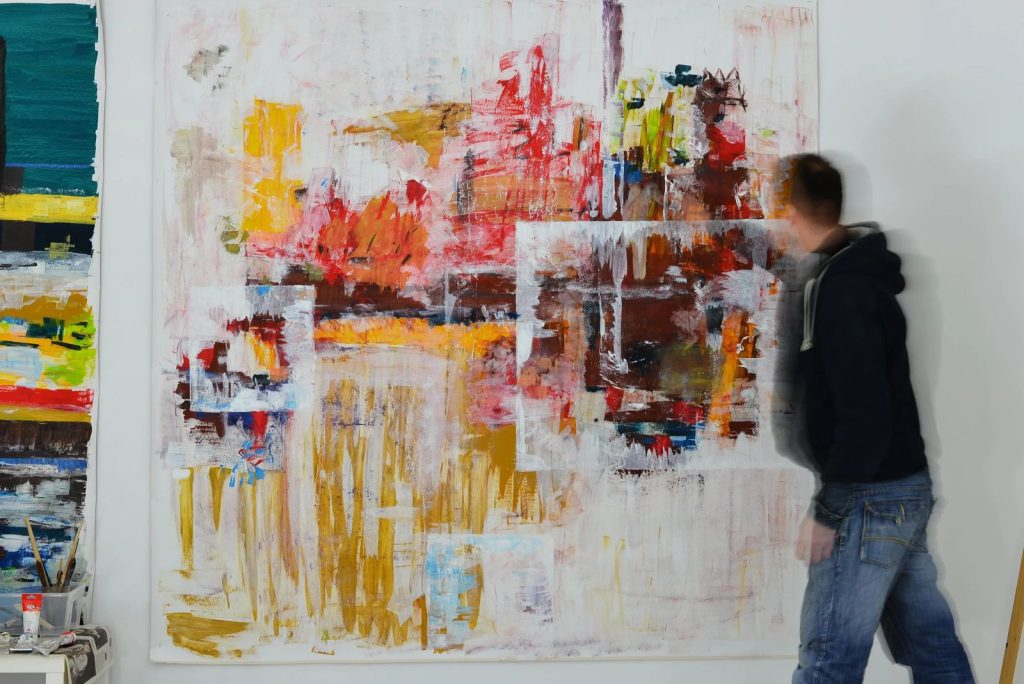
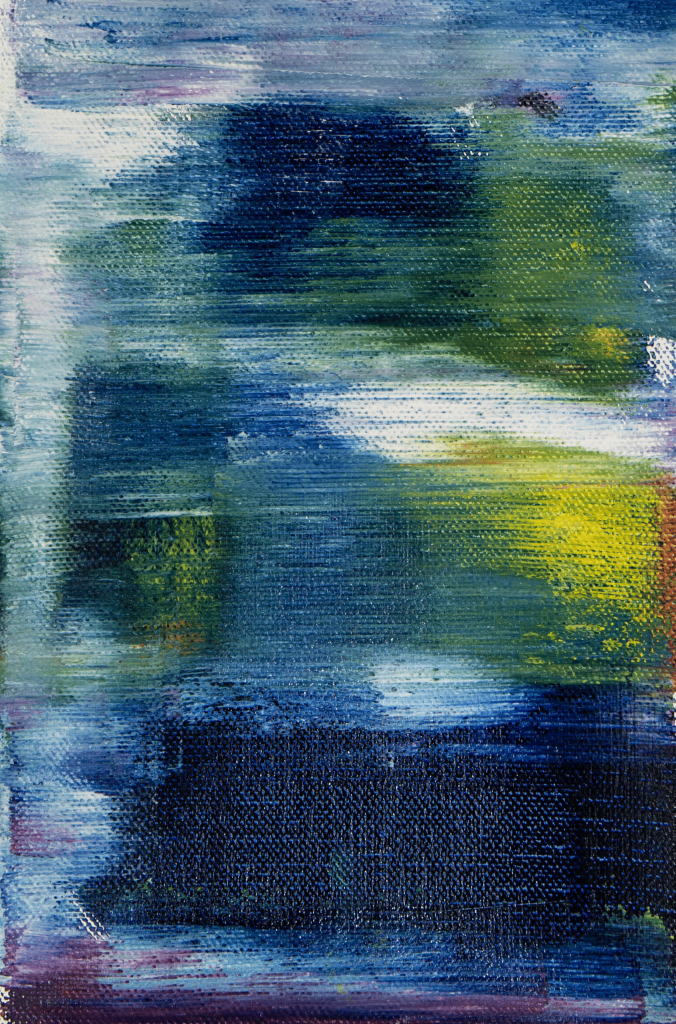
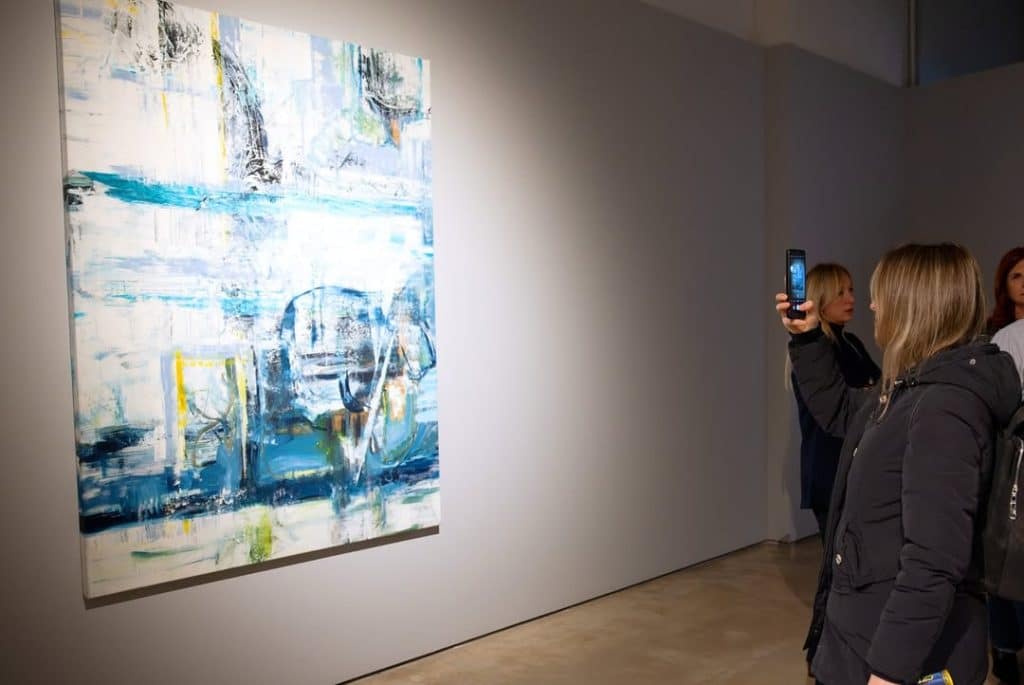
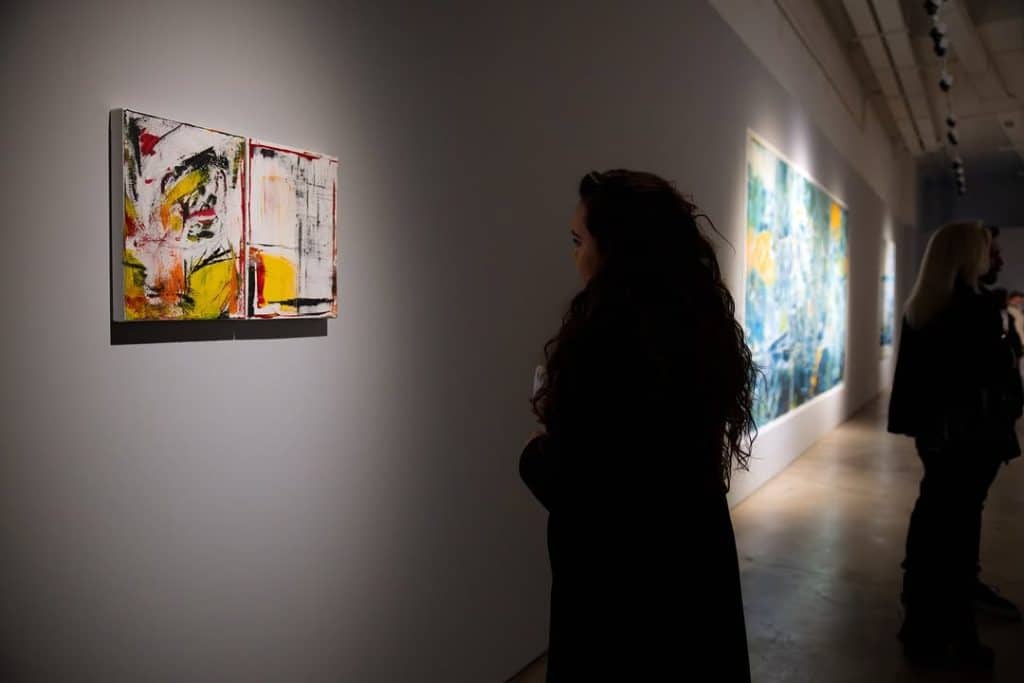
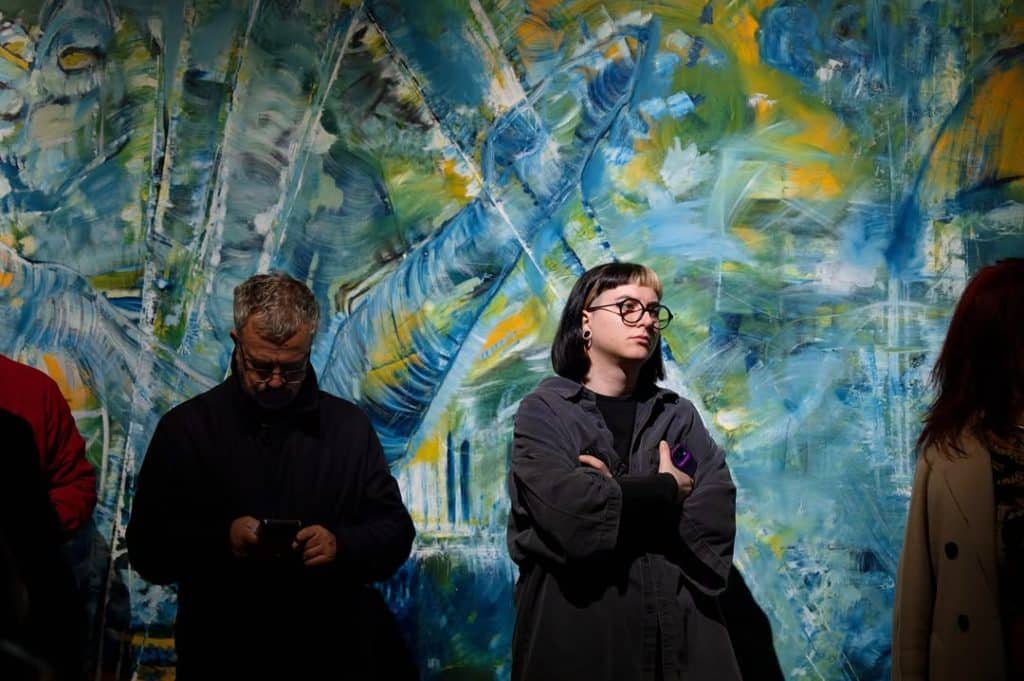
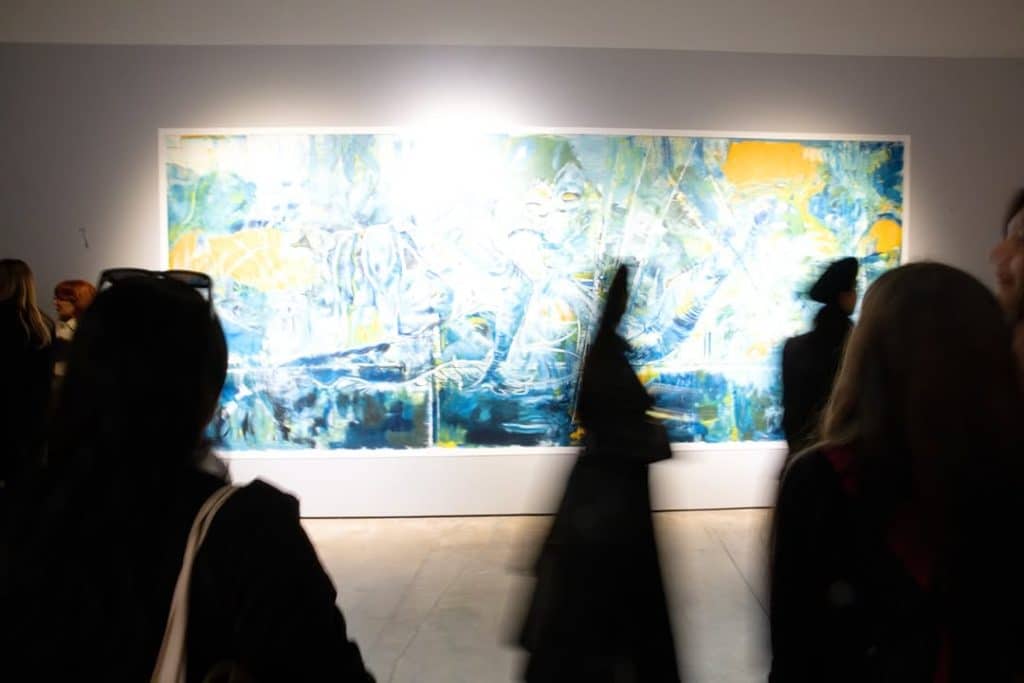
Orani’s large abstract canvases belong to the most rigorous tradition of post war European painting, particularly what is often called the German school; where gesture is never decorative, where colour carries the weight of history and where the surface is always also a threshold. His monumental works do not allow themselves to be ignored: they enter the space with the authority of someone who knows that the body matters, that the physicality of painting cannot be replaced.
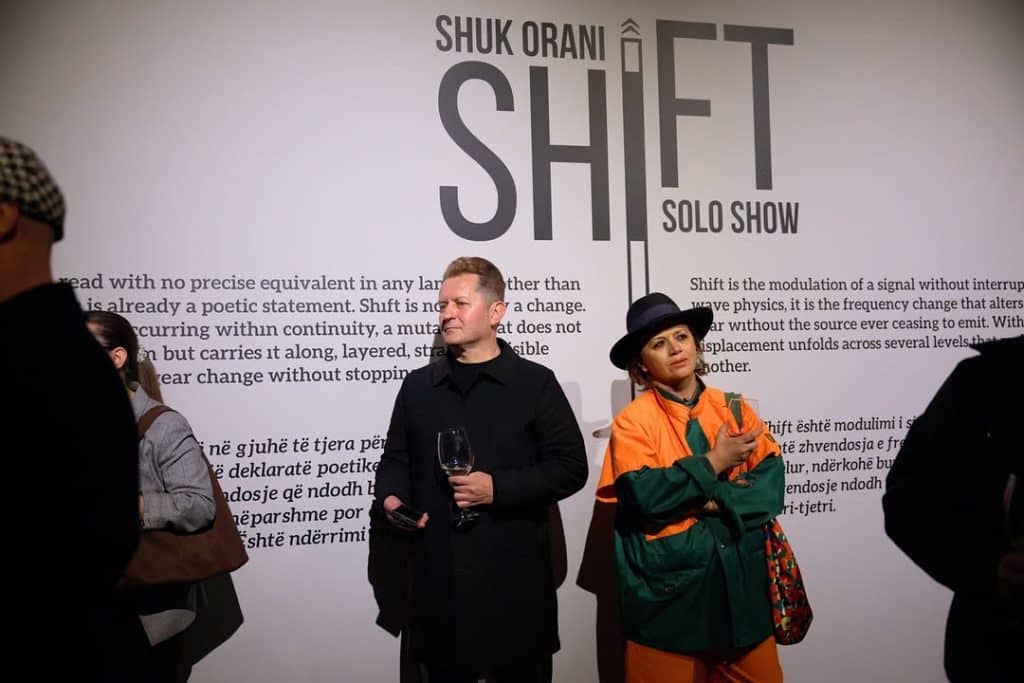
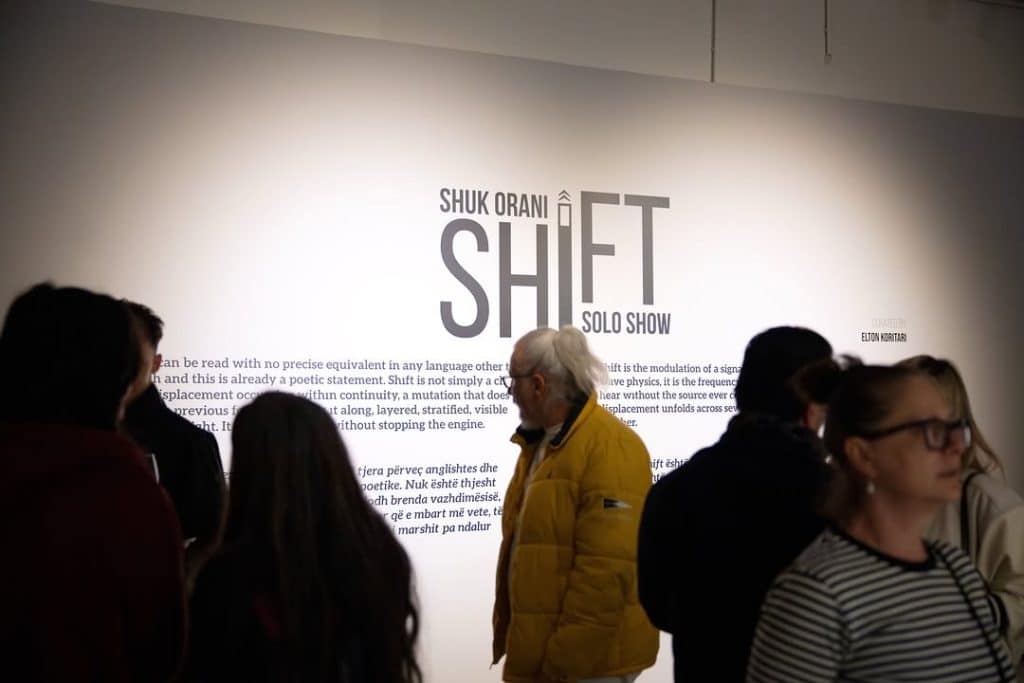
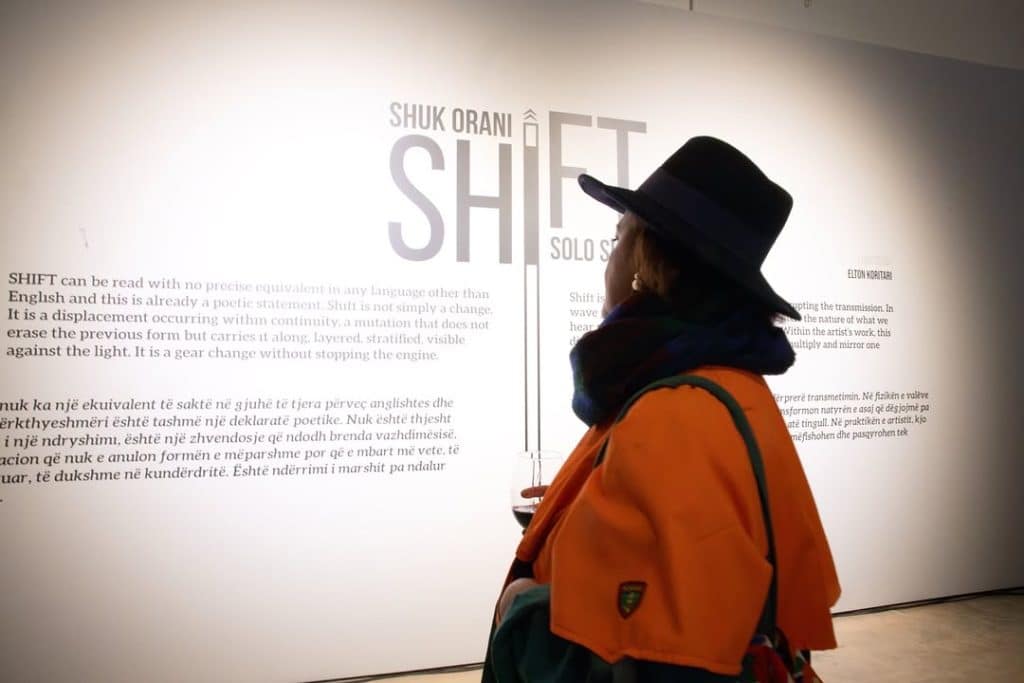
Fjala shift nuk ka një ekuivalent të saktë në gjuhë të tjera përveç anglishtes, dhe kjo papërkthyeshmëri është tashmë një deklaratë poetike. Nuk është thjesht sinonim i një ndryshimi: është një zhvendosje që ndodh brenda vazhdimësisë, një mutacion që nuk e anulon formën e mëparshme, por që e mbart me vete, të shtresëzuar, të dukshme në kundërdritë. Shift është ndërrimi i marshit pa ndalur motorin. Është modulimi i sinjalit pa ndërprerë transmetimin. Në fizikën e valëve, është zhvendosja e frekuencës që transformon natyrën e asaj që dëgjojmë pa u ndalur, ndërkohë që burimi e prodhon atë tingull.
In this sense, SHIFT is not a descriptive title. It is an operative structure; the model through which Orani’s entire practice can be read. Within the artist’s work, this displacement unfolds across several levels that multiply and mirror one another. There is the shift of the hand: the painterly gesture that settles onto the canvas as the trace of an intention that, at the very moment of action, has already become something else. There is the shift of the medium: when Orani overlays his layers of paint onto reproductions of works by Pablo Picasso, he does not quote, pay homage, or destroy; he displaces. The history of painting is neither revered nor denied; it is made to flow beneath a new surface, transformed into a substratum, an invisible pressure shaping the chromatic field without appearing within it.
And then there is the most radical shift: the moment when the artist encounters his own digital double, the avatar that studies him, replicates him, anticipates him, and reveals how much of the creative act can be learned, and how much instead resides precisely in what refuses to be codified
AKTI I – DRITA
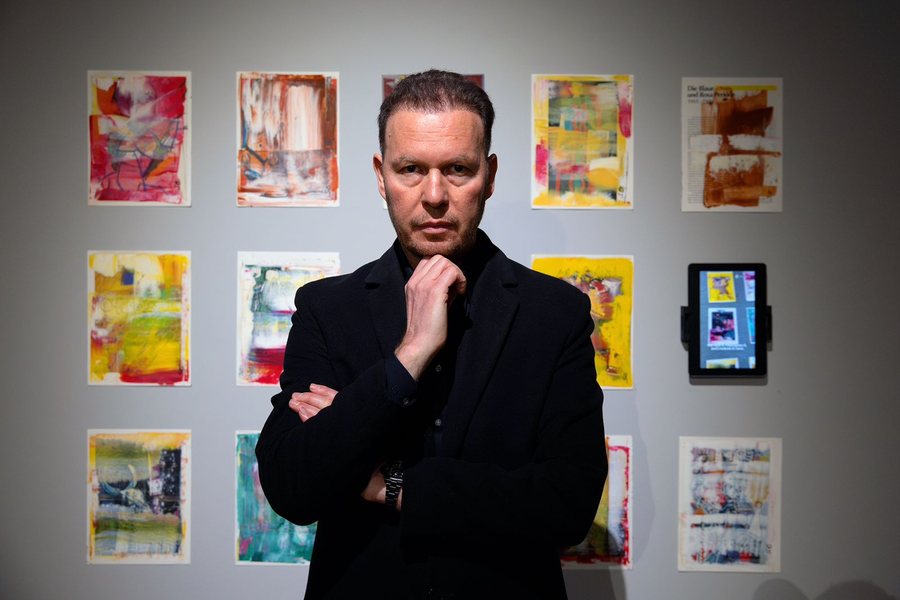
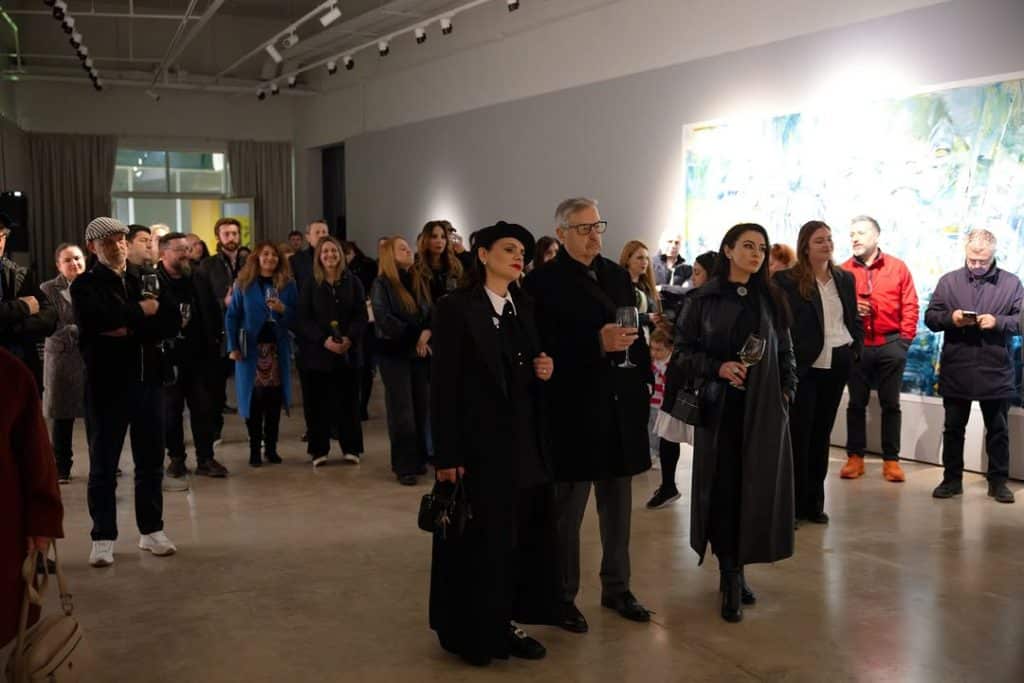
Vizitori hyn në sallën e parë dhe e njeh territorin. Drita është e kalibruar, muzeale. Veprat ndriçohen sipas rregullave: çdo telajo në tërësinë e saj, çdo detaj i aksesueshëm, çdo sipërfaqe e lexueshme. Dy monitorë përballen në hapësirë. Avatari digjital i Oranit dialogon me vetveten, i përgjigjet pyetjeve, përpunon inpute, gjeneron përgjigje. Një projeksion dokumentar tregon artistin duke punuar.
Gjithçka është e dukshme. Gjithçka është e klasifikuar.
Vizitori ndihet konfort, kompetent, beson se e kupton ekspozitën. Kjo sallë e parë është bota e inteligjencës artificiale e përkthyer në një hapësirë ekspozimi: logjika e dukshmërisë totale, e transparencës si ideologji, e informacionit që ofrohet i plotë dhe pa rezistencë. Këtu vepra është e aksesueshme sepse makina ka vendosur çfarë të tregojë, si ta kornizojë dhe në çfarë drite ta vendosë.
The visitor consumes; they do not quest. They look; they do not discover. It is a comfortable condition of knowledge and like all comfort, slightly deceptive.
AKTI I – DRITA
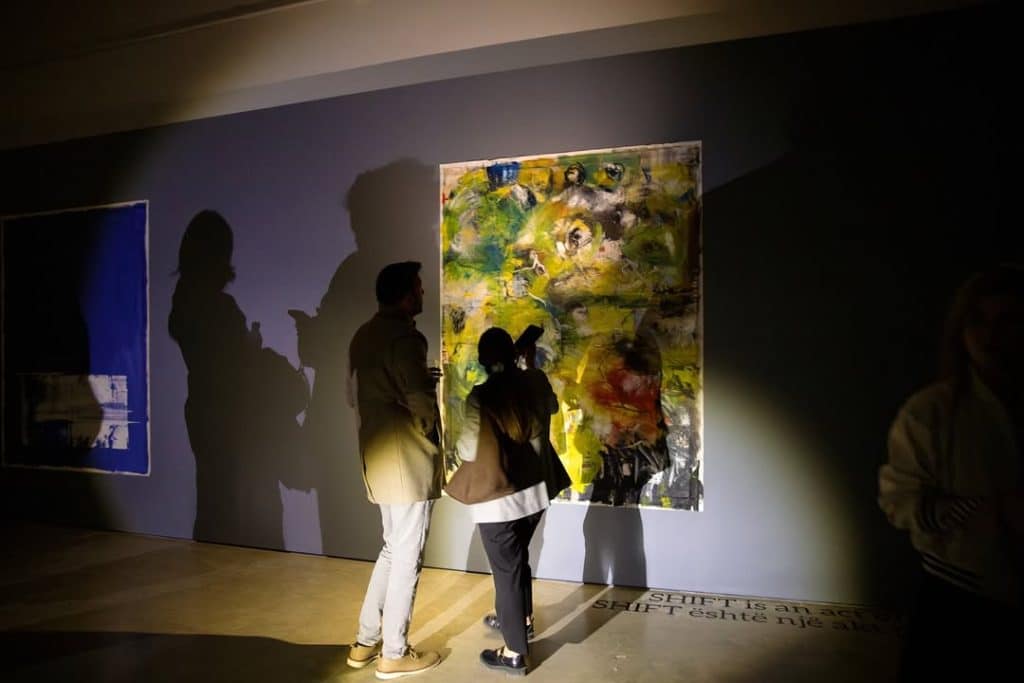
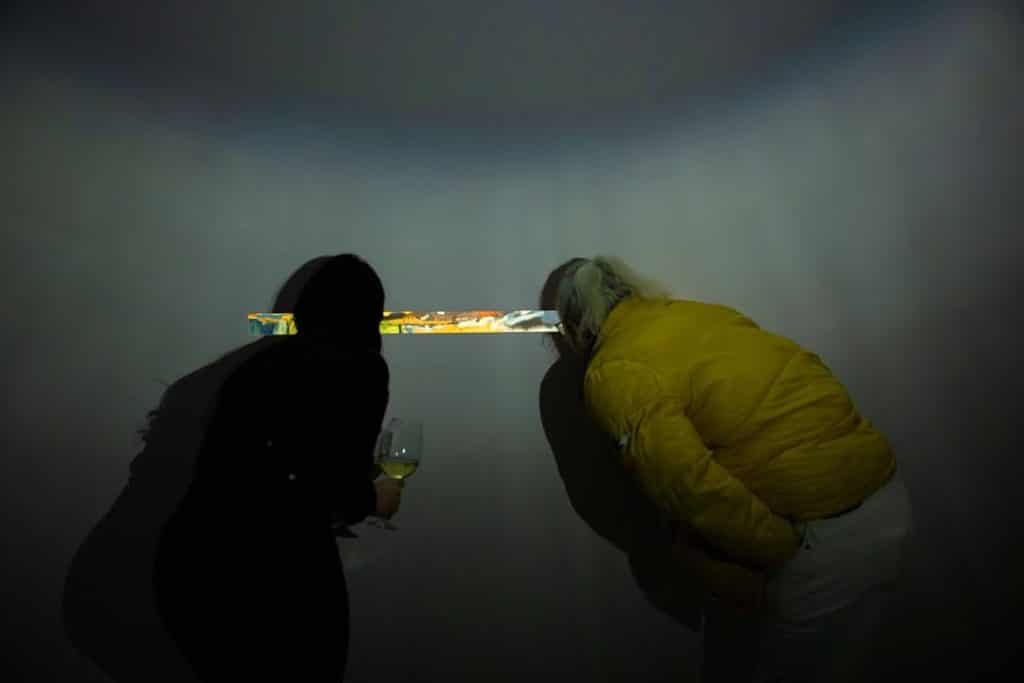
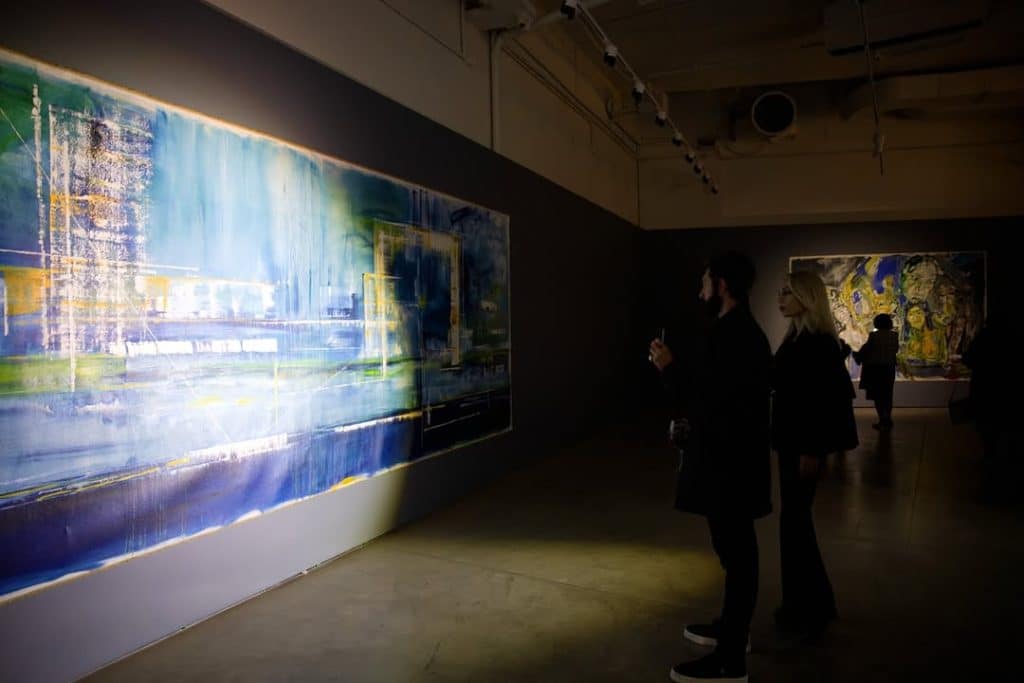
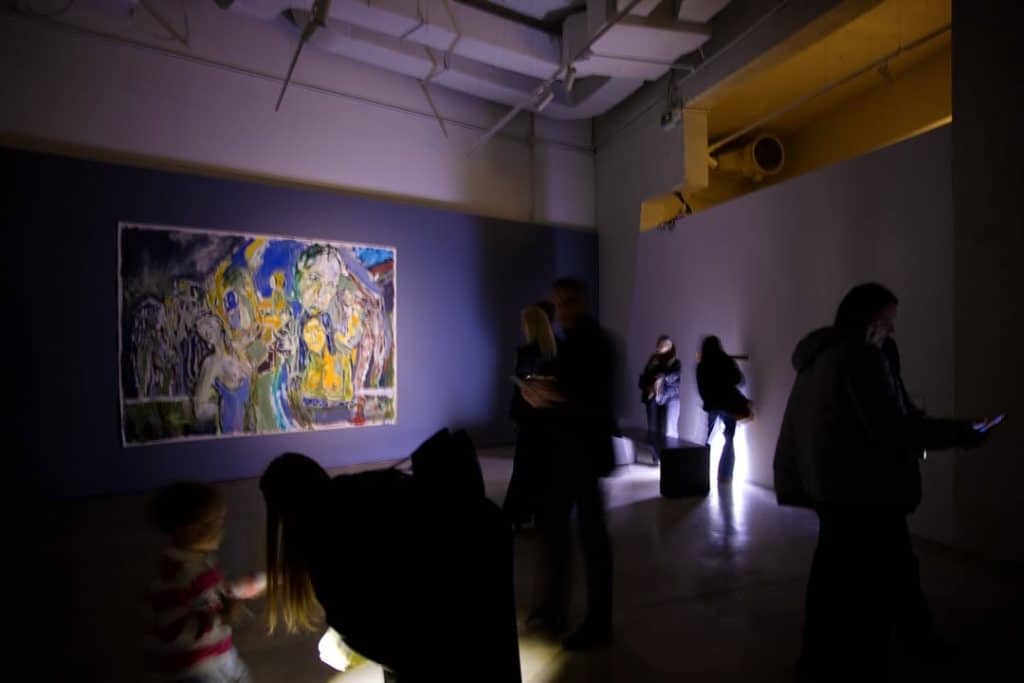
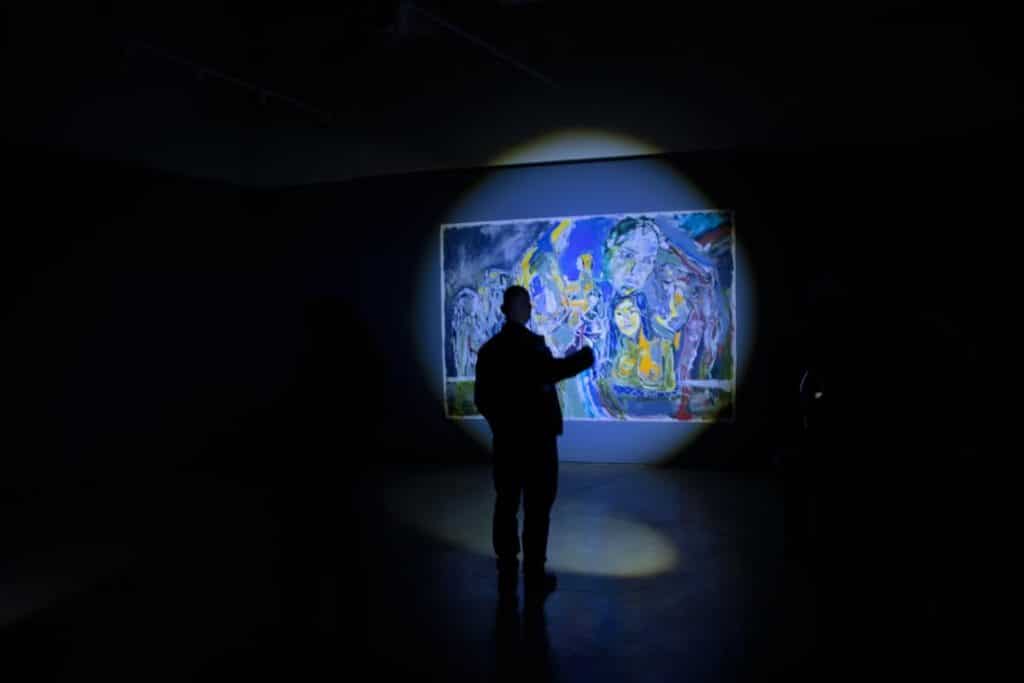
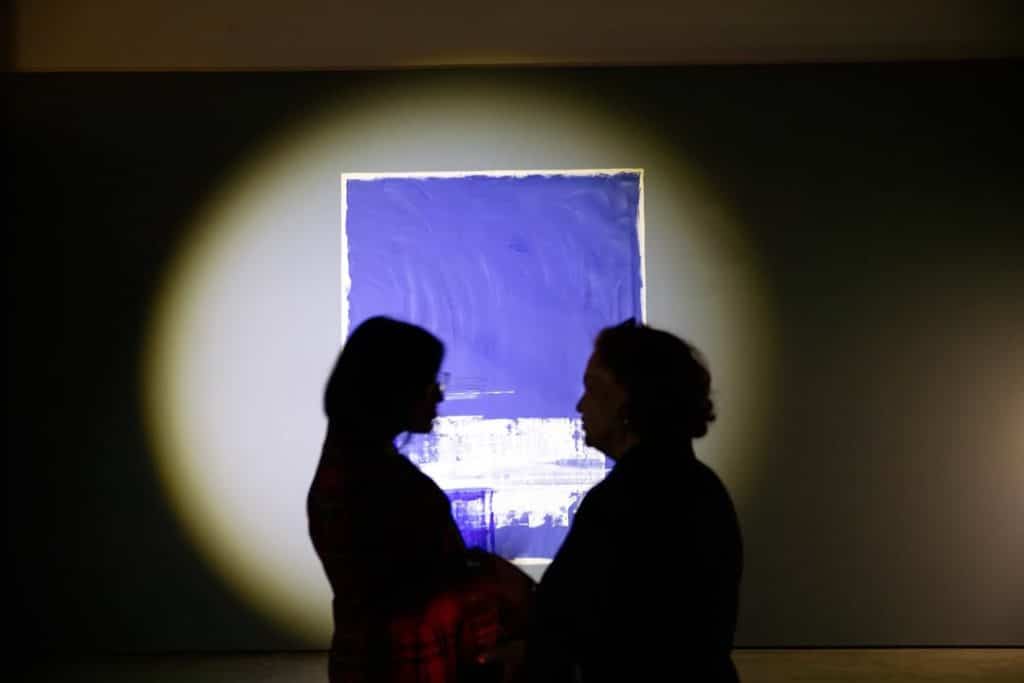
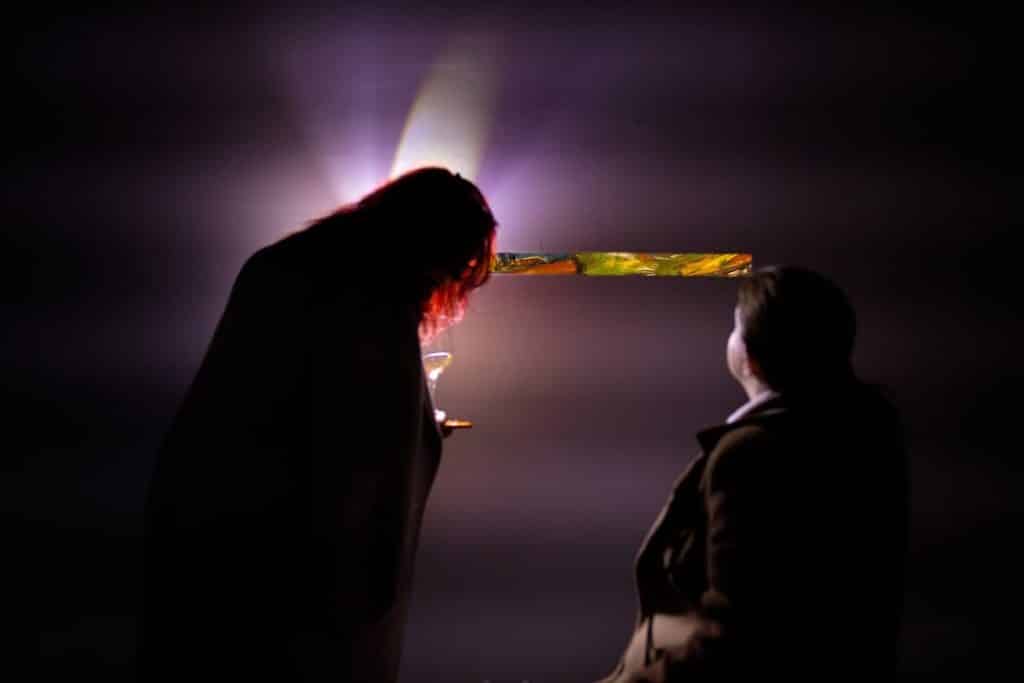
Pastaj vizitori kalon në sallën e dytë. Dhe rehatia zhduket. Errësira është totale. Jo një errësirë skenografike, jo një gjysmëhije romantike, por një errësirë që ndërpret. Veprat janë aty, por nuk janë më të ofruara, të aksesueshme, falas. Disa janë të fshehura pas një muri të ndërtuar posaçërisht: të dukshme vetëm përmes krisjes së murit, në fragmente që vërehen sikur përgjon diçka private, diçka që nuk është menduar të shihet plotësisht. Të tjera vepra ekzistojnë në errësirë, të paarritshme derisa vizitori të marrë një elektrik dore dhe të zgjedhë vetë ku të shohë.
Disa janë të fshehura pas një muri të ndërtuar posaçërisht: të dukshme vetëm përmes krisjes së murit, në fragmente që vërehen sikur përgjon diçka private, diçka që nuk është menduar të shihet plotësisht. Të tjera vepra ekzistojnë në errësirë, të paarritshme derisa vizitori të marrë një elektrik dore dhe të zgjedhë vetë ku të shohë.
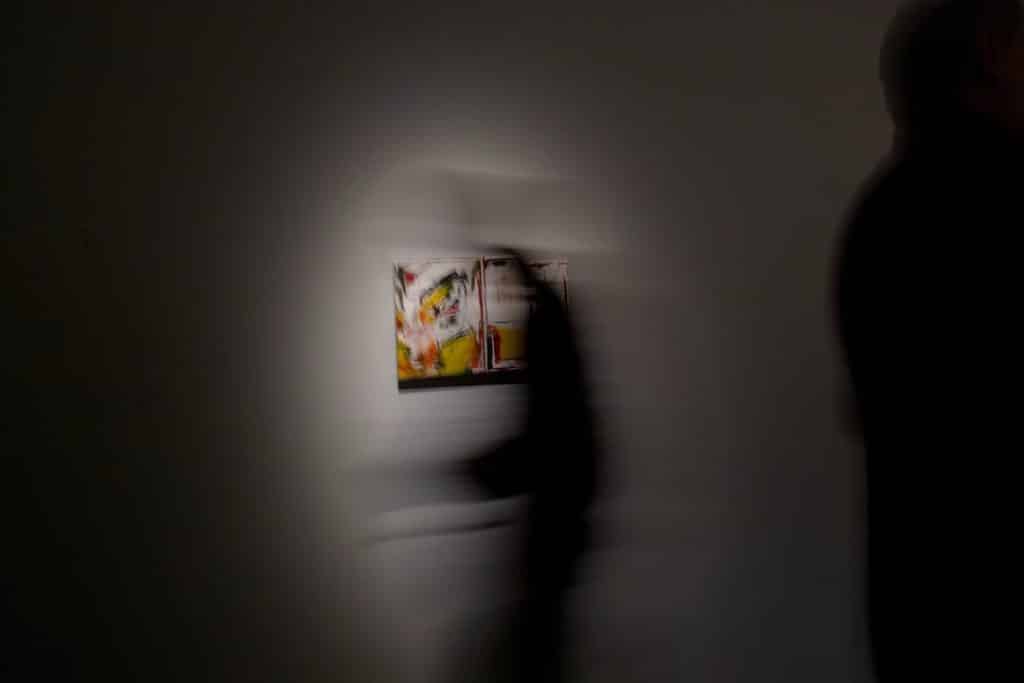
The flashlight is the antithesis of the algorithm; The algorithm optimizes vision: it determines relevance, hierarchizes attention, organizes what deserves to be seen. The flashlight knows nothing. It illuminates wherever the body directs it, wherever curiosity leads the hand, wherever instinct suggests searching.
The visitor becomes the author of their own experience of the work. The fragment illuminated is the fragment seen, and what remains in darkness stays a hypothesis, an intuited presence, an edge of colour glimpsed and then lost.
No visitor will see the same work in the same way. No one will carry away the same painting in memory.
The slits in the wall are perhaps the most radical gesture in the entire exhibition. A hidden work is not an absent work: it is a work that resists. The slit is not a window. It is a limit imposed on vision, a reminder that the artwork possesses its own sovereignty, that it owes nothing to the gaze that observes it.
One spies, glimpses, imagines the rest.
It is precisely what the machine cannot do: it cannot not know where to look; it cannot inhabit incompleteness as a productive condition. The passage from one room to the other, from one act to the next, yeah, this is the exhibition shift. Not a metaphor for it: the physical act of crossing the threshold between the two spaces is the moment when the concept ceases to be a concept and becomes a bodily experience. The competence acquired in the first room does not disappear. It transforms, it becomes insufficient and in that insufficiency, something opens: the awareness that the work always contains more than what light reveals.
SHIFT is an act of presence. But presence here is neither simple nor guaranteed. It must be sought in the dark, centimetre by centimetre, with the hands and with light as art has always asked us to do, even when no one said so explicitly.

Talk With The Artist
Podcast
